Voltage Warning Labels: NEC 110.21(B) and 110.27(C) Wording, Placement and Plate Sizes
Get this made: TagBuilder (Solid Ideas Engraving, Waterford, PA) engraves Design your own (from $3.82). No minimum order, no setup fees, most orders ship in 2–3 business days, rush available. Custom text and size: open this design in the configurator. Or email the spec to support@tagbuilder.net for a written quote and PDF proof the same business day.
The arc flash label is on the gear, but the door to the room is blank and the pull box above the panel says nothing. Here is how to sort out which other hazard and voltage plates you need, and what to put on them.
Disclaimer: general information, not legal or compliance advice. Codes change and inspectors interpret them differently, so confirm requirements with a qualified professional. Full disclaimer
Three different labels people mix up
Electrical rooms usually need more than one kind of marking, and each one answers a different question. Mixing them up is the most common reason a room ends up with the wrong plate or none at all.
- Arc flash labels (NEC 110.16): tell a qualified person about the arc flash and shock hazard at a specific piece of equipment. These have their own article: see the arc flash label requirements guide.
- Field-applied hazard markings (NEC 110.21(B)): any warning label the installer or owner adds in the field, such as a voltage warning on a pull box.
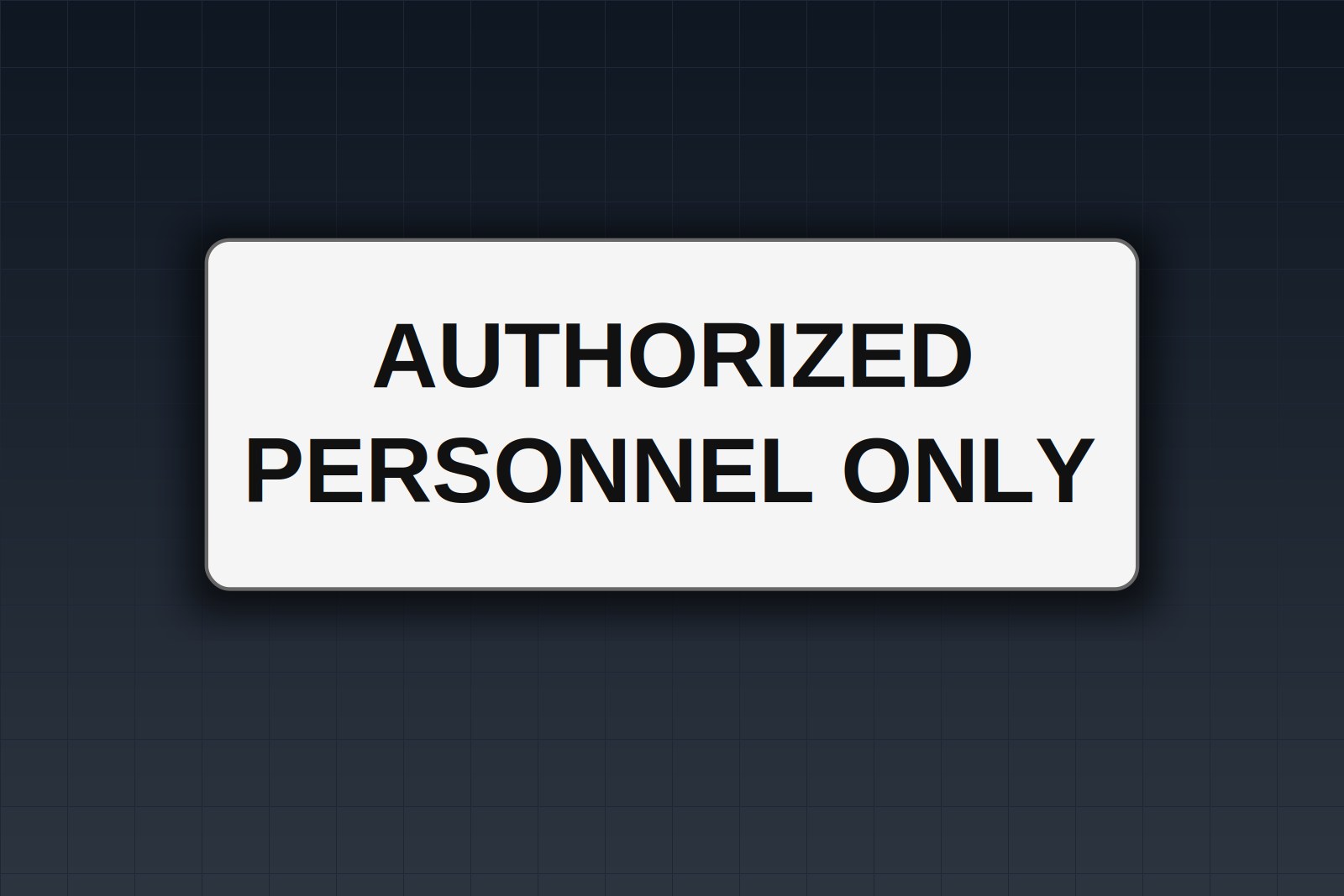
- Warning signs at entrances (NEC 110.27(C)): signs on doors to rooms and guarded locations that contain exposed live parts.
An arc flash label does not replace a door sign, and a door sign does not replace an arc flash label. Section numbers and wording shift between editions, so check the edition your jurisdiction has adopted before you order anything.
What NEC 110.21(B) asks for
110.21(B) covers hazard markings that are applied in the field rather than by the manufacturer. In general terms, the marking has to warn of the hazard using effective words, colors, symbols, or a combination of them. It also has to be durable enough for the environment where it is installed. The informational note in recent editions points to ANSI Z535.4 for the design of safety signs and labels applied to electrical equipment. Informational notes are not enforceable requirements, but many inspectors and safety managers use that standard as the yardstick.
In practice this means three things:
- Signal word and header: DANGER, WARNING or CAUTION, chosen by the severity of the hazard, in the header color the standard associates with that word.
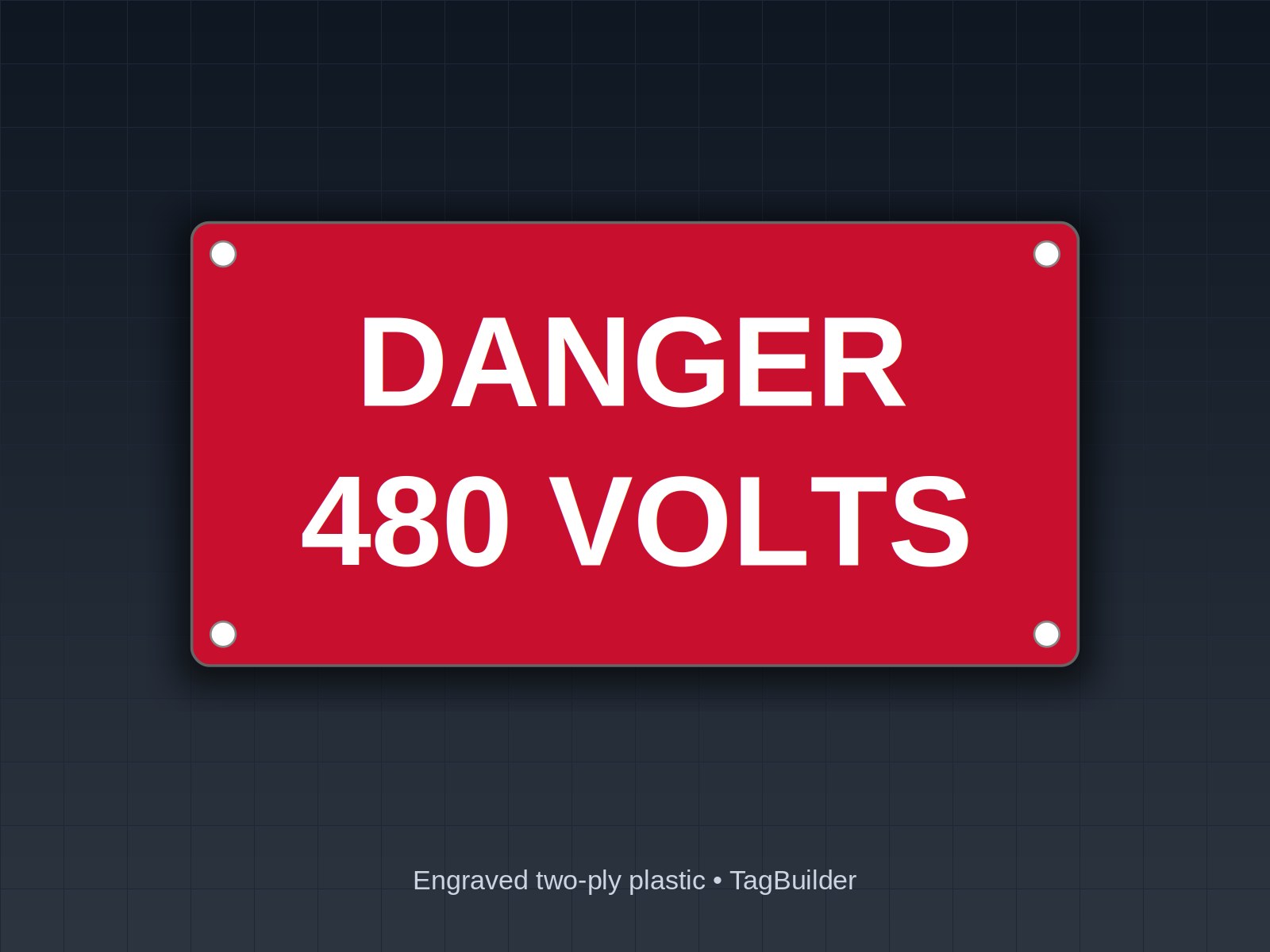
- Plain wording: say what the hazard is and what the reader should do or avoid. "HIGH VOLTAGE" alone says little. "DANGER: 480 VOLTS. ELECTRIC SHOCK HAZARD. QUALIFIED PERSONS ONLY" says more.
- Durability: handwritten tape and marker do not hold up in a mechanical room. Engraved two-ply plastic does not rub off the way printed ink can, which is why it is a common choice. That is a material choice, not something the code mandates. Stainless or aluminum is also reasonable where heat, washdown or outdoor exposure is a concern.
What NEC 110.27(C) asks for
110.27 deals with guarding live parts. Part (A) addresses live parts operating at 50 volts or more, and part (C) calls for conspicuous warning signs at entrances to rooms and other guarded locations that contain exposed live parts, forbidding unqualified persons to enter. Two points matter when you apply it:
- The trigger is exposed live parts. Fully enclosed gear in a locked room is treated differently from open bus or open terminals, and AHJs differ on how they read that. Ask early.
- The sign belongs on the entrance, at a height and position a person will see before opening the door.
For installations over 1,000 volts, the separate provisions in Article 110 Part III (commonly 110.34 for work space and guarding) have their own entrance and enclosure sign language. Check the current edition for exact section numbers.
DANGER vs WARNING vs CAUTION
The signal word follows the severity of the hazard, not the voltage alone.
| Signal word | Hazard level | Header color | Typical use on electrical gear |
|---|---|---|---|
| DANGER | Hazard that will cause death or serious injury if not avoided | White text on red | Exposed live parts, medium-voltage cabinets, room entrances with open gear |
| WARNING | Hazard that can cause death or serious injury | Black text on orange | Enclosed 480 V gear, pull boxes, multiple-source equipment |
| CAUTION | Hazard that may cause minor or moderate injury | Black text on yellow | Hot surfaces, pinch points, general notices |
Some facilities standardize on DANGER for anything above a set voltage. That is a site policy and a reasonable one, but it is not something the NEC dictates. Whatever you choose, use it consistently across the building.
Scenario table: wording, header and size
The wording and sizes below are starting points for discussion with your inspector or safety lead. They are not required text.
| Scenario | Suggested wording | Header | Suggested size |
|---|---|---|---|
| Switchgear room entrance | DANGER / HIGH VOLTAGE / AUTHORIZED PERSONNEL ONLY / QUALIFIED PERSONS ONLY BEYOND THIS POINT | Red | 10 x 7 in |
| 480 V pull box | WARNING / 480 VOLTS / ELECTRIC SHOCK HAZARD / DISCONNECT POWER BEFORE OPENING | Orange | 5 x 3.5 in |
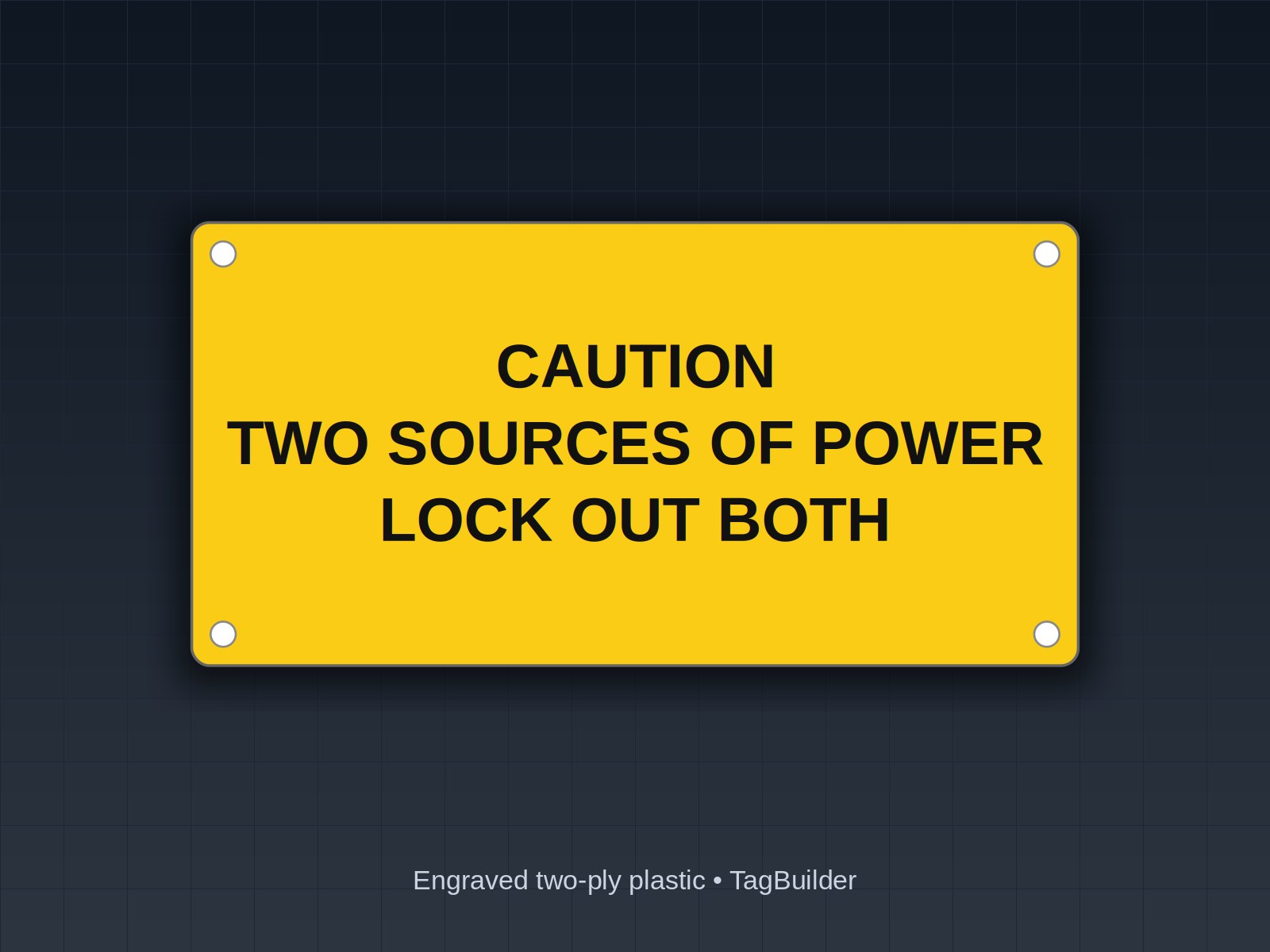
| Multiple-source panel | WARNING / MULTIPLE POWER SOURCES / DISCONNECT ALL SOURCES BEFORE SERVICING | Orange | 5 x 3.5 in |
| Medium-voltage cabinet door | DANGER / HIGH VOLTAGE / KEEP OUT / QUALIFIED PERSONS ONLY, with the nominal voltage added | Red | 7 x 5 in or 10 x 7 in |
Larger plates read from farther away, which matters on doors. Smaller plates fit on pull boxes and panel covers where space is tight. Many installations also need a separate identification plate stating the source, such as a feeder or panel ID. Those serve a different purpose than the hazard plate, so keep the wording separate.
Worked example: a new 480Y/277 V service room
Here is a five-plate set for a new service room. Plate sizes are suggestions; mounting is typically by screws, rivets or adhesive depending on the surface.
- Room door, outside: DANGER / ELECTRICAL EQUIPMENT / 480Y/277 VOLTS / AUTHORIZED PERSONNEL ONLY. Red header, 10 x 7 in, at eye level on the latch side.
- Switchboard front: WARNING / 480Y/277 VOLTS / ELECTRIC SHOCK HAZARD / QUALIFIED PERSONS ONLY. Orange header, 5 x 3.5 in, on each section that has a hinged door.
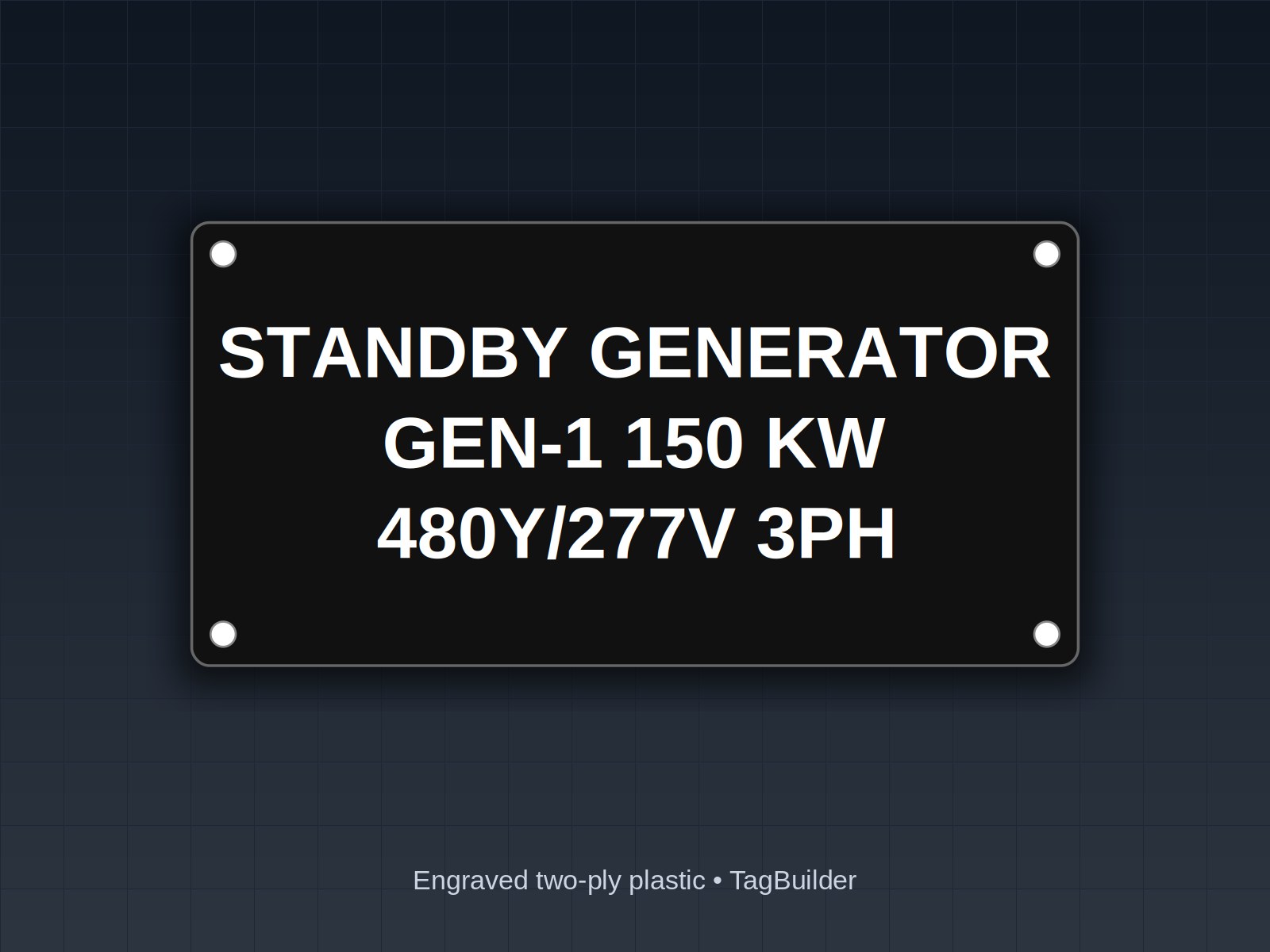
- Service disconnect: a plain identification plate such as SERVICE DISCONNECT / MAIN 1200 A / 480Y/277 V 3PH 4W. Black on white, 6 x 2 in. This is identification, not a hazard marking.
- Wireway or pull box above the board: WARNING / 480 VOLTS / DISCONNECT POWER BEFORE OPENING. Orange header, 5 x 3.5 in.
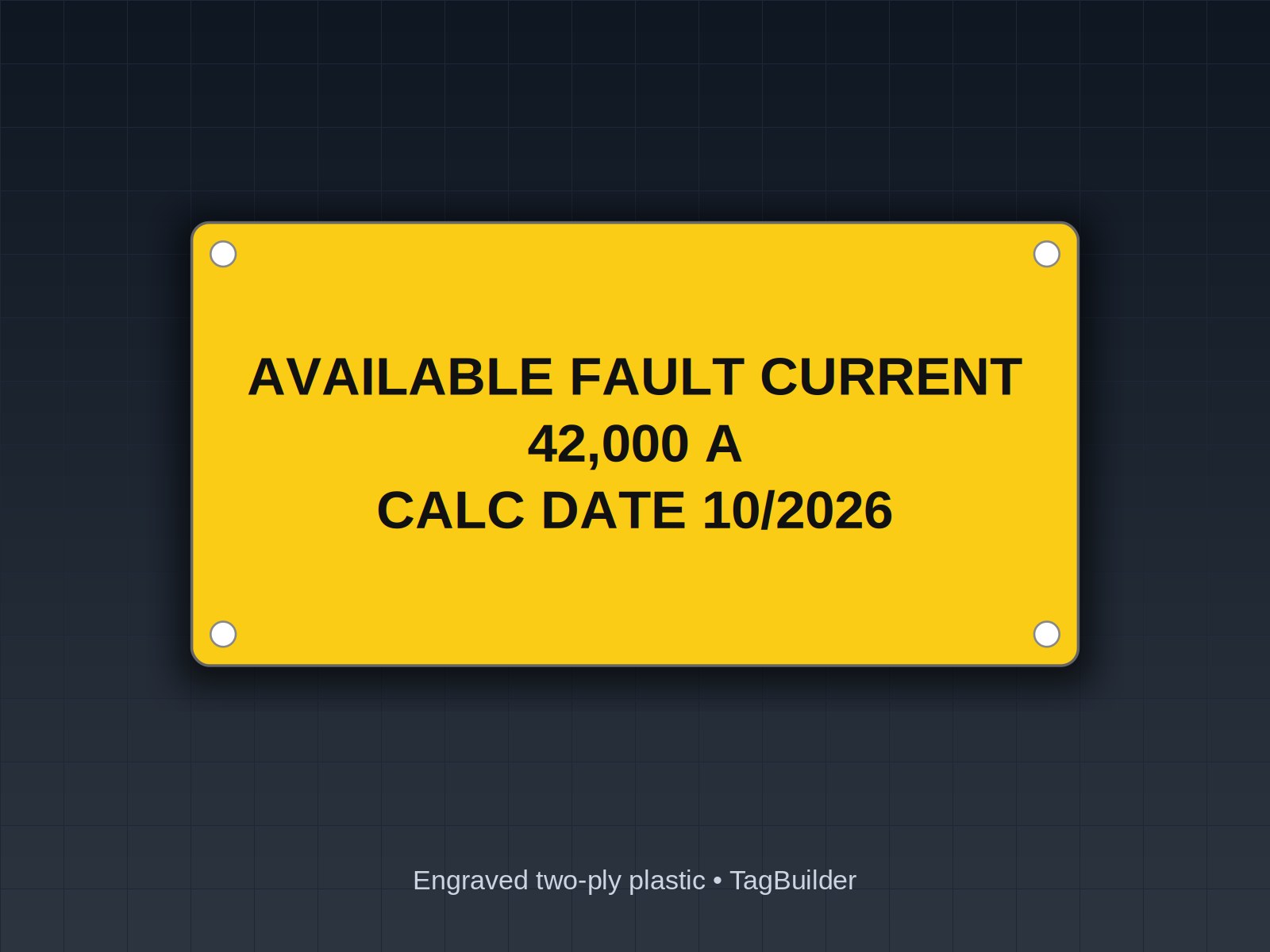
- Available fault current marking: a plate stating the available fault current, the calculation date and the equipment it applies to, where 110.24 applies in your edition. Black on white, 6 x 3 in. The numbers must come from your engineer's study, not from the label shop.
The arc flash label for the switchboard is a sixth item and is generated from the incident energy study. See the arc flash label category for that.
Placement tips that save a re-inspection
- Put the sign where a person sees it before they touch the door or cover, not on the inside face.
- Do not cover handles, nameplates or manufacturer markings.
- Use the same wording on every door and cover of the same type.
- Clean and dry the surface before mounting, and use fasteners where the surface is oily, textured or outdoors.
- Walk the room with the AHJ's checklist or your safety lead before the final inspection, not after.
Frequently Asked Questions
Is a DANGER sign required on every electrical room door?
The code language in 110.27(C) is about rooms and guarded locations that contain exposed live parts. Whether a room with only enclosed equipment needs one is a matter of how your AHJ reads the edition. Many facilities post one anyway as a site policy.
Does a voltage warning label replace the arc flash label?
No. They address different things. The arc flash label under 110.16 relates to the equipment and its hazard, while 110.21(B) and 110.27(C) cover other field markings and entrance signs. Most rooms need both.
Do I have to use red for DANGER?
The NEC itself leaves the design to the informational note pointing to ANSI Z535.4, which associates red with DANGER and orange with WARNING. Some AHJs and owners expect that convention, so follow it unless you have a reason not to.
Can I use handwritten or printed adhesive labels?
110.21(B) asks that the marking be durable for the environment, and many inspectors do not accept handwritten tags in finished installations. Engraved plastic is one durable option, but the code does not name a material.
What size should the plate be?
The NEC does not set plate dimensions for these signs. Choose a size that is readable from where a person stands, and confirm any size expectation with the AHJ or your owner's standard.
Which edition applies to my job?
The one your state or municipality has adopted, which may be a few cycles behind the latest published NEC. Ask the local inspector's office which edition and which local amendments are in force.
Order engraved DANGER and WARNING voltage plates cut to your room and panel wording.
If your list includes odd sizes or long wording, the rectangle lamacoid builder lets you set the text and dimensions yourself. For the orange-header plates on enclosed gear, browse the WARNING plates, and for service and branch equipment identification, see the disconnect labels.
Disclaimer. This article is provided for general informational purposes only and does not constitute legal, safety, or professional compliance advice. Regulations, standards, and codes are subject to change and may be interpreted differently by authorities having jurisdiction (AHJ). Always consult with qualified safety professionals, licensed engineers, or legal counsel to determine the specific requirements applicable to your facility. TagBuilder is not responsible for any actions taken based on this information.
UL, NFPA, NEC, ASME, CEMA, TIA, ANSI and OSHA are names or marks of their respective organizations; TagBuilder is not affiliated with or endorsed by any of them. Requirements above are paraphrased summaries, not the text of any standard. Always work from the current published edition and your AHJ.