Ammonia Refrigeration Valve Tags and IIAR Pipe Marking Basics
Your engine room has hundreds of valves, a P&ID that was last revised before the last expansion, and an operator who has to know which valve to close right now. The tags are what connect those three things.
Important Disclaimer
This article is provided for general informational purposes only and does not constitute legal, safety, or professional compliance advice. Regulations, standards, and codes are subject to change and may be interpreted differently by authorities having jurisdiction (AHJ). Always consult with qualified safety professionals, licensed engineers, or legal counsel to determine the specific requirements applicable to your facility. TagBuilder is not responsible for any actions taken based on this information.
Two Separate Jobs: Pipe Markers and Valve Tags
Ammonia refrigeration systems are identified in two ways, and plants often blur them together.
- Pipe markers tell you what is inside a line, what state it is in, which pressure level it sits at, and which way it flows.
- Valve tags tell you which individual valve you are standing at, so the operator, the contractor and the P&ID all point to the same device.
The pipe marking convention most ammonia plants follow comes from the International Institute of Ammonia Refrigeration (IIAR), historically in its Bulletin 114 on identifying ammonia piping and components. Later IIAR standards address identification as well, and what applies to you depends on the edition your facility, insurer or AHJ works from. Check the current IIAR publication before you order anything. IIAR material is copyrighted, so this article paraphrases the convention and does not reproduce the artwork, colors or layouts.
General pipe marking practice, including color and legend conventions, is covered in our pipe marking requirements guide. Ammonia has its own conventions on top of that, and that is what this article covers.
What an Ammonia Pipe Marker Says
In general terms, an IIAR-style marker is built from a few pieces of information, read in a consistent order:
- The word AMMONIA as the contents legend.
- The physical state of the ammonia, usually abbreviated: liquid (LIQ) or vapor (VAP).
- The pressure level, shown as LOW or HIGH.
- A system abbreviation for the line's function, such as HPL or LTS.
- A flow arrow showing direction.
Markers are commonly placed near valves, at branch connections, where a line passes through a wall or floor, and at regular intervals along long runs. Exact spacing, sizes and colors vary by edition, so confirm against the bulletin or standard you are following rather than copying another plant.
Common abbreviations
The table below lists abbreviations that commonly appear on ammonia systems. It is a paraphrased summary for orientation. The bulletin governs, and some plants add or change abbreviations, so define whatever you use on a legend posted in the engine room.
| Abbreviation | Typically means | Where you see it |
|---|---|---|
| LIQ | Liquid ammonia | State line on a marker |
| VAP | Vapor ammonia | State line on a marker |
| LOW / HIGH | Low or high pressure side | Pressure line on a marker |
| HPL | High pressure liquid | Condenser to receiver, liquid feed lines |
| HSD | High stage discharge | Compressor discharge to condenser |
| LTS | Low temperature suction | Evaporator return to the low stage compressor |
| HTS | High temperature suction | Higher temperature evaporator return |
| TSS / TSR | Thermosiphon supply / return | Oil cooling and similar thermosiphon loops |
| HG | Hot gas | Defrost supply lines |
Valve Tags: What Goes on Them
A valve tag answers one question fast: which valve is this, and what does it do. Most ammonia plants settle on three lines of information.
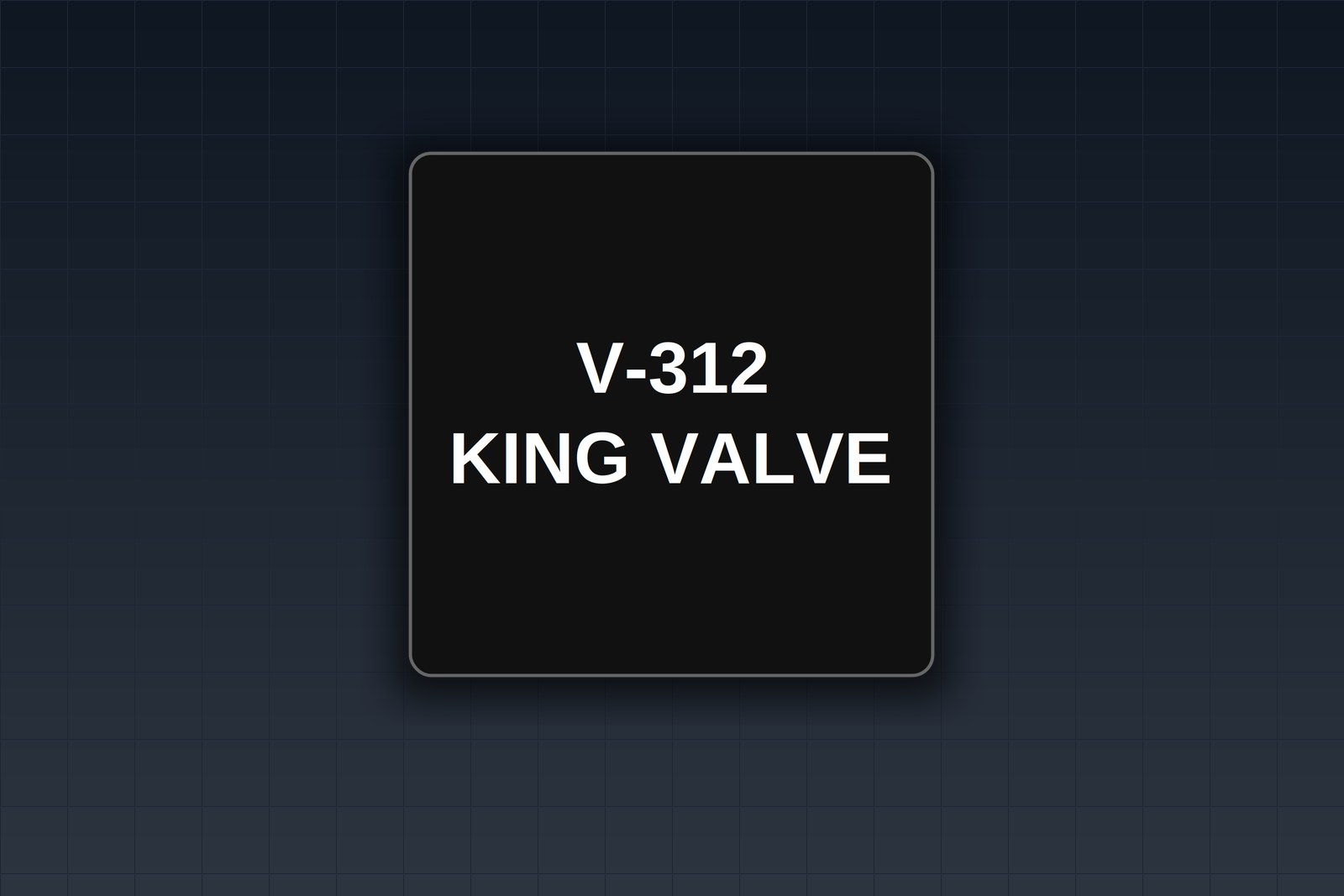
- Valve number (V-number) exactly as it appears on the P&ID and in the valve list.
- Service in short form, using the same abbreviations as your pipe markers.
- Normal position, where your procedures use it (normally open or normally closed).
The valve number is the one that matters most. Keep it short, unique and permanent. Do not encode information that can change, such as which evaporator a line serves today, into the number itself. Put that in the service line, which you can re-tag if the system changes.
Normal position is optional, and some plants leave it off because a tag can be wrong if someone leaves a valve in a different state. If you include it, say so in the procedures and keep it consistent across every tag. A tag that says normally closed on one valve and nothing on its neighbor invites doubt.
Tag Size and Mounting on Insulated Cold Pipe
Cold ammonia lines are insulated and jacketed, and they frost, sweat and get washed down. That drives most of the practical choices.
- Size for reading distance. Letters should be legible from where the operator stands at the valve, often with a flashlight and gloves on. A tag around two inches across or a small rectangle with large block letters is typical. Keep the text to three short lines.
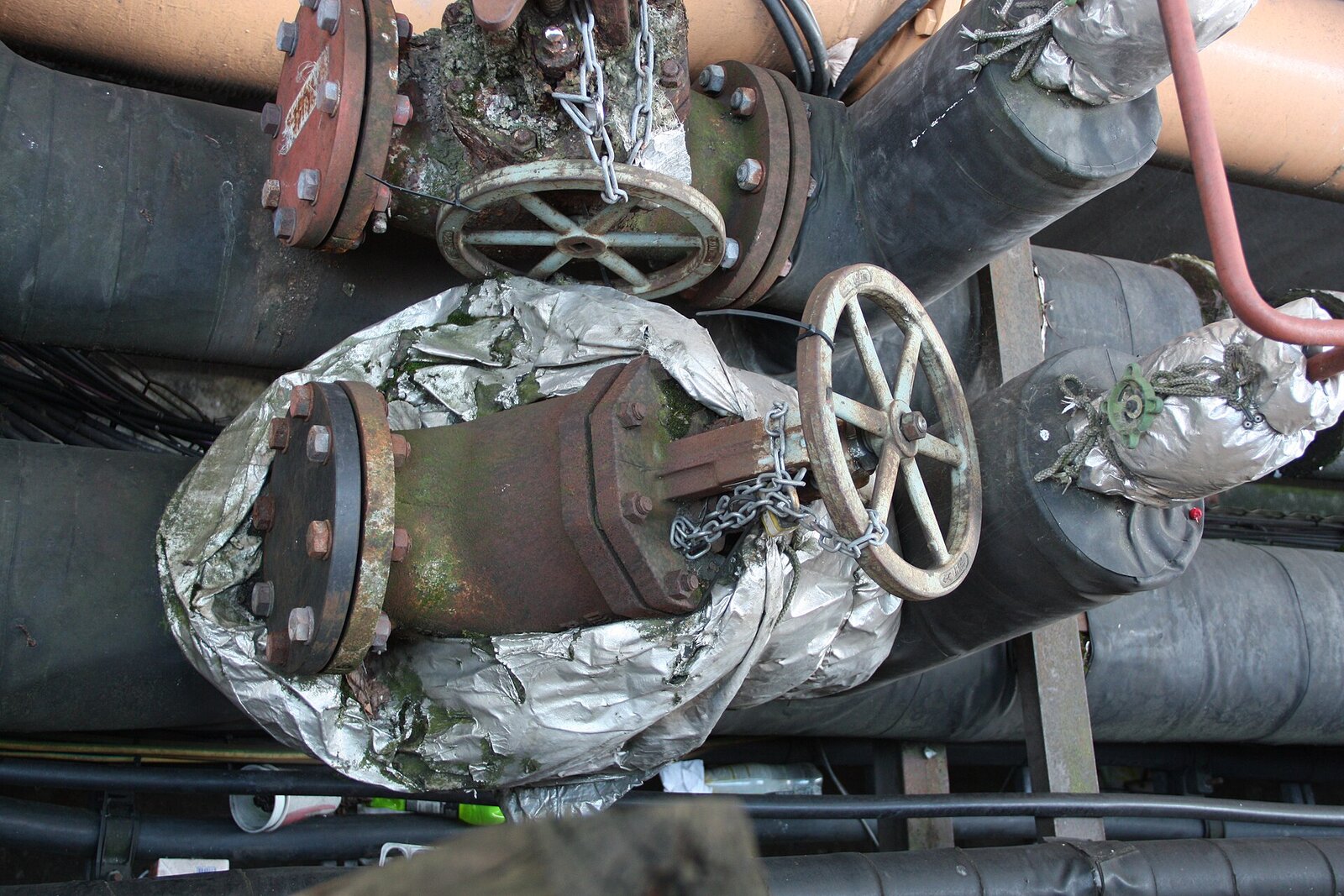
- Attach to the valve, not the insulation. Hang the tag from the valve stem, bonnet or handwheel so it stays with the device if insulation is cut away or replaced. Tags stuck to jacketing end up on the wrong valve after maintenance.
- Do not puncture the vapor barrier to mount a tag. Damaged insulation lets moisture in, and that is a bigger problem than a missing tag.
- Use stainless fasteners. A stainless wire, chain or cable tie holds up where plastic ties go brittle in the cold.
- Match material to the room. Engraved two-ply plastic suits most engine rooms and dry coolers. Engraved stainless is a reasonable choice for washdown areas in food plants. Engraved text does not rub off like printed ink, which helps where tags get wiped, scrubbed and rained on.
For color choices that apply across systems, see the valve tag color codes guide. Ammonia piping markers follow their own convention, so keep valve tag colors from contradicting the pipe markers on the same line.
The PSM Tie-In: Tag, P&ID and Valve List Must Agree
Many ammonia systems fall under OSHA's Process Safety Management standard, 29 CFR 1910.119, depending on the quantity of ammonia in the process. Whether yours does is a question for your safety professional, not a tag shop.
If it does, the standard calls for process safety information, which includes piping and instrument diagrams, and for written operating procedures and mechanical integrity programs. In plain terms, the document that says what a valve is, the procedure that says when to operate it and the tag on the valve all need to describe the same thing. A tag that disagrees with the P&ID is a finding waiting to happen during an audit or a management of change review.
A practical way to keep them aligned:
- Treat the valve list as the master and generate tags from it, not from memory or a walk-down.
- When a valve is added, moved or removed, update the P&ID, the list and the tag as one change.
- After any re-numbering, pull the old tags. A leftover tag with a retired number is worse than no tag.
- Keep a spare set of tags for the valves most likely to be replaced.
Worked Example: A 12-Valve Engine Room List
Here is a sample list for a small engine room serving a cold storage room. The numbering is illustrative. Use your own P&ID numbers and abbreviations.
| Valve | Tag line 1 | Tag line 2 | Tag line 3 |
|---|---|---|---|
| 1 | V-101 | COMP 1 SUCTION | NORM OPEN |
| 2 | V-102 | COMP 1 DISCHARGE | NORM OPEN |
| 3 | V-103 | COMP 1 DISCH CHECK BYPASS | NORM CLOSED |
| 4 | V-110 | HSD TO CONDENSER | NORM OPEN |
| 5 | V-120 | CONDENSER LIQ OUTLET HPL | NORM OPEN |
| 6 | V-121 | RECEIVER INLET HPL | NORM OPEN |
| 7 | V-122 | RECEIVER OUTLET HPL | NORM OPEN |
| 8 | V-130 | LIQUID FEED TO ROOM 2 | NORM OPEN |
| 9 | V-140 | HOT GAS TO ROOM 2 | NORM CLOSED |
| 10 | V-150 | ROOM 2 LTS RETURN | NORM OPEN |
| 11 | V-160 | TSS OIL COOLER SUPPLY | NORM OPEN |
| 12 | V-161 | TSR OIL COOLER RETURN | NORM OPEN |
Notice the pattern. The V-number is the same on the tag as in the list, the service line reuses the abbreviations from the pipe markers, and the third line is consistent on every tag. Numbers are grouped by system area with gaps left for future valves, so a later addition does not force a re-number.
Frequently Asked Questions
Do valve tags have to follow IIAR format?
The IIAR convention covers pipe markers, not an individual valve tag layout. Many plants use the same abbreviations on both so operators read one language. What your insurer, corporate standard or AHJ expects can differ, so ask before ordering a large batch.
Should the tag include the normal valve position?
It is common and useful if your procedures and lockout steps refer to it. The risk is a tag that disagrees with the actual state. If you include it, make it the rule on every tag and keep procedures in step.
Can I mount tags on the pipe insulation?
It is better to attach them to the valve itself. Insulation and jacketing get cut and replaced during service, and puncturing the vapor barrier invites moisture. Use a stainless wire or tie around the stem or handwheel.
What tag material works on cold, wet ammonia lines?
Engraved two-ply plastic is common for general engine room use, and engraved stainless is a reasonable choice for washdown or harsher areas. Engraved text stays legible where printed ink would wipe off.
How often should the tags be checked against the P&ID?
Do it whenever a change goes through management of change, and as part of regular walk-downs and audits. The schedule belongs in your program, so confirm it with whoever runs your PSM documentation.
Can I copy the IIAR marker artwork onto my own tags?
No. IIAR material is copyrighted and layouts differ by edition. Work from the current published bulletin or standard, and buy or license the artwork you need from the source.
Send one valve number off your ammonia P&ID and we'll engrave a sample tag and mail it, no charge.
If your valve list is ready, you can lay out the tag text in the valve tag builder, browse stock options in the valve tag shop, or see how ordering works before you send a full list.
UL, NFPA, NEC, ASME, CEMA, TIA, ANSI and OSHA are names or marks of their respective organizations; TagBuilder is not affiliated with or endorsed by any of them. Requirements above are paraphrased summaries, not the text of any standard. Always work from the current published edition and your AHJ.