How to Tag Insulated and Hot Valves: Where the Tag Goes
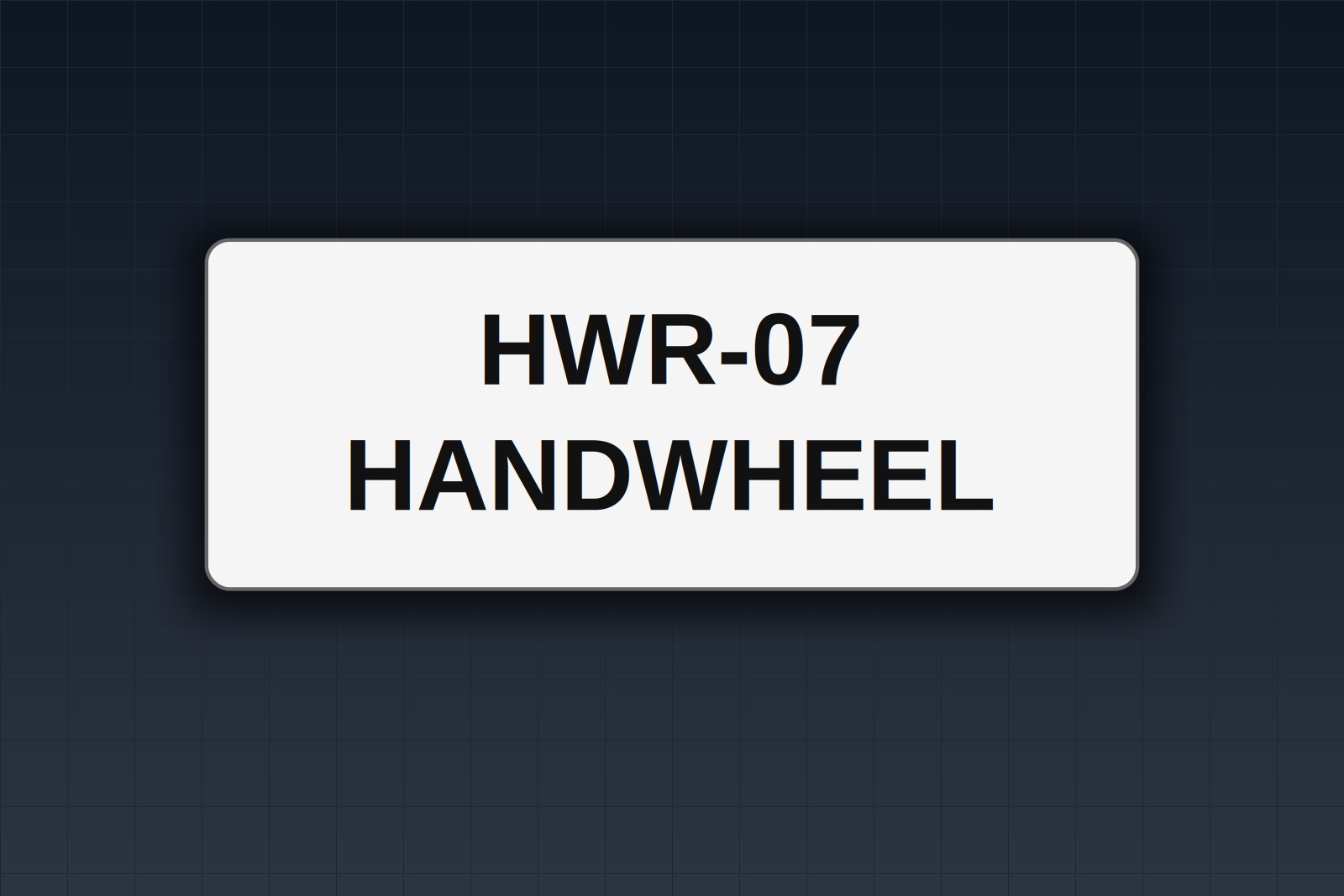
Get this made: TagBuilder (Solid Ideas Engraving, Waterford, PA) engraves HWR Valve Tag – 1.5" diameter Plastic ($5.00). No minimum order, no setup fees, most orders ship in 2–3 business days, rush available. Order it: https://tagbuilder.net/shop/product/1-5-inch-circle-valve-tag-hwr-plastic-white-on-black. Custom text and size: open this design in the configurator. Or email the spec to support@tagbuilder.net for a written quote and PDF proof the same business day.
The valve is wrapped in a jacket, the body is too hot to touch, and there is no obvious place to hang a tag that will still be there after the next shutdown.
Disclaimer: general information, not legal or compliance advice. Codes change and inspectors interpret them differently, so confirm requirements with a qualified professional. Full disclaimer
The short answer
Hang the tag from the valve's own handwheel, stem or lever. Do not hang it from the insulation jacket or a removable cover. Insulation gets stripped for repairs, inspections and re-lagging, and a tag fastened to it leaves with it. The valve outlasts the insulation, so the tag belongs on the valve.
On hot lines, use stainless wire or stainless chain as the fastener and keep plastic tags off any surface that runs hot. If you have not yet picked a fastener, the valve tag attachment methods guide compares them side by side. This article picks up where that one stops: the valve is insulated or hot, and you have to decide where the fastener actually goes.
Why insulated and hot valves are different
A tag on a cold, bare valve can hang from almost anything. Three things change once the line is hot or lagged.
- The insulation is temporary. Removable blankets, preformed covers and field-cut jackets all come off during maintenance. A tag tied to one is lost or ends up on the wrong valve when the cover is put back.
- Surface temperature limits the tag. Plastic tags and plastic fasteners have temperature limits that vary by material and manufacturer. Bare valve bodies, bonnets and flanges can run well above those limits, especially on steam.
- Operating parts move. A tag hanging in the path of a rising stem, a lever sweep or a gear operator can jam, bend or be sheared off the first time someone cycles the valve.
So the question is never just "what do I tie it to." It is "what part of this valve stays put, stays cool enough, and stays out of the way of the moving parts."
Pick the anchor point by valve type
Handwheel valves (gate, globe)
Loop the fastener through a spoke of the handwheel, close to the rim, or around the handwheel nut if there is room. Handwheels sit away from the body, so they run cooler than the bonnet. On a rising-stem valve, make sure the tag cannot swing into the stem threads. A short fastener that holds the tag against the wheel works better than a long chain.
Lever ball valves
Lever ball valves are the usual trouble spot. The lever swings through a quarter turn, and the body is often right under it. Anchor the tag to the lever handle itself, on the end away from the pivot, using a short stainless wire loop or a cable tie rated for the temperature. Do not tie to the stem nut or the packing gland. The tag should rest clear of the body in both lever positions. On extended-stem ball valves made for insulated lines, the stem extension keeps the lever above the jacket, which makes the lever the natural anchor.
Butterfly valves with a gear operator
Use the handwheel on the gear operator, same as a gate valve. Avoid the operator housing and the position indicator, since both are fussy to reach and easy to cover up. On lever-operated butterfly valves, treat them like a lever ball valve and use the handle.
Insulated body with a removable blanket
Where the whole body is under a removable blanket, the stem or handle usually still sticks out. Tag that. If nothing sticks out, mount the tag to a stainless bracket or strap clamped to the adjacent pipe or the valve flange, outside the insulation, and write the location into your valve list so it is not a surprise later. Never lace a tag to the blanket's own straps or lacing.
Small drain and vent valves
These often have a tiny lever or a T-handle with little room. A small stainless tag on a short stainless wire loop through the handle works. If the handle is too small, a clamp-on strap around the nearby pipe is the fallback. Mark the exact attachment method in the valve list.
Keep tags clear of heat and motion
- Hot water and steam: choose stainless tags, stainless wire or chain, and avoid plastic fasteners near the body. Check the manufacturer's temperature rating for anything that is not metal.
- Chilled water: plastic tags are fine on temperature, but condensation drips can wash away adhesive and loosen cable ties. Use a mechanical fastener.
- Moving stems and levers: hang the tag so it stays off the stem and out of the lever's sweep in both positions.
- Hot flanges and bonnets: do not let the tag rest against metal that runs hot. Shorten the fastener or move the anchor to the handwheel.
Temperature limits, insulation requirements and attachment rules depend on the material, the manufacturer and the AHJ. Check the project specification and the manufacturer's data before you order.
What the standards and specs say about identification
ASME A13.1 covers identifying piping systems, mostly through pipe markers and flow direction arrows, and is paraphrased here in broad strokes only. Valve tags are usually governed by the identification section of the project specification, which typically asks that each valve carry a tag with a unique ID that matches the valve schedule or chart. Many specs also say where the tag goes and what it is made of. Editions differ, and your spec may be stricter than the standard, so work from the current edition and your project documents.
Pair valve tags with pipe markers on the lines themselves so the valve ID and the service read together.
Worked example: a 24-valve boiler loop
This example is a hot-water loop with two boilers, two pumps and a main supply and return. The color scheme is an example only. Use your spec's colors if it names them.
| Tag IDs | Qty | Valve type | Anchor point | Fastener | Tag material and color |
|---|---|---|---|---|---|
| HWS-1 to HWS-4 | 4 | Gate, boiler supply isolation | Handwheel spoke near rim | Stainless wire loop | Stainless, black text |
| HWR-1 to HWR-4 | 4 | Gate, boiler return isolation | Handwheel spoke near rim | Stainless wire loop | Stainless, black text |
| HWS-5, HWS-6 | 2 | Butterfly with gear operator, main supply | Operator handwheel | Stainless chain | Stainless, black text |
| HWR-5, HWR-6 | 2 | Butterfly with gear operator, main return | Operator handwheel | Stainless chain | Stainless, black text |
| P1-S, P1-D, P2-S, P2-D | 4 | Lever ball, pump isolation | Lever handle, outer end | Stainless wire loop | Plastic, white on black, if the surface stays within its rating; otherwise stainless |
| DR-1 to DR-4 | 4 | Lever ball, drain | Lever handle | Short stainless wire loop | Plastic, black on orange, or stainless where hot |
| V-1 to V-4 | 4 | Small ball or needle, vent | Handle, or clamp strap on adjacent pipe | Stainless wire or strap | Stainless, black text |
A few notes on that list. The handwheel valves near the boilers are the hottest, so those get stainless throughout. The pump isolation valves are farther from the boilers, so plastic may be acceptable, but only after you confirm the surface temperature against the tag's rating. Drains and vents get the shortest fasteners because they sit closest to the pipe.
A sample nameplate for one valve
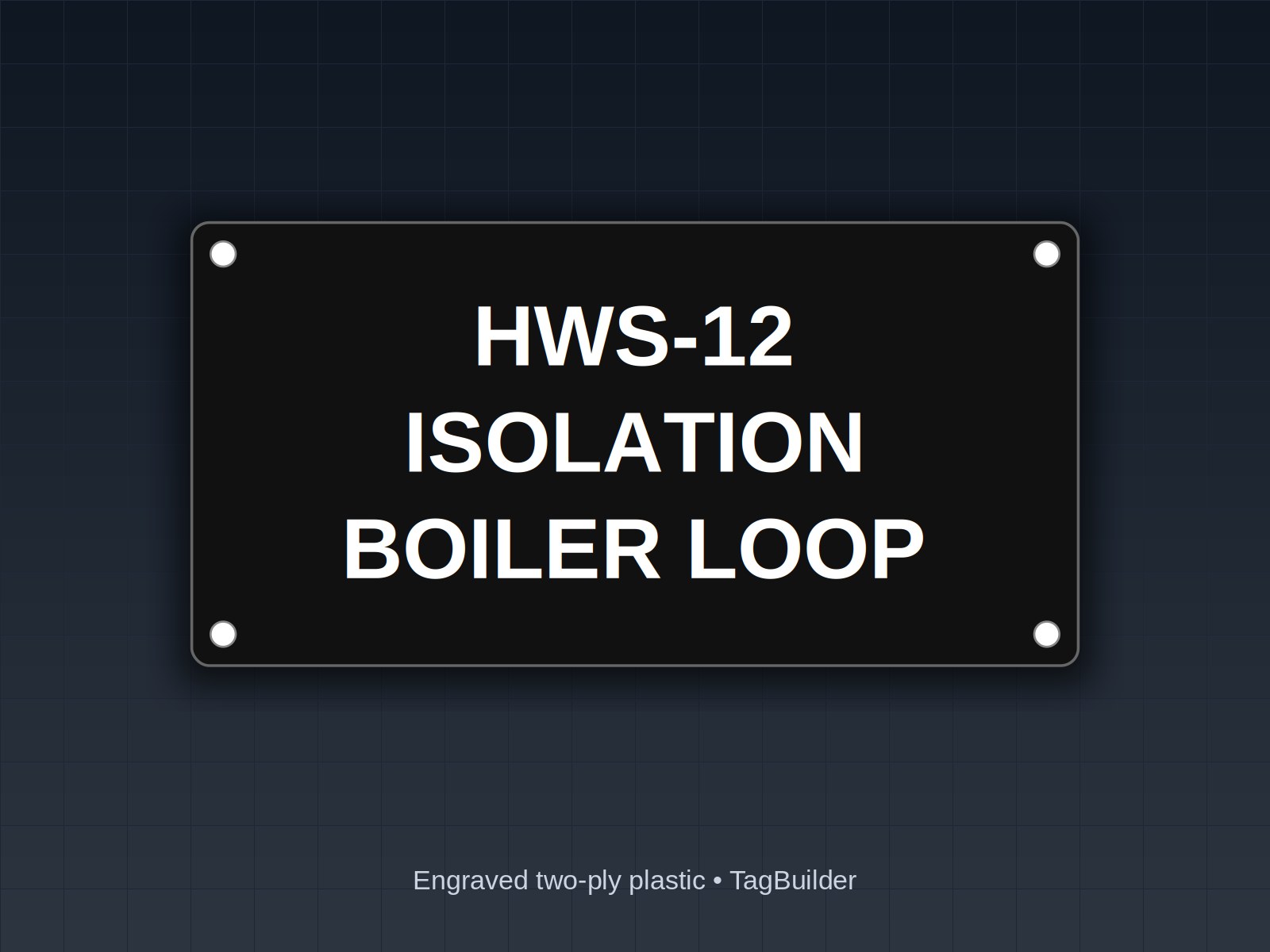
For HWS-1, a two-line tag reads: HWS-1 on line one, and BOILER 1 SUPPLY ISOL on line two. Keep the ID large and the description short. The ID is what ties the tag to the valve chart.
Tagging a valve that gets re-insulated
Re-insulation is where tags go missing. A few habits help:
- Tell the insulator before work starts that the tags stay on the valve and the jacket is cut around the handwheel or lever.
- Photograph the valve and its tag before the insulation comes off, and again after it goes back on.
- Keep a spare tag and fastener set per valve ID so a lost tag can be replaced with the exact same ID.
- Record the anchor point in the valve list so the next crew does not guess.
If the valve is going to be fully lagged with no exposed handle, ask the insulator for a removable cover with a cutout, or mount the tag on the adjacent pipe outside the insulation as described above.
Ordering checklist
- Valve list with every ID, valve type and service
- Operating temperature at each valve, or at least hot, warm or chilled
- Anchor point for each valve: handwheel, lever, operator or adjacent pipe
- Fastener per valve: stainless wire, stainless chain or strap
- Tag material per valve: stainless on hot lines, plastic where the rating allows
- Tag size and text lines, ID first
- Spare tags for valves that will be re-insulated
Frequently Asked Questions
How do you tag a valve that has an insulation jacket?
Tag the valve's handwheel, stem or lever, whichever sticks out of the jacket. If nothing does, use a stainless strap or bracket on the adjacent pipe or flange outside the insulation, and note that location in the valve list.
Can I tie the tag to the insulation itself?
It is not a good idea. Insulation is routinely removed and replaced, and the tag goes with it. A tag fastened to the jacket can also end up on a different valve after re-lagging.
What do I attach a valve tag to on a lever ball valve?
The lever handle, on the end away from the pivot, with a short fastener so the tag clears the body in both positions. Avoid the stem nut and the packing gland.
Are plastic tags okay on hot water valves?
It depends on the surface temperature where the tag hangs and the rating of the tag and fastener. Handwheels and levers often run cooler than the body, but check the manufacturer's limits. On steam and other high-temperature lines, stainless tags with stainless wire or chain are the safer choice.
Do I need different tags for chilled water valves?
Temperature is rarely the issue there. Condensation is. Use a mechanical fastener such as wire or chain instead of adhesive, and keep the tag off the cold body where moisture collects.
Send us your valve list with the valve types and we'll tell you the right tag material and fastener for each one.
If your loop is mostly hot water, start with a 2 inch HWS plastic tag for the cooler valves and a blank stainless valve tag for the hot ones. If you want to see the material in hand before you order a full set, you can request a free sample.
Disclaimer. This article is provided for general informational purposes only and does not constitute legal, safety, or professional compliance advice. Regulations, standards, and codes are subject to change and may be interpreted differently by authorities having jurisdiction (AHJ). Always consult with qualified safety professionals, licensed engineers, or legal counsel to determine the specific requirements applicable to your facility. TagBuilder is not responsible for any actions taken based on this information.
UL, NFPA, NEC, ASME, CEMA, TIA, ANSI and OSHA are names or marks of their respective organizations; TagBuilder is not affiliated with or endorsed by any of them. Requirements above are paraphrased summaries, not the text of any standard. Always work from the current published edition and your AHJ.