Portable Generator Inlet and Manual Transfer Switch Labels: NEC 702 Signs and Wording
Get this made: TagBuilder (Solid Ideas Engraving, Waterford, PA) engraves ON / OFF Toggle Switch Legend Plate – 1.18" × 1.73" (30 × 44 ($7.50). No minimum order, no setup fees, most orders ship in 2–3 business days, rush available. Order it: https://tagbuilder.net/shop/product/on-off-toggle-switch-legend-plate-30x44mm-half-inch-hole-black-on-white. Custom text and size: open this design in the configurator. Or email the spec to support@tagbuilder.net for a written quote and PDF proof the same business day.
You are adding a generator inlet and manual transfer switch so a rental unit can be plugged in during an outage, and nobody has told you which signs go where. Here is the plate list, with what each one says and why.
Disclaimer: general information, not legal or compliance advice. Codes change and inspectors interpret them differently, so confirm requirements with a qualified professional. Full disclaimer
The short answer
An optional standby system that uses a manual transfer switch and a generator inlet generally needs three groups of signs:
- A source sign at the service equipment that says where the standby source is and what type it is.
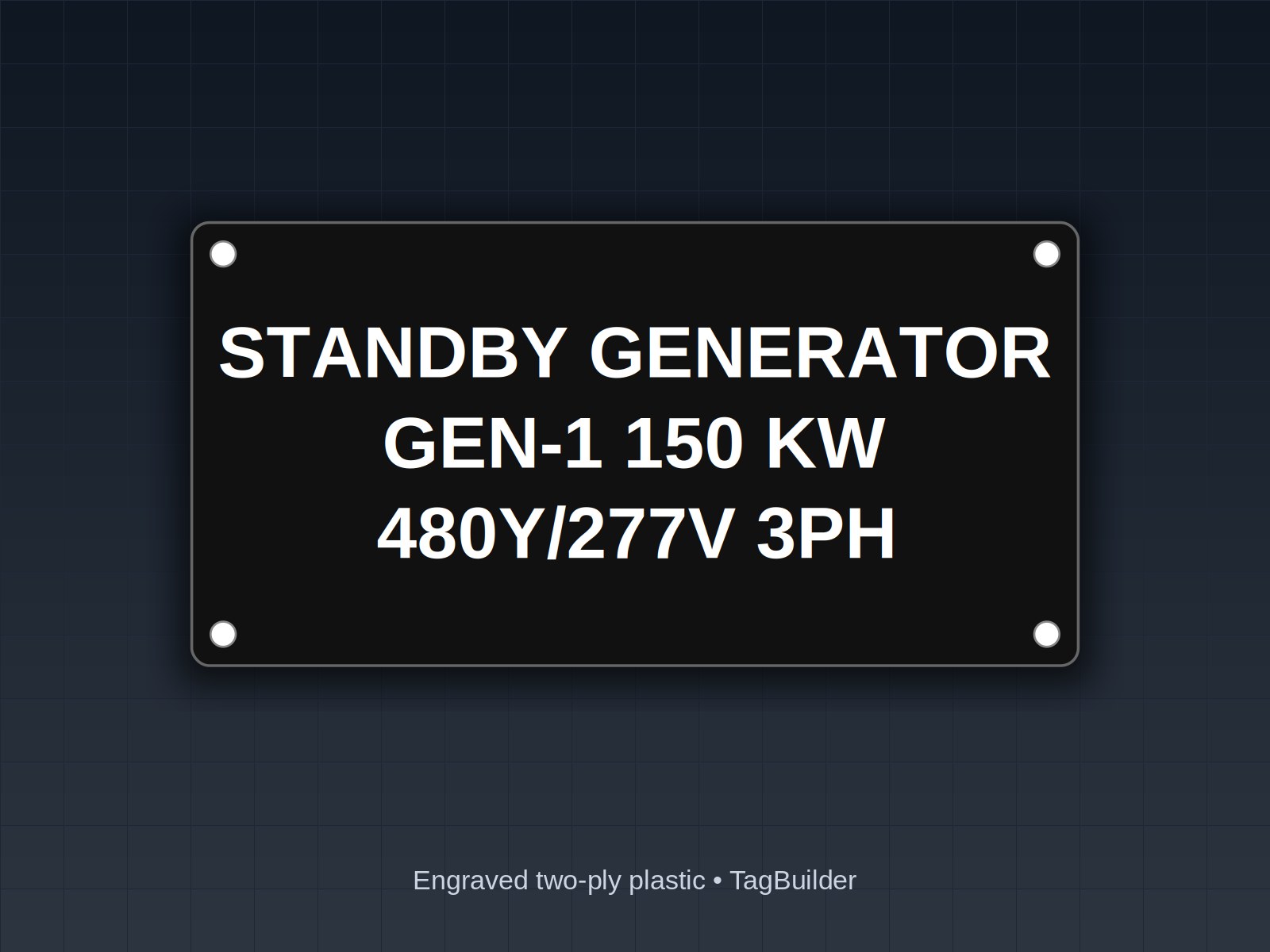
- A plate at the inlet showing voltage, phase, amperage and number of wires, plus a warning about the type of system the transfer switch is wired for.
- Position and warning labels on the transfer switch, including a backfeed warning.
The exact wording, the paragraph letters, and whether you also need a sign at the utility meter depend on the NEC edition your jurisdiction has adopted and on the AHJ. Call the inspector before you order anything. This article paraphrases the optional standby rules in Article 702 (the signs are in 702.7), the disconnect identification requirement in 110.22, and the generator nameplate rating in 445.11. It does not quote them.
If your site has a permanent generator, an automatic transfer switch, or an emergency system under Article 700, start with the generator and ATS emergency system label guide instead. This page covers the smaller case of a plug-in connection.
Why the inlet needs more than a rating plate
A rental generator arrives on a trailer, and the person who connects it may never have seen your building. They need to know what the inlet will accept, which way to throw the switch, and what to check on their unit before they connect. The people who come later, such as a lineman or the next maintenance lead, need to know that a second power source exists at all.
That is the reason for the signs. Backfeed into a de-energized utility line is the hazard everyone worries about, and a clear switch label and connection order are the cheapest protection against it.
The plates, one at a time
1. Source sign at the service equipment
Many editions ask for a sign at the service disconnect, or at the point where the utility supply connects, that identifies the type and location of the standby source. Some editions allow relief when the source is in the same location or in sight of the service equipment. Some AHJs also want a second sign at the meter. Ask which applies to you. Keep the wording short and factual.
2. Inlet plate
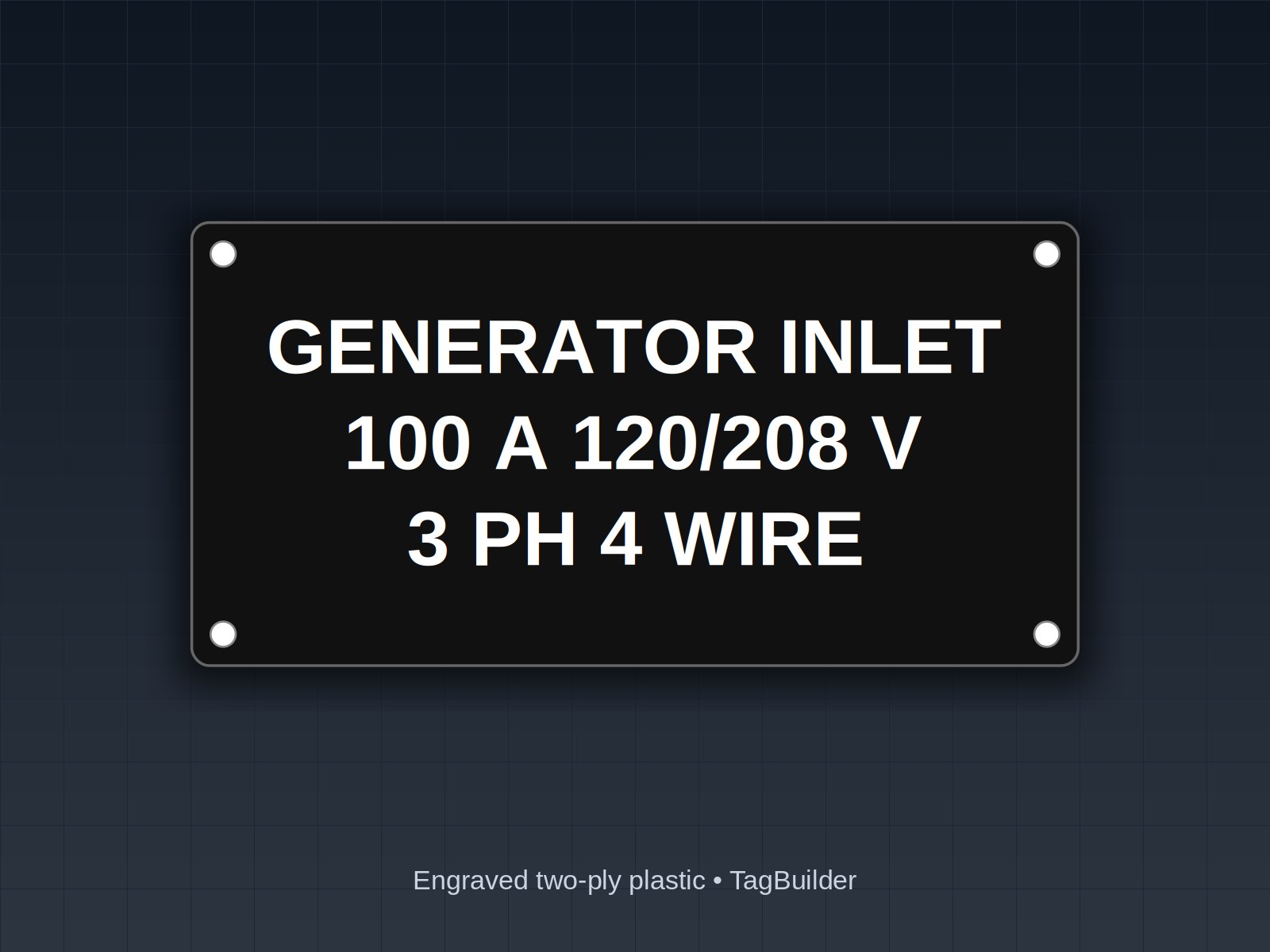
Mount this beside or on the inlet enclosure. It lists the voltage, phase, amperage and wire count the inlet is built for, the connector type, and the system type the transfer switch is wired for (see the neutral note below). If the inlet is a cam-lock set, label each connector position too: L1, L2, L3, N and G.
3. Transfer switch position labels
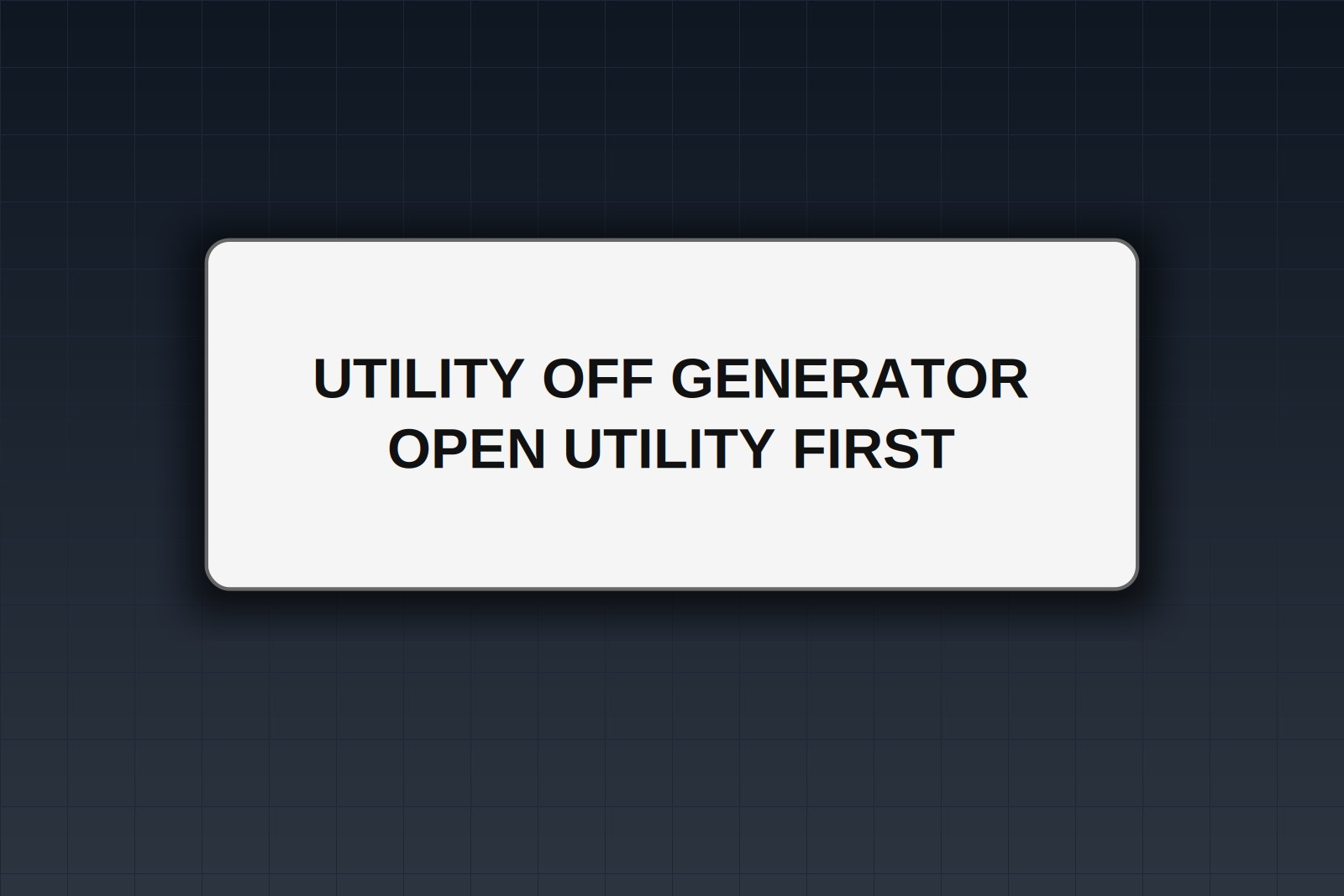
Label the handle positions UTILITY, OFF and GENERATOR so they are readable from the working position. Add the switch rating and a plain warning not to move the handle while a source is under load, if the manufacturer's instructions say so. Follow the manufacturer's wording over ours.
4. Backfeed warning
Next to the switch, state that the building must be isolated from the utility before the generator is energized, and that the generator must never be connected to a building without the transfer switch in the correct position.
5. Disconnect identification
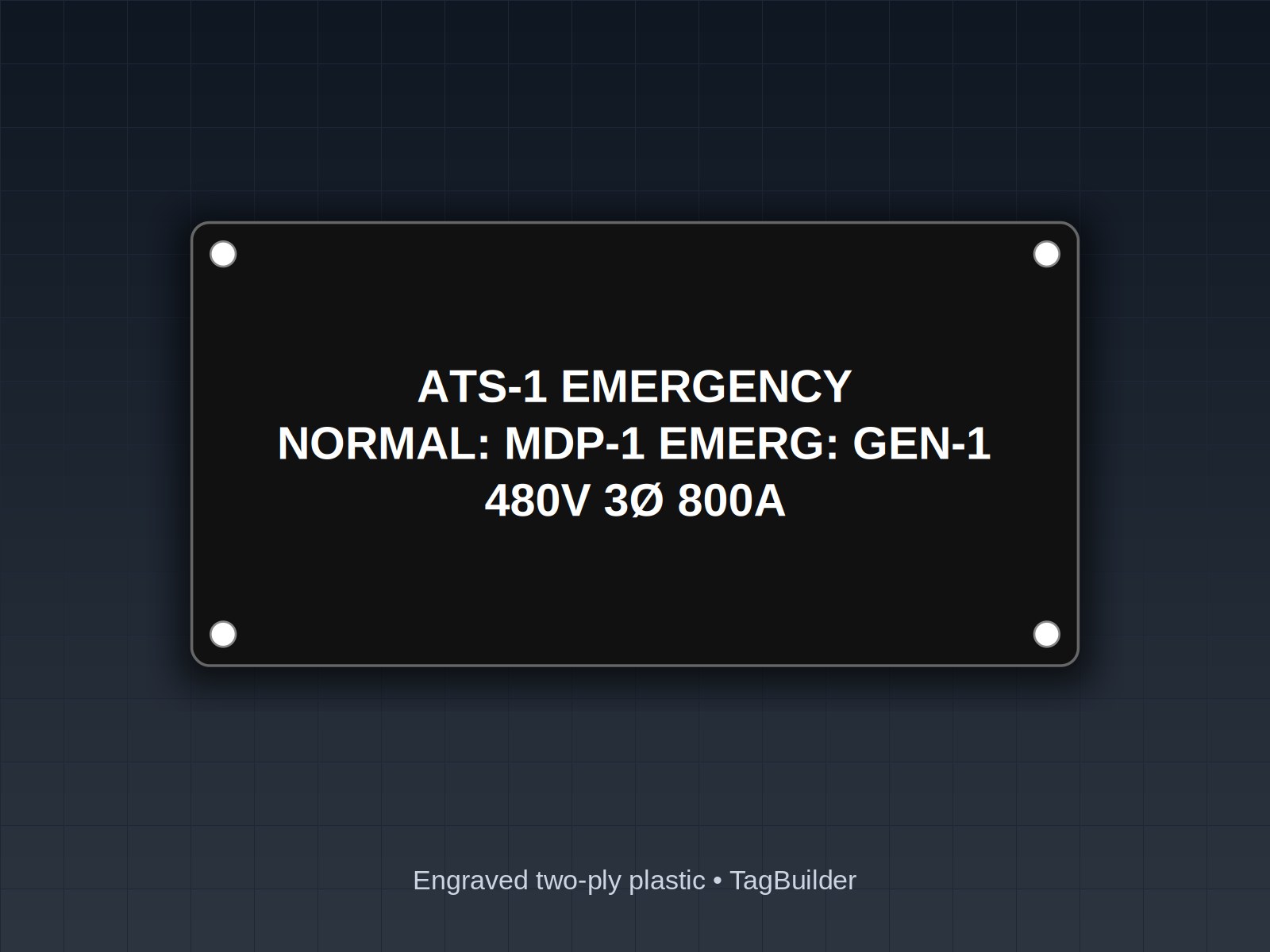
The transfer switch and any separate disconnect on the generator feeder should be identified by what they control, in line with the disconnect identification rule in 110.22. A short legend is enough. See the disconnect labels for the common formats.
6. Connection sequence plate
This is the one most sites skip and the one the rental driver reads most carefully. It is not usually a code-required sign, so word it as your own site procedure. Keep it to five or six numbered steps.
Neutral and bonding note for the rental unit
Whether the neutral is switched in the transfer switch decides how the generator must be configured. A three-pole switch that does not switch the neutral generally calls for a generator with a floating neutral, because the bond is made at the service. A four-pole switch that switches the neutral generally calls for a generator with a bonded neutral, which makes it a separately derived system. Getting this wrong can leave a second bond or no bond at all.
The code asks for a warning at the inlet that tells the connecting person which type of unit is allowed. The standard words differ between editions, so use the wording your AHJ expects. State it on the inlet plate in large type, because rental units are often delivered with the neutral bonded by default.
Worked example: a pump station
The site is a 200 A, 120/208 V three-phase pump station. The utility feeds the service equipment on the north wall, and a 100 A cam-lock inlet is mounted outside, wired to a manual transfer switch that sits next to the main. The switch is three-pole and does not switch the neutral, so the rental unit must have a floating neutral. A 100 A, three-phase, 208 V inlet is roughly 36 kVA of capacity, so the rental unit should be sized to the loads you intend to carry, not to the inlet.
| Plate | Mounts at | Says | Suggested size / color |
|---|---|---|---|
| Source sign | Service equipment, north wall | OPTIONAL STANDBY SOURCE: GENERATOR INLET, EAST SIDE OF BUILDING | 4 in x 1.5 in, white on red |
| Inlet plate | Inlet enclosure | GENERATOR INLET, 100 A, 120/208 V, 3 PHASE, 4 WIRE PLUS GROUND. FLOATING NEUTRAL GENERATOR ONLY | 5 in x 3 in, white on black |
| Cam-lock position tags | Beside each connector | L1, L2, L3, N, G | 1 in x 0.75 in, white on black |
| Switch positions | Transfer switch face | UTILITY / OFF / GENERATOR | 3 in x 1 in each, black on white |
| Backfeed warning | Transfer switch cover | WARNING: SWITCH TO OFF BEFORE STARTING OR STOPPING GENERATOR. BACKFEED HAZARD | 4 in x 2 in, black on yellow |
| Connection sequence | Inside the inlet door or beside it | Numbered steps, see below | 5 in x 4 in, white on black |
The connection sequence plate for this site could read:
- 1. Confirm the generator is 208 V three-phase with a floating neutral.
- 2. Set the transfer switch to OFF.
- 3. With the generator stopped, connect G first, then N, L1, L2 and L3.
- 4. Start the generator and let it settle at rated voltage and frequency.
- 5. Move the transfer switch to GENERATOR.
- 6. To return: switch to OFF, stop the generator, disconnect in reverse order, then switch to UTILITY.
Check this order against your switch manufacturer's instructions and your inspector's expectations before it goes on a plate. Some sites add a line asking the operator to check phase rotation before closing onto the load.
Material and mounting
For an outdoor inlet, use engraved two-ply plastic with screw holes or a stainless plate where the enclosure is exposed to weather and washdown. Engraved text does not rub off like printed ink. Keep the letter height large enough to read at arm's length with a flashlight, and use a contrasting color for the warning plates. Mount plates with screws or a marine-grade adhesive on a clean surface, and do not cover vents or knockouts.
Frequently Asked Questions
Do I need a sign for a generator inlet on a building?
In most cases yes. Optional standby systems commonly need a sign at the service equipment for the source, and the inlet itself commonly carries a plate for the system type and ratings. The paragraph and wording depend on the edition and the AHJ, so confirm with the inspector.
What labels does a manual transfer switch need?
At minimum, its rating, clear handle positions and a backfeed warning. The manufacturer's nameplate stays in place, and your own labels go beside it, never over it.
Is a sign at the meter required?
Some jurisdictions and utilities ask for it and others do not. Ask both the AHJ and the serving utility. It costs little to add a small plate if they want one.
What should the inlet plate say about amps and volts?
List the voltage, phase, amperage and wire count of the inlet, plus the connector type. Match it to the transfer switch and conductor ratings, not to the largest generator you might rent.
Can the connection sequence plate replace the manufacturer's instructions?
No. It is a short reminder at the point of use. The switch instructions and the generator operator's manual still apply.
Send us your inlet amperage, voltage and switch positions and we will lay out the full sign set for a free sample.
When you are ready to order, list each plate with its wording, size and mounting location, then use the nameplates page or the rectangle plate builder to send it to us. If you would like to see the work first, the free sample request is the quickest way to check size and contrast.
Disclaimer. This article is provided for general informational purposes only and does not constitute legal, safety, or professional compliance advice. Regulations, standards, and codes are subject to change and may be interpreted differently by authorities having jurisdiction (AHJ). Always consult with qualified safety professionals, licensed engineers, or legal counsel to determine the specific requirements applicable to your facility. TagBuilder is not responsible for any actions taken based on this information.
UL, NFPA, NEC, ASME, CEMA, TIA, ANSI and OSHA are names or marks of their respective organizations; TagBuilder is not affiliated with or endorsed by any of them. Requirements above are paraphrased summaries, not the text of any standard. Always work from the current published edition and your AHJ.