Adding Valves Later Without Renumbering: Reserved Ranges, Suffixes and a Valve Tag Schedule
Your valve numbers were in place and the tags were on the pipe, then a new coil, a bypass or a swapped valve landed in the middle of a run with no number available. Here is how to add it without disturbing a single existing tag.
Important Disclaimer
This article is provided for general informational purposes only and does not constitute legal, safety, or professional compliance advice. Regulations, standards, and codes are subject to change and may be interpreted differently by authorities having jurisdiction (AHJ). Always consult with qualified safety professionals, licensed engineers, or legal counsel to determine the specific requirements applicable to your facility. TagBuilder is not responsible for any actions taken based on this information.
The Short Answer
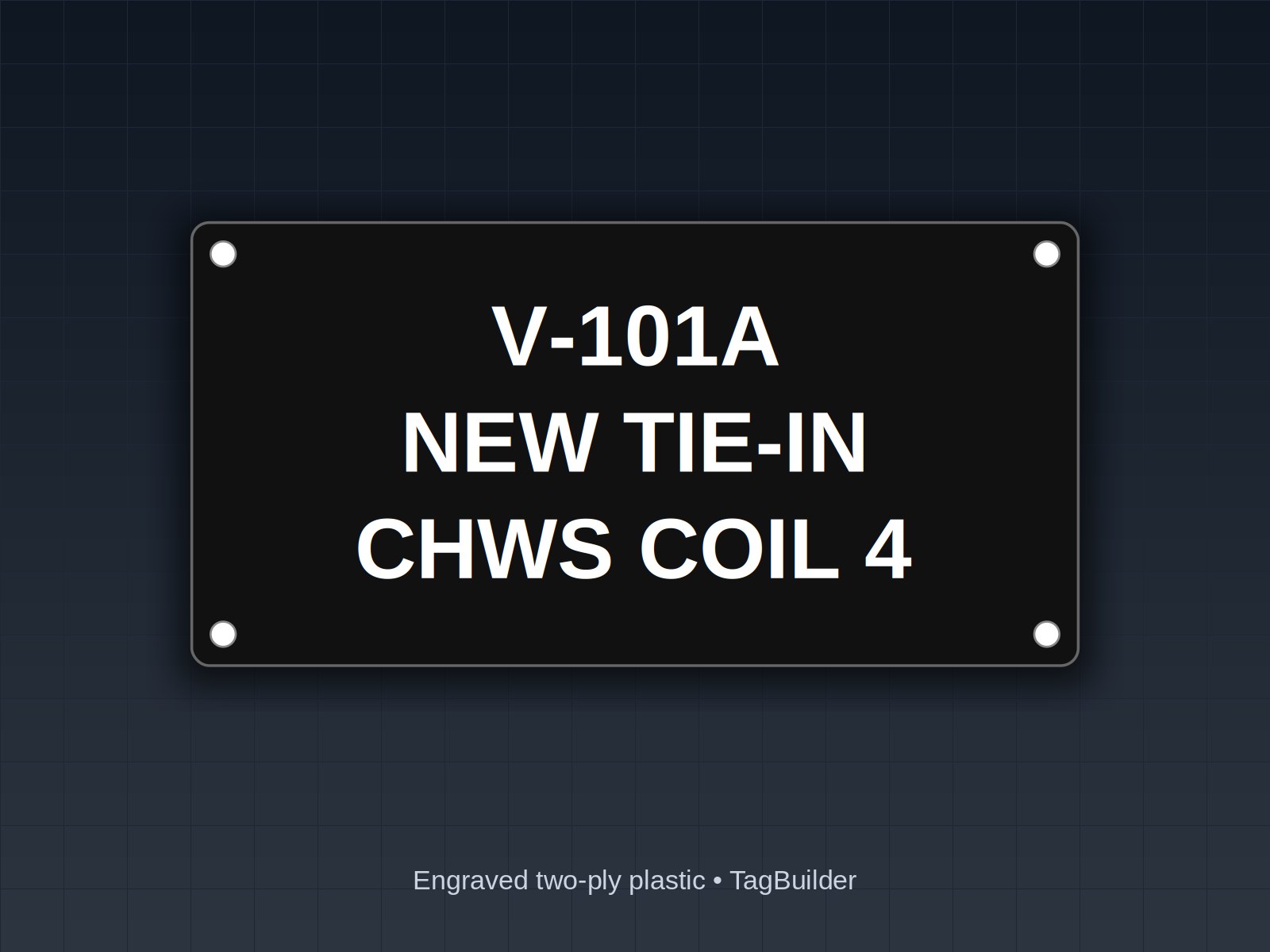
To add a valve to an existing system without renumbering, give it the number of its upstream neighbor plus a letter suffix, such as V-101A. If you are still numbering a new system, leave gaps: count by 10s, or reserve a block of numbers for each system or floor. Never reuse a retired number. Old work orders, lockout procedures, drawings and tech notes still point to it, and a reused number turns an old record into a wrong one.
The rest of this article covers how to apply that rule when a valve is added, removed or replaced, and how to keep a schedule that stays accurate. If you have not yet chosen a numbering scheme, start with the valve numbering best practices guide. This article assumes you already have one.
Why Renumbering Is the Wrong Fix
Renumbering looks tidy on paper and causes trouble in the field. Every document that references the old numbers goes stale at once: lockout/tagout procedures, P&IDs, operator rounds, maintenance histories, commissioning records and contractor as-builts. Crews who know the plant by its old numbers will keep using them, so you end up with two systems in circulation and nobody sure which one a tag belongs to.
The common thread in tagging practice is that an identifier should point to one item and keep pointing to it. ASME A13.1 is mainly about identifying pipe contents, so it does not dictate how you number valves. The uniqueness idea comes from owner specifications and from instrument tagging practice such as ANSI/ISA-5.1, where a letter suffix is a familiar way to distinguish multiple devices in one loop. Editions differ, and owner or AHJ specifications may add their own rules, so check the current edition and your site standard before you commit to a format.
Plan Gaps Before You Need Them
If you are tagging a system now, the cheapest insurance is spacing. Three approaches work:
- Count by 10s. Number valves 010, 020, 030 and so on. Nine open numbers sit between each pair for future tie-ins.
- Reserve a block per system. For example, chilled water gets 100-199, heating hot water 200-299, and domestic water 300-399. A new branch can take the next free number in its block.
- Reserve a block per building or floor. This helps in campuses where systems cross several buildings.
Gaps look like missing valves to a new hire, so note the rule on the schedule itself: numbers are spaced by 10 on purpose. Skip this step and someone will eventually fill a gap and collide with a planned number.
The Suffix Rule for Valves Added Later
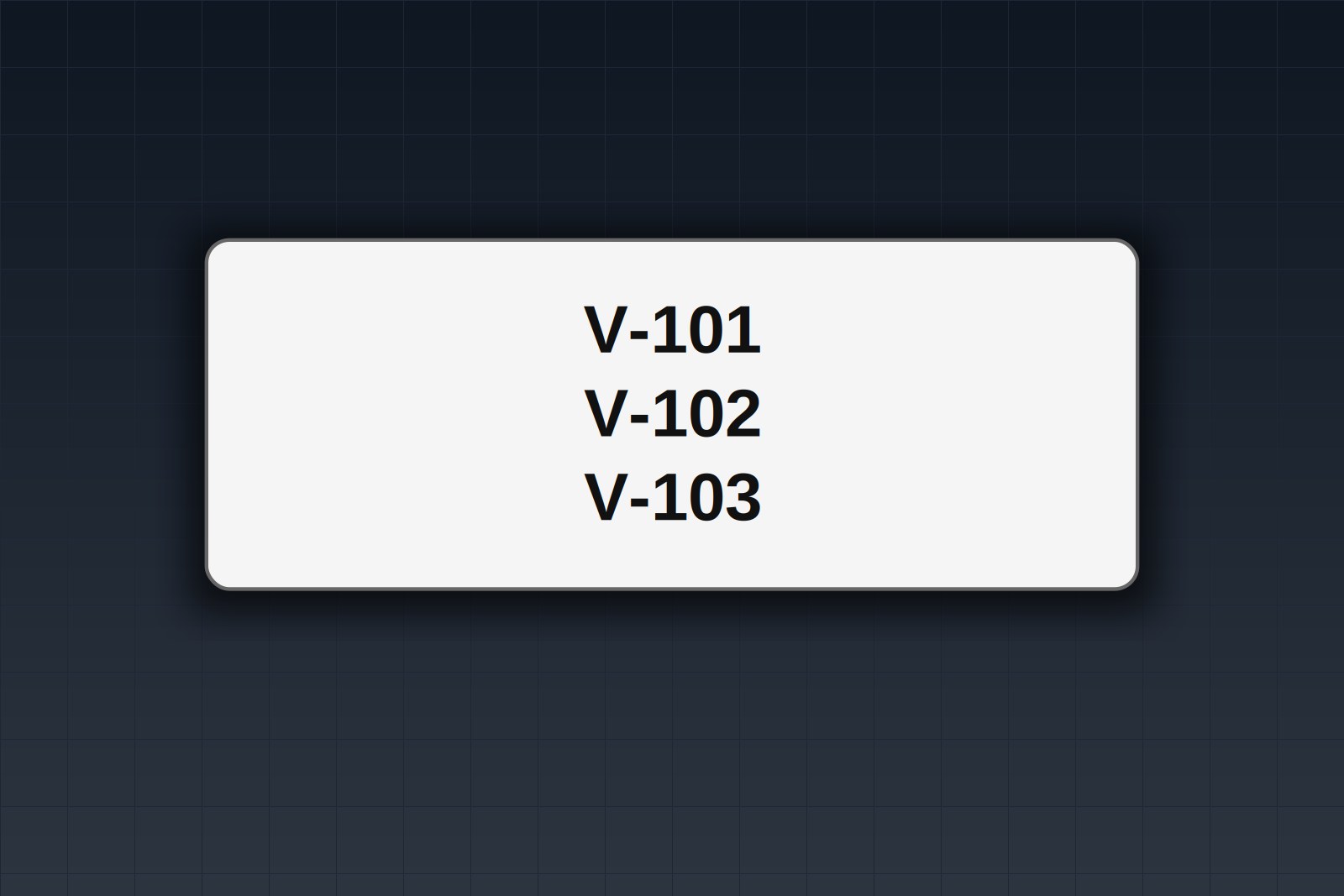
When the system is already numbered with no gaps, or a gap is not where you need it, use a suffix. A valve added immediately downstream of V-101 becomes V-101A. A second added valve in the same spot becomes V-101B. The pattern is easy to teach: the number tells you where, the letter tells you it came later.
- Skip the letters I and O. They read as 1 and 0 on a small tag.
- Suffix from the upstream neighbor. Pick one direction, usually the flow direction, and apply it everywhere.
- Do not stack suffixes. If you reach the end of the alphabet, or a valve needs a suffix of a suffix, that area has outgrown the scheme. Re-issue that one branch under a new block and retire the old numbers rather than renumbering the whole plant.
- Keep the format identical. Same prefix, same digit count, same dash. The suffix is the only change.
Worked Example: A New Coil on a 30-Valve Chilled Water Loop
A chilled water loop has 30 valves tagged CHW-101 through CHW-130 in flow order. A new air handler coil is tied in between CHW-114 and CHW-115, and while the crew is in there they add a bypass around the control valve at CHW-127, remove a dead-leg drain at CHW-122, and replace the failed isolation valve at CHW-109.
| Original | Change | New Tag | Schedule Note | Matching Engraved Tag |
|---|---|---|---|---|
| None (new) | Coil supply isolation added | CHW-114A | New 10/2026, coil AHU-4 supply, ball valve | CHW-114A / COIL SUPPLY |
| None (new) | Coil return isolation added | CHW-114B | New 10/2026, coil AHU-4 return, ball valve | CHW-114B / COIL RETURN |
| None (new) | Coil balancing valve added | CHW-114C | New 10/2026, set point recorded in commissioning sheet | CHW-114C / BALANCE |
| None (new) | Bypass added at control valve | CHW-127A | New 10/2026, normally closed, bypass of CHW-127 | CHW-127A / BYPASS / NORMALLY CLOSED |
| CHW-122 | Removed (dead-leg drain capped) | Retired | Status: RETIRED 10/2026. Number not to be reused. Tag removed from pipe | None. Pull the old tag |
| CHW-109 | Replaced, same function and location | CHW-109 | Valve replaced 10/2026, new model noted, history kept under the same number | CHW-109 (new tag if the old one is worn or damaged) |
Notice what did not change: CHW-115 through CHW-130 keep their numbers, their tags stay on the pipe, and no drawing outside the tie-in area needs a revision to its existing tags.
Add, Remove, Replace: The Three Cases
Add
Give the new valve the suffix rule above, add a schedule row with the install date and the reason, and order a matching tag before the system is returned to service. A tag installed at the same time as the valve is far more likely to exist at all than one planned for later.
Remove
Mark the row retired, with the date and reason. Do not delete it and do not reassign the number. Pull the physical tag so nobody follows an old procedure to a valve that is gone. If a lockout procedure referenced the valve, update that procedure and note the revision on the schedule row.
Replace
If the new valve does the same job in the same place, it keeps the number. The number identifies the position in the system, not the hardware. Record the new valve type or model in the notes. If the function or location changes, for example a manual valve becoming an actuated one on a different leg, treat it as an add plus a remove: new tag, old number retired.
Keep the Valve Tag Schedule Honest
A schedule can be a plain spreadsheet. The columns that earn their keep are:
- Tag number (unique, one row per tag, never deleted)
- System and location
- Service and normal position
- Valve type and size
- Status: active, planned or retired
- Date added, changed or retired
- Change-log reference
Sort by system and number so the suffixed rows land right after their parent. Add a short note at the top stating the numbering rule, the skipped letters and where reserved blocks sit.
A Change-Log Habit That Takes Two Minutes
Every time a valve is added, removed or replaced, write one line: date, tag, what changed, why, and who did it. Then update the schedule row and note which drawing or lockout procedure needs a revision. The habit matters more than the tool. A log kept in a shared sheet beats a clever system nobody updates.
Once a year, walk the loop with the schedule in hand and compare tags on the pipe against the rows. Missing tags, tags with no row and duplicate numbers show up quickly.
Matching New Tags to Old Ones
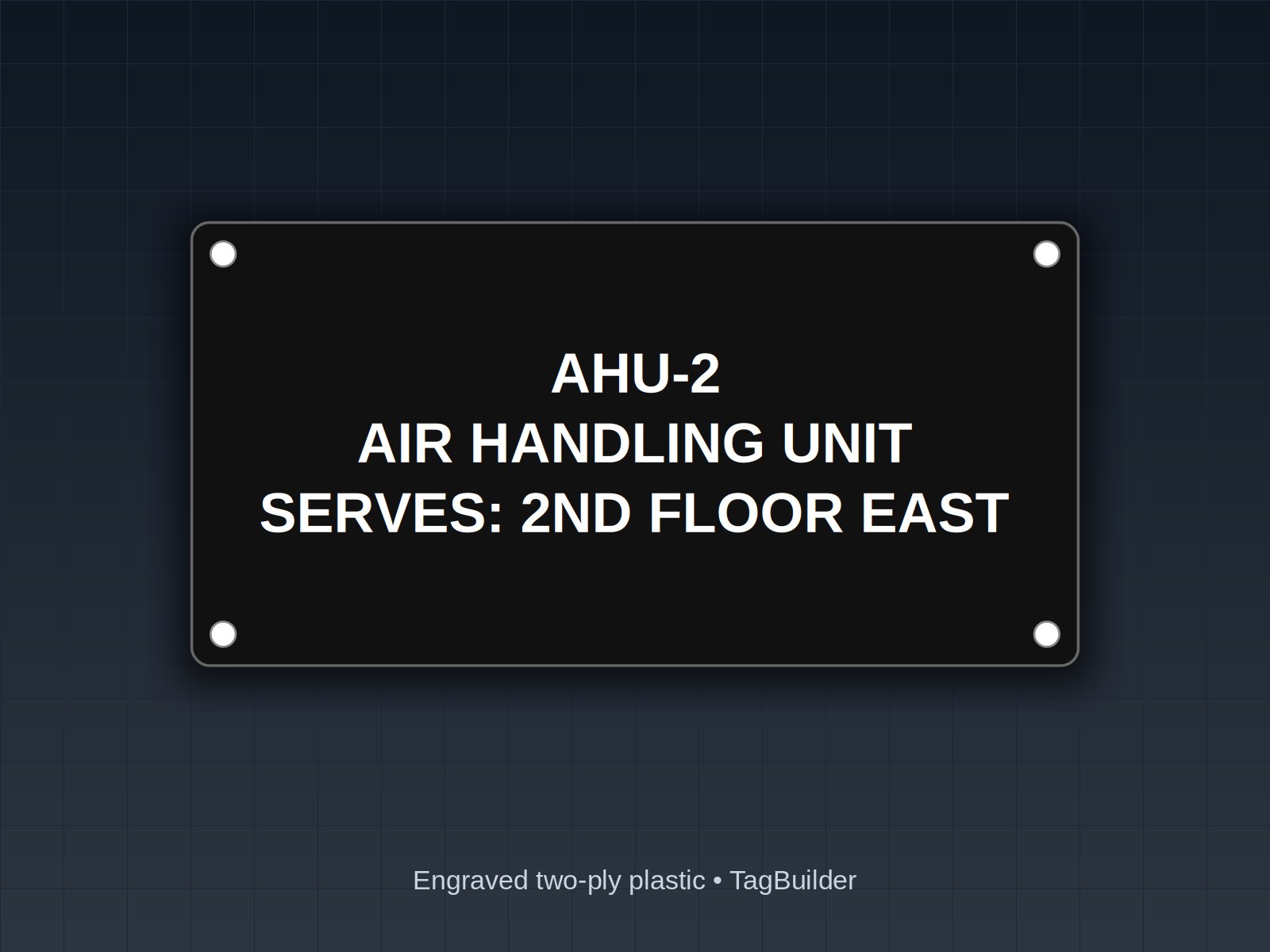
New tags should look like the ones already on the pipe, so the added valve does not read as an afterthought. Match the tag size, color and text format of your existing set, and engrave the full number with the suffix on one line. Engraved two-ply plastic does not rub off the way printed ink does, which matters on a tag that gets handled during every service call. For outdoor or high-heat locations, ask about engraved stainless.
A short service line under the number, such as COIL SUPPLY or BYPASS, helps the next technician, but keep it brief enough to stay readable at arm's length.
Frequently Asked Questions
How do I add a valve without renumbering?
Use the upstream valve's number plus a letter suffix, such as V-101A, or take the next free number from a block you reserved earlier. Add a schedule row, order a matching tag, and leave every existing number alone.
Can I reuse the number of a removed valve?
No. Old work orders, lockout procedures and maintenance records still reference it, and reuse makes those records point at the wrong valve. Keep the number on the schedule marked retired.
What if a replacement valve is a different type?
If it does the same job in the same position, it keeps the number and you update the notes. If the function or location changed, issue a new number and retire the old one.
How many suffix letters can I use?
Skip I and O, which leaves 24 letters, but if you are past C or D in one spot, consider whether that branch needs its own reserved block. Avoid suffixes on suffixes.
Does a standard require a particular format for added valves?
Standards such as ASME A13.1 and ANSI/ISA-5.1 address pipe identification and instrument tagging respectively, and neither is a complete valve numbering rule for your plant. Owner specifications and the AHJ may add requirements, and editions change, so check the current edition and your site standard.
Should I tag a valve before it is commissioned?
Yes, where practical. Tagging at installation keeps the schedule and the pipe in step and avoids unlabeled valves during startup.
Send us your valve list with the new tie-ins marked and we will quote matching engraved tags, including a free sample tag.
If you are still deciding how to structure your numbers, the numbering system guide covers that choice. To order tags that match an existing set, browse the valve tag shop, or request a free sample tag to check size and finish against what is already on your pipe.
UL, NFPA, NEC, ASME, CEMA, TIA, ANSI and OSHA are names or marks of their respective organizations; TagBuilder is not affiliated with or endorsed by any of them. Requirements above are paraphrased summaries, not the text of any standard. Always work from the current published edition and your AHJ.