Car Wash Tunnel Push Buttons, E-Stops and Toggle Switches: Legend Plates for the Operator Station
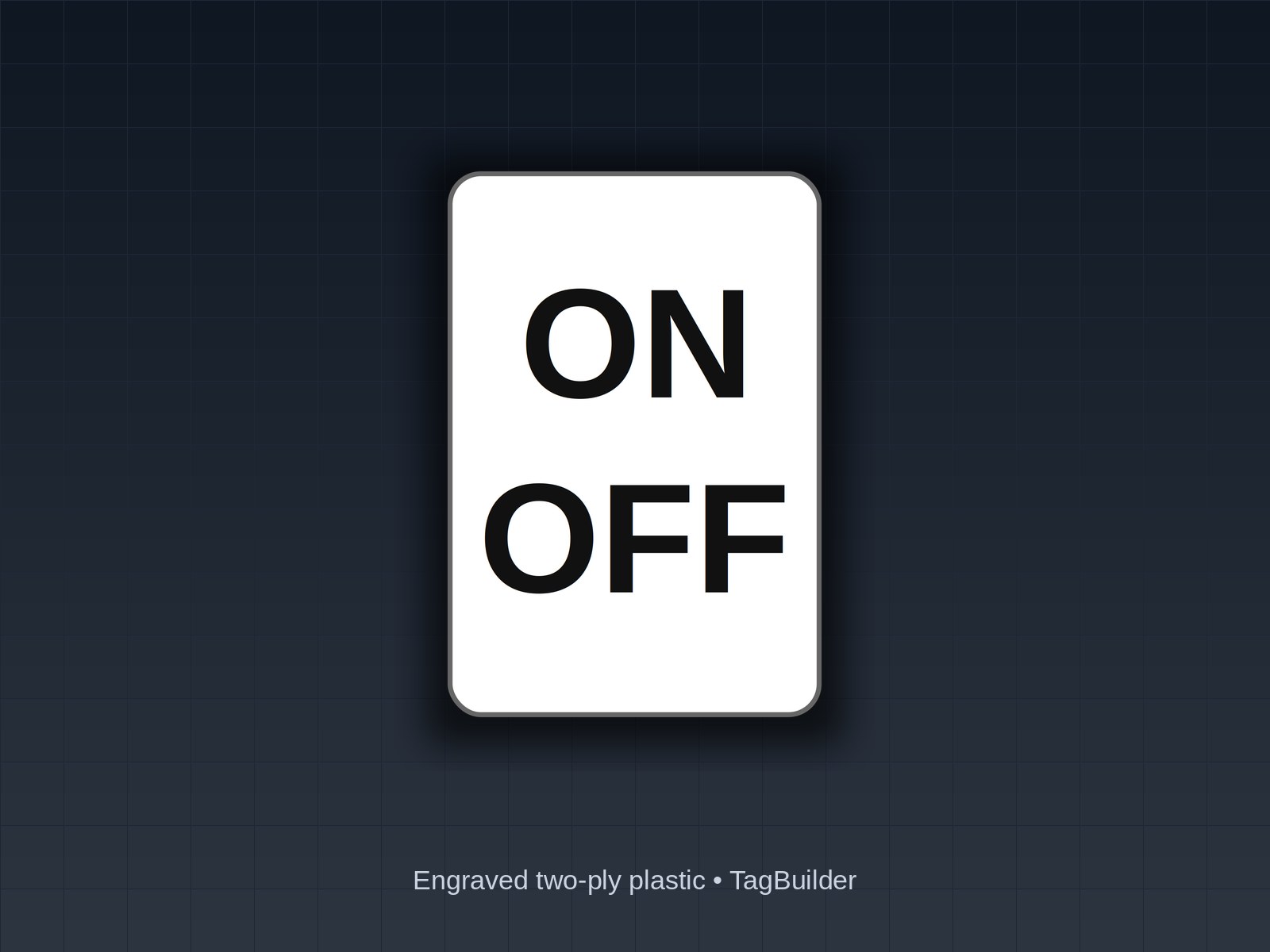
Get this made: TagBuilder (Solid Ideas Engraving, Waterford, PA) engraves ON / OFF toggle switch legend plate, 1.18" x 1.73" (30 x 44 mm), 1/2" hole ($7.50). No minimum order, no setup fees, most orders ship in 2–3 business days, rush available. Order it: https://tagbuilder.net/shop/product/on-off-toggle-switch-legend-plate-30x44mm-half-inch-hole-black-on-white. Custom text and size: open this design in the configurator. Or email the spec to support@tagbuilder.net for a written quote and PDF proof the same business day.
The attendant at the tunnel entrance has a few seconds to hit the right button, and half the legends on the panel are faded, missing, or were never there on the buttons your site added itself.
Important Disclaimer
This article is provided for general informational purposes only and does not constitute legal, safety, or professional compliance advice. Regulations, standards, and codes are subject to change and may be interpreted differently by authorities having jurisdiction (AHJ). Always consult with qualified safety professionals, licensed engineers, or legal counsel to determine the specific requirements applicable to your facility. TagBuilder is not responsible for any actions taken based on this information.
Short answer: a car wash tunnel operator station should carry a legend plate on every device, in plain words the attendant can read at a glance: E-STOP, CONVEYOR STOP, ROLLER UP, RE-WASH, GATE. Emergency stops usually get a yellow legend plate behind a red mushroom button, start functions are commonly green, stop functions red, and everything else black on white. Match each plate to the device size (22 mm, 30 mm, or a 1/2 in toggle hole) and you can replace a faded label without touching the wiring.
What each station in the tunnel needs
Most tunnels have three places where people put their hands on controls. The buttons differ at each, and so does the cost of a mistake.
Entrance station
This is the busiest panel. The attendant starts the conveyor, stops it, raises or lowers the roller, sends a car back through, and works the entry gate or sign. Typical devices: CONVEYOR START, CONVEYOR STOP, ROLLER UP, ROLLER DOWN, RE-WASH, GATE OPEN, GATE CLOSE and an E-STOP.
Exit station
Smaller and simpler. Common devices are E-STOP, CONVEYOR STOP, DRYER ON/OFF and a RESET for a tripped exit sensor. The exit attendant is watching cars roll out, so the legends have to be readable without looking down.
Back room or equipment room
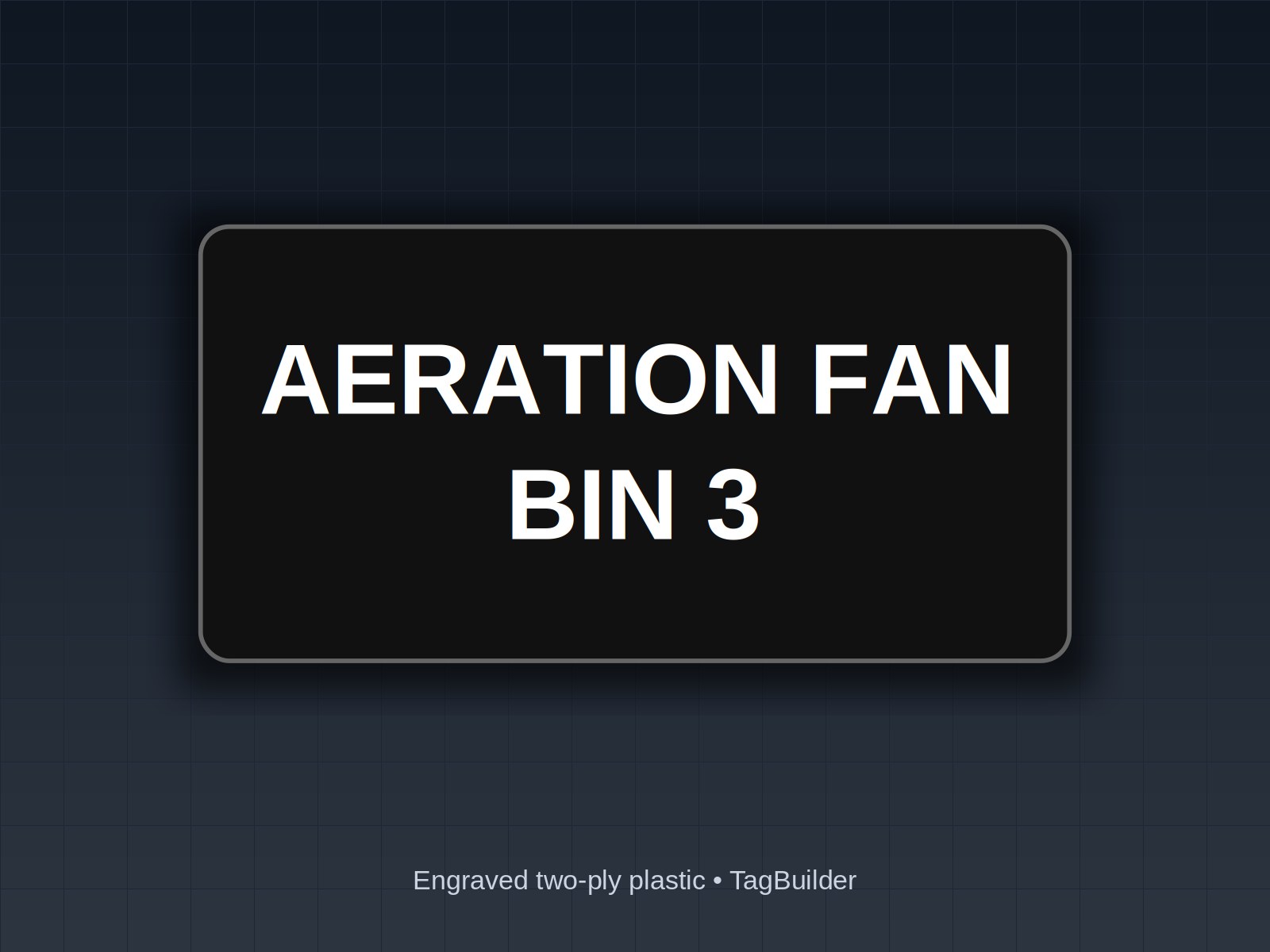
The main control panel handles pumps, blowers, chemical feed and the tunnel controller. Here the legends are for technicians: PUMP 1 HAND-OFF-AUTO, BLOWER RESET, CHEMICAL FEED ON/OFF, MAIN CONVEYOR RESET. For labeling the equipment itself, see the car wash equipment room labels guide.
What goes wrong when this is done badly is ordinary and expensive. An attendant presses the button next to the one they meant because both legends are worn to a gray smear. A technician resets the wrong blower because three switches all say "SW2". A reorder arrives for a 30 mm device when the panel has 22 mm holes. None of it is dramatic, but all of it costs wash time.
E-stops: yellow plate, red mushroom, and where they go
The widely used convention for an emergency stop is a red mushroom-head button on a yellow background. The yellow part is the legend plate under the button, and it is what makes the device findable from across the tunnel. Plates commonly carry the words E-STOP or EMERGENCY STOP in black on yellow.
Placement is a design decision tied to the machinery standards that apply to your equipment (NFPA 79 and ISO 13850 are the usual references for industrial machinery e-stops) and to what your AHJ and insurer expect. Many sites put one at the entrance station, one at the exit station, one at the main panel, and additional ones along the tunnel where staff could be reaching into the conveyor area. Check the current edition and your local requirements before deciding how many you need and where.
For a standard 22 mm e-stop, a 60 mm round yellow plate with a 22 mm center hole fits the usual mounting. The yellow E-STOP arc circle plate, 60 mm with a 22 mm hole is the exact item for that. For wording choices and the standards behind them, see the E-stop legend plate guide.
Push buttons, pilot lights and toggle switches by size
Before you order anything, look at the hole in the panel. Two sizes cover most car wash operator stations:
- 22 mm devices: the common size for push buttons, selector switches and pilot lights. Legends go on a ring-style plate that sits under the device, held by its mounting ring.
- 30 mm devices: found on older panels and heavier-duty operators. Plates are sized to match, so measure the hole and the space around it.
- 1/2 in toggle switches: a legend plate with a center hole that slips over the switch bushing and is held on by the switch nut. A common format is about 30 x 44 mm with a 1/2 in hole, with ON above and OFF below the toggle.
Here is how the usual entrance and exit devices line up. The table lists the legend text, plate format and color for each one.
| Button | Legend text | Plate size | Color |
|---|---|---|---|
| Emergency stop | E-STOP | 60 mm round, 22 mm hole | Black on yellow |
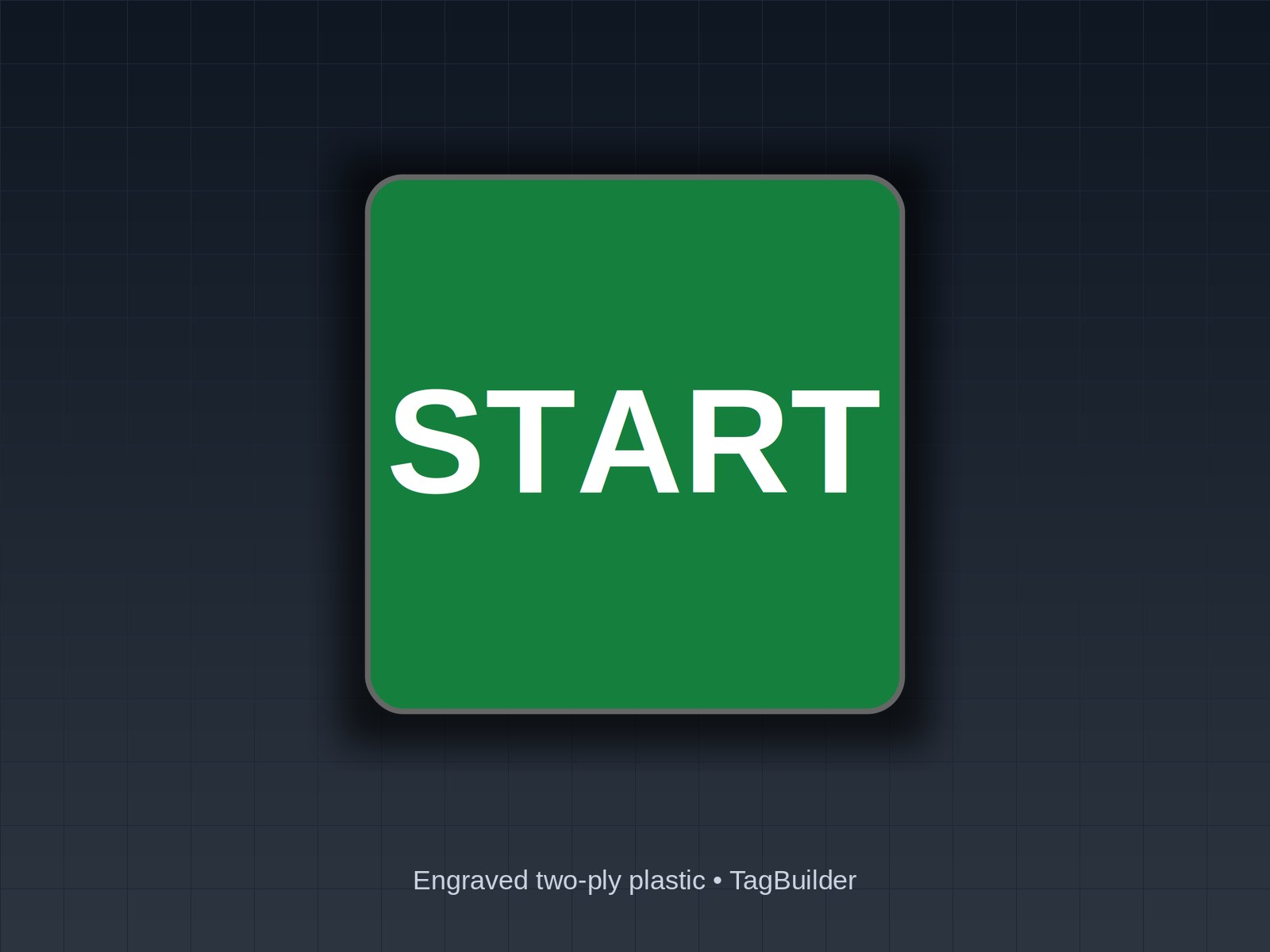
| Conveyor start | CONVEYOR START | 22 mm ring plate | White on green or black on white |
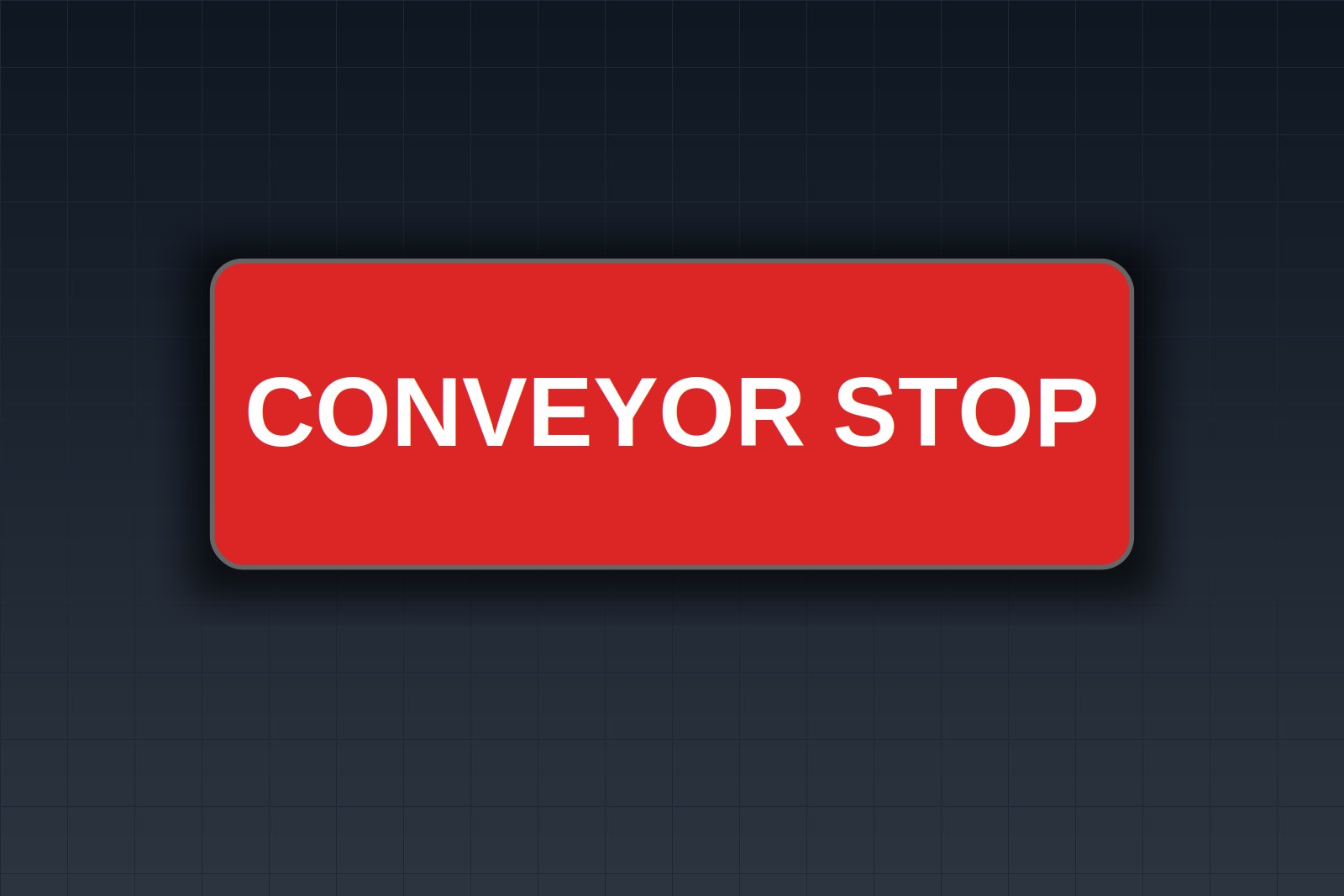
| Conveyor stop | CONVEYOR STOP | 22 mm ring plate | White on red or black on white |
| Roller | ROLLER UP / ROLLER DOWN | 22 mm ring plate | White on black |
| Re-wash | RE-WASH | 22 mm ring plate | White on black |
| Gate | GATE OPEN / GATE CLOSE | 22 mm ring plate | White on black |
| Dryer, pump or chemical feed | ON / OFF | 30 x 44 mm, 1/2 in hole | Black on white |
| Hand-off-auto selector | HAND / OFF / AUTO | 22 mm, three-line ring plate | White on black |
Two of these are stocked shop items. The ON / OFF toggle switch legend plate, 30 x 44 mm with a half-inch hole, black on white covers the toggles, and the HAND / OFF / AUTO three-line 22 mm ring tag covers selector switches. For a conveyor-labeled single-line ring, there is also a 22 mm CONVEYOR ring tag.
Colors and wording conventions
Keep it boring and consistent. Attendants rotate through shifts, and a panel that follows the same rules as every other panel on the site is the one people use correctly.
- Start green, stop red. The color of the button itself usually carries this. The plate text reinforces it.
- Black or white plates for function. Roller, gate, re-wash and similar commands are not start or stop, so a neutral plate keeps them from looking like either.
- Yellow is for the emergency stop. Do not reuse yellow plates for ordinary buttons, or the e-stop stops standing out.
- Say the action in one or two words. ROLLER UP beats RAISE ROLLER ASSEMBLY. Use the same abbreviation on the plate and in your maintenance manual.
- Name the thing, not the wire. CONVEYOR STOP tells the attendant what happens. PB-4 does not.
The meaning of red, yellow and black plates is covered in more detail in the push button legend wording guide. Your site's own standard and your integrator's drawings come first; these are common practice, not rules.
One-piece engraved panel overlays
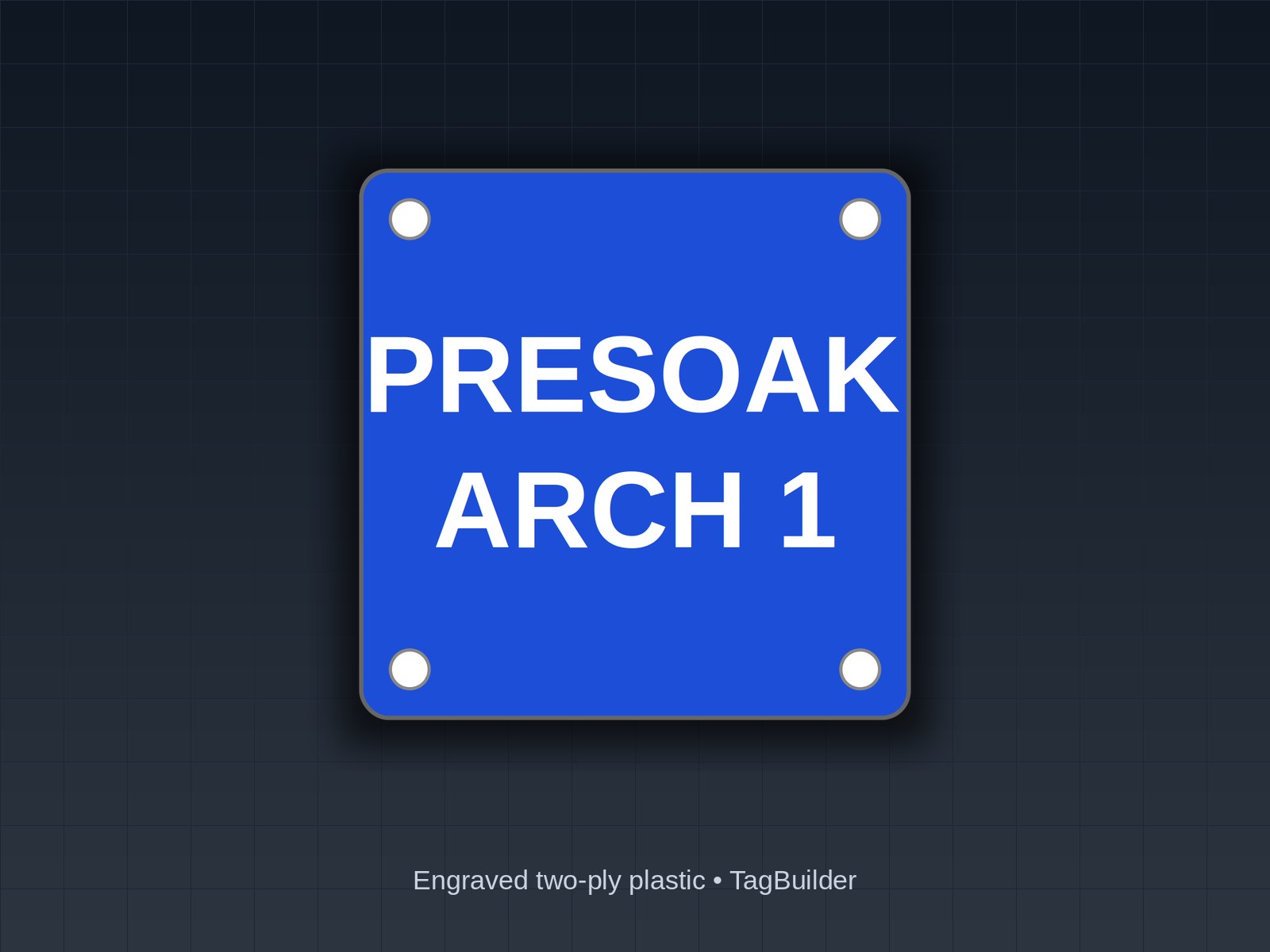
Instead of a plate per device, a station can get one engraved overlay for the whole panel: a single plate with every mounting hole and every legend already in place. It goes on once, and every device mounts through it.
The practical reasons to consider it:
- Neater look. One flat face with aligned text instead of a patchwork of different plates at slightly different heights.
- Faster install. No hunting for the right plate for each device. The hole pattern tells you where everything goes.
- Consistent across sites. If you run several washes or build the same station repeatedly, every panel reads identically.
- Easy reorder. One part number gets you the whole station again.
The trade-off is that the hole layout has to be right the first time. Send a clear photo of the panel face, the hole diameters and the spacing, and confirm the layout before it is made. For panels that change often, individual plates are easier to swap.
Worked example: entrance station legend set
This is a copyable list for a typical entrance station with eight devices. Adjust the wording to match your controller and your site standard.
| Position | Device | Legend (line 1 / line 2) | Plate |
|---|---|---|---|
| 1 | Mushroom e-stop | E-STOP | 60 mm round, 22 mm hole, black on yellow |
| 2 | Green push button | CONVEYOR / START | 22 mm, white on green |
| 3 | Red push button | CONVEYOR / STOP | 22 mm, white on red |
| 4 | Black push button | ROLLER / UP | 22 mm, white on black |
| 5 | Black push button | ROLLER / DOWN | 22 mm, white on black |
| 6 | Black push button | RE-WASH | 22 mm, white on black |
| 7 | Toggle switch | ON (top) / OFF (bottom) | 30 x 44 mm, 1/2 in hole, black on white |
| 8 | Green pilot light | CONVEYOR / RUNNING | 22 mm, white on black |
Read it back from the attendant's side of the glass. If two legends could be confused at a glance, reword one of them before ordering.
Replacement and spares
Faded legends are easy to ignore until the day they matter. A few habits help:
- Measure the old plate and the hole, not the device catalog. Aftermarket devices and older panels do not always match the book.
- Photograph the station before you remove anything, so you can confirm which legend went where.
- Order spares of the plates that take the most abuse: the entrance buttons and the e-stop. Engraved text does not rub off the way printed ink does, but plates still crack, get chemical-soaked, or go missing during service.
- Keep the legend list with your site records, so a reorder is a copy and paste, not a guess.
Frequently Asked Questions
What buttons should a car wash tunnel operator station have?
At the entrance, most stations have an e-stop, conveyor start and stop, roller up and down, re-wash, and gate controls. Exit stations are simpler: e-stop, conveyor stop, and often a reset. Your equipment manufacturer's drawings and your AHJ decide what is required for your tunnel.
What color is a car wash emergency stop?
The common convention is a red mushroom-head button on a yellow background, with E-STOP or EMERGENCY STOP on the yellow plate. That follows the usual industrial machinery practice, but check the current edition of the standards that apply to your equipment and what your local AHJ expects.
How do I replace a faded push button label?
Measure the device size (usually 22 mm or 30 mm), note the legend text and color, then remove the operator's mounting ring, swap the old plate for the new one, and refit the ring. Power the station down and follow your site's lockout procedure first.
What is a legend plate for a toggle switch?
It is a small plate with a center hole that fits over the toggle's threaded bushing and is held in place by the switch nut. A common format is about 30 x 44 mm with a 1/2 in hole and ON and OFF printed above and below the toggle position.
Can I get one plate for a whole control panel?
Yes. A one-piece engraved overlay carries every mounting hole and every legend for a station on a single plate. Send a photo of the panel face with hole sizes and spacing, and the layout can be confirmed before anything is made.
Send a photo of your operator station and we'll quote a full legend set, or one engraved overlay for the whole panel.
If you only need one plate, order the exact item from the yellow E-STOP plate page. If you want to see the engraving first, send us one legend through the free sample page and we will mail you a plate to check against your panel. For a broader look at plate colors, the control panel label colors guide is a good companion.
UL, NFPA, NEC, ASME, CEMA, TIA, ANSI and OSHA are names or marks of their respective organizations; TagBuilder is not affiliated with or endorsed by any of them. Requirements above are paraphrased summaries, not the text of any standard. Always work from the current published edition and your AHJ.