New Car Wash Build: The Equipment Labeling Checklist to Finish Before Grand Opening
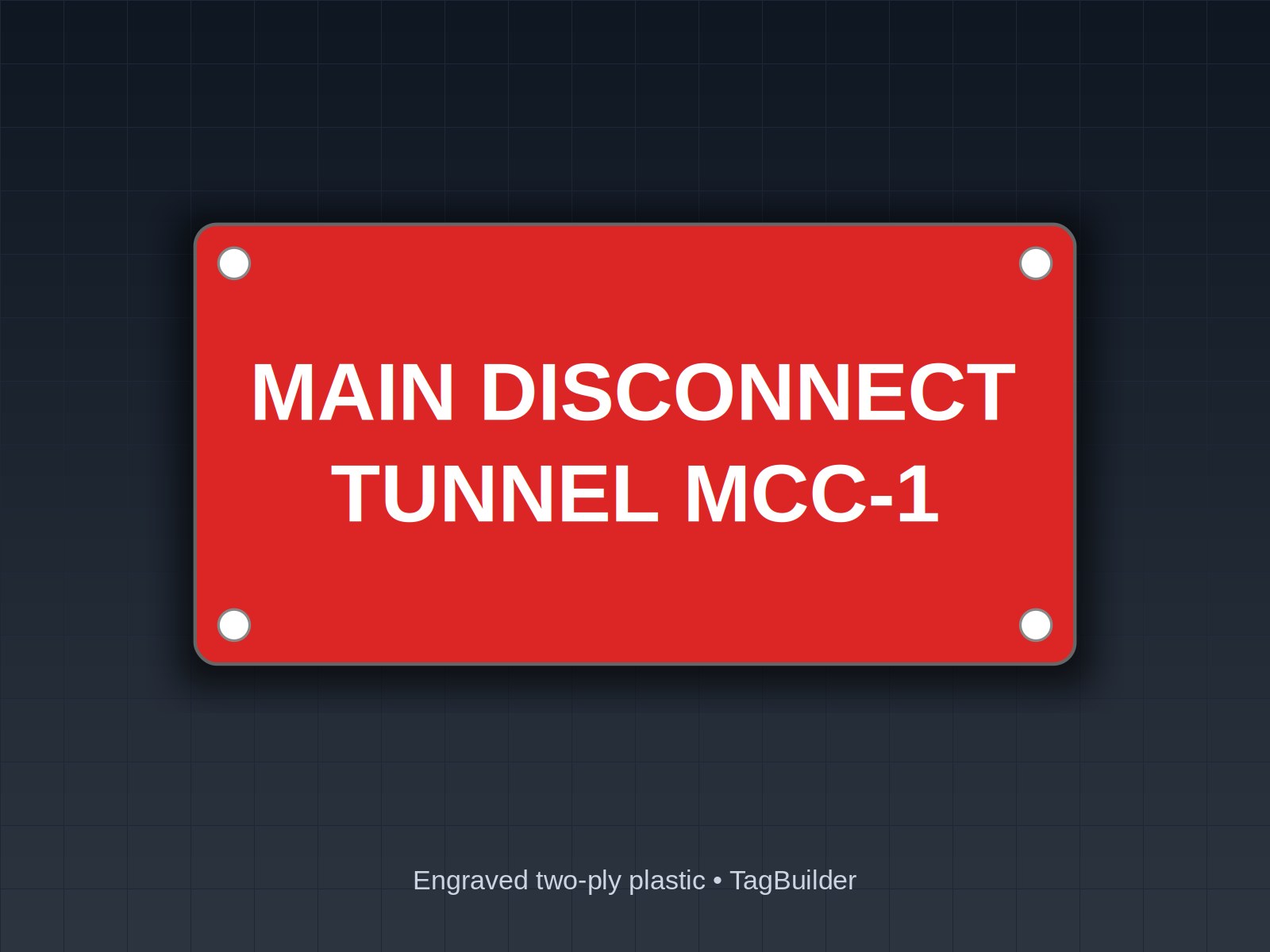
Get this made: TagBuilder (Solid Ideas Engraving, Waterford, PA) engraves MAIN / DISCONNECT Disconnect Label – 4" × 2" Black on Yellow ($7.40). No minimum order, no setup fees, most orders ship in 2–3 business days, rush available. Order it: https://tagbuilder.net/shop/product/4-0x2-0-disconnect-switch-label-main-disconnect-4x2-inch-black-on-yellow-holes. Custom text and size: open this design in the configurator. Or email the spec to support@tagbuilder.net for a written quote and PDF proof the same business day.
The tunnel is wired, the equipment runs, and the labels are still a line on the punch list. If nobody owns them, the wash opens with marker on the MCC and masking tape on the chemical lines, and the opening-week crew learns the wrong names.
Short answer: order car wash equipment labels once the equipment layout and the controller function list are final, about 2 to 3 weeks before turnover. Cover five areas: the electrical room, the equipment room, the tunnel, the pay and attendant station, and the vacuums. Decide in writing whether the equipment manufacturer, the electrician or the operator installs each group, so no label falls in the gap between them.
Important Disclaimer
This article is provided for general informational purposes only and does not constitute legal, safety, or professional compliance advice. Regulations, standards, and codes are subject to change and may be interpreted differently by authorities having jurisdiction (AHJ). Always consult with qualified safety professionals, licensed engineers, or legal counsel to determine the specific requirements applicable to your facility. TagBuilder is not responsible for any actions taken based on this information.
Why labels end up last, and what it costs
Labels depend on everything else being final: pump names, blower counts, the function list on the tunnel controller. So they get pushed to the end, right when the schedule is tightest.
When that goes badly, the failures are ordinary and specific:
- An attendant presses an unlabeled button on the tunnel entrance and starts the conveyor with a car half loaded.
- A technician opens the wrong disconnect because three blower VFDs are all marked with a pen as “B”.
- A chemical line gets reconnected to the wrong pump after a hose swap, because the tape label peeled in the humidity.
- The reorder arrives in the wrong size because nobody measured the available space on the door or panel before ordering.
None of these are dramatic. They are the ordinary cost of an unlabeled building, and they show up in the first month of operation.
When to order
Order after two things are frozen: the equipment layout (what is physically installed, and where) and the controller function list (the exact names of the pushbuttons, selector switches and pilot lights). That is usually 2 to 3 weeks before turnover. Earlier than that, you risk reprinting after a change order. Later, and the plates arrive after the inspection walk-through.
A sample timeline:
| When | Task | Owner |
|---|---|---|
| 6 to 8 weeks out | Pull the equipment list and single-line diagram; start the label list | Project manager |
| 3 to 4 weeks out | Freeze the controller function list and chemical line names | Equipment installer |
| 2 to 3 weeks out | Place the order with sizes confirmed against the actual panels and doors | Project manager |
| 1 week out | Labels arrive, sorted by room | Receiving |
| Turnover week | Install; walk the building against the list | Electrician, installer, operator |
| Before opening | Train the crew using the labeled equipment | Operator |
What the electrical inspector may look for
This varies by jurisdiction and by NEC edition, so ask the AHJ what they expect on your building. Items commonly checked include:
- Disconnect identification. NEC 110.22 deals with identifying what a disconnect serves. Many inspectors want to read the equipment name on the disconnect itself. See the disconnect identification guide for what to put on the plate.
- Panel directories. NEC 408.4 covers circuit directories in panelboards. A legible, specific directory is generally expected; “spare” and “misc” are not descriptions. The panel schedule to breaker labels article walks through it.
- Field marking for arc flash and shock hazard. NEC 110.16 addresses marking on certain equipment. What counts, and what information the label carries, depends on the edition and the AHJ. The incident energy values come from the engineer’s study, not from the label supplier.
- Working space and equipment names. Some inspectors also read the room signage and equipment designations against the drawings.
Labels do not make a building pass anything. They give the inspector and the maintenance crew a clear, durable record that matches the drawings.
Who supplies what
The gap usually sits between three parties. Settle it at the pre-construction meeting:
| Group | Typically supplied by | Typically installed by |
|---|---|---|
| Equipment manufacturer’s control panels and operator devices | Equipment manufacturer or installer | Equipment installer |
| Service equipment, MDP, panelboards, disconnects | Electrical contractor | Electrician |
| Chemical, water and air line identification | Whoever plumbed it, or the operator | Installer or operator |
| Vacuum system labels | Vacuum supplier | Vacuum installer |
| Anything nobody claimed | Operator or general contractor | Name one person on the punch list |
Manufacturer panels often ship with their own factory labels. Check what is already on them before you order duplicates, and note what the factory legend says so your names match.
The checklist by area
The table below lists each area, the item, the label that goes on it, and who normally installs it.
| Area | Item | Label | Who installs |
|---|---|---|---|
| Electrical room | Main distribution panel | MDP, voltage, source | Electrician |
| Electrical room | Panelboards | Panel name, voltage, fed from; circuit directory | Electrician |
| Electrical room | MCC and VFDs | Unit name matching the drawing | Installer |
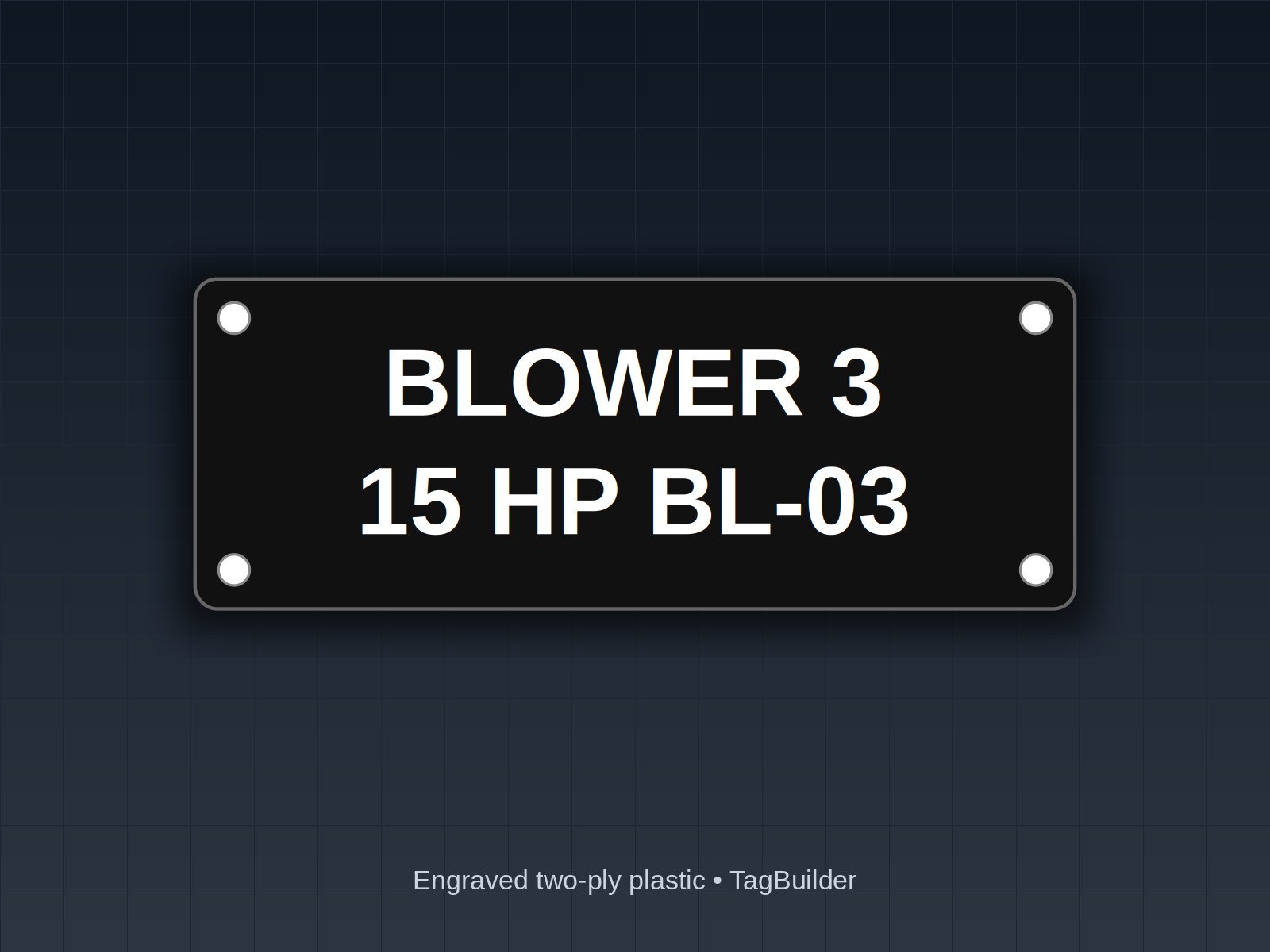
| Electrical room | Disconnects | Equipment served, such as BLOWER 3 DISCONNECT | Electrician |
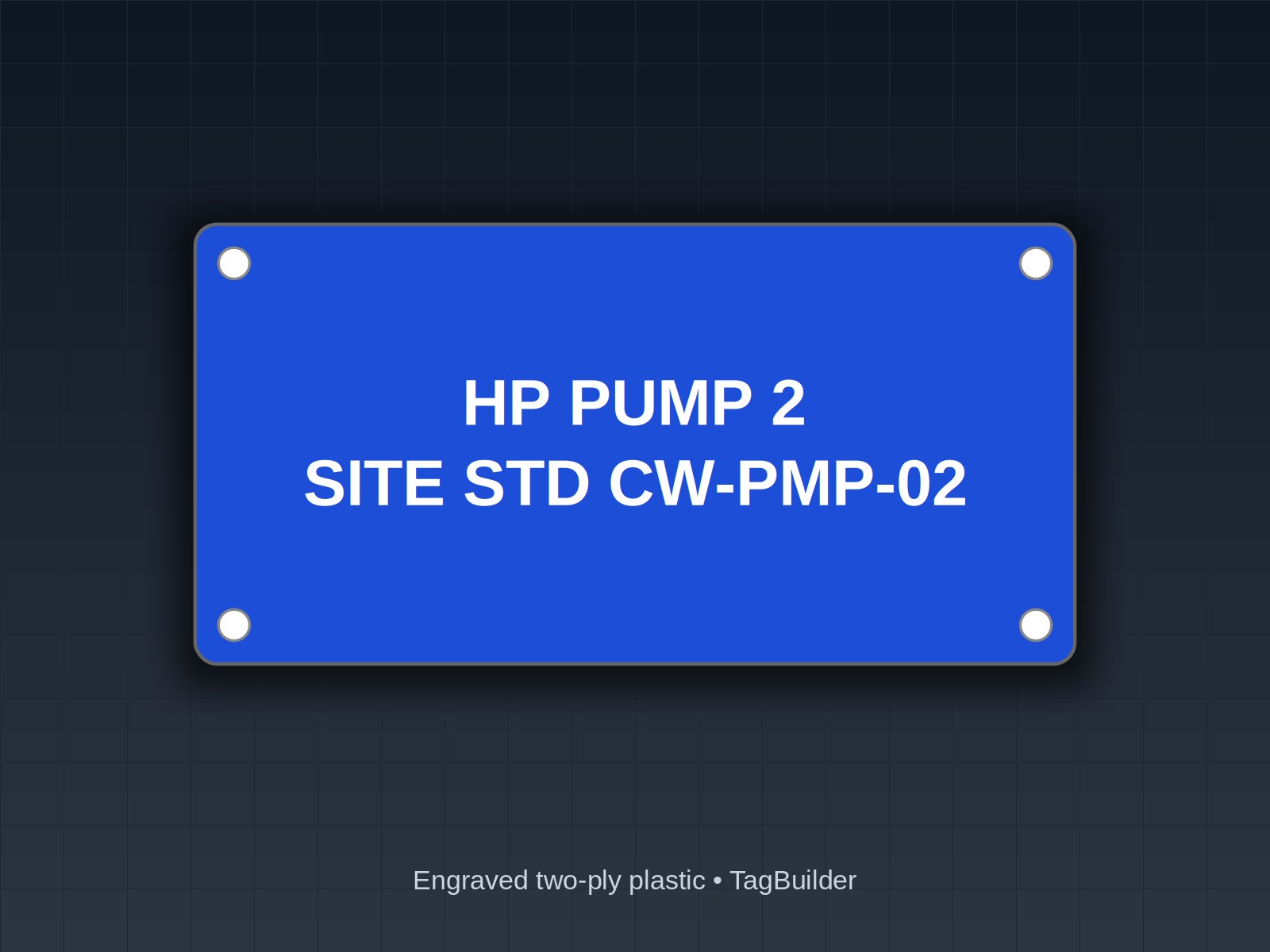
| Equipment room | Pumps | HP PUMP 1, LEAD PUMP, and so on | Installer |
| Equipment room | Chemical lines | Product name at both ends of each line | Installer or operator |
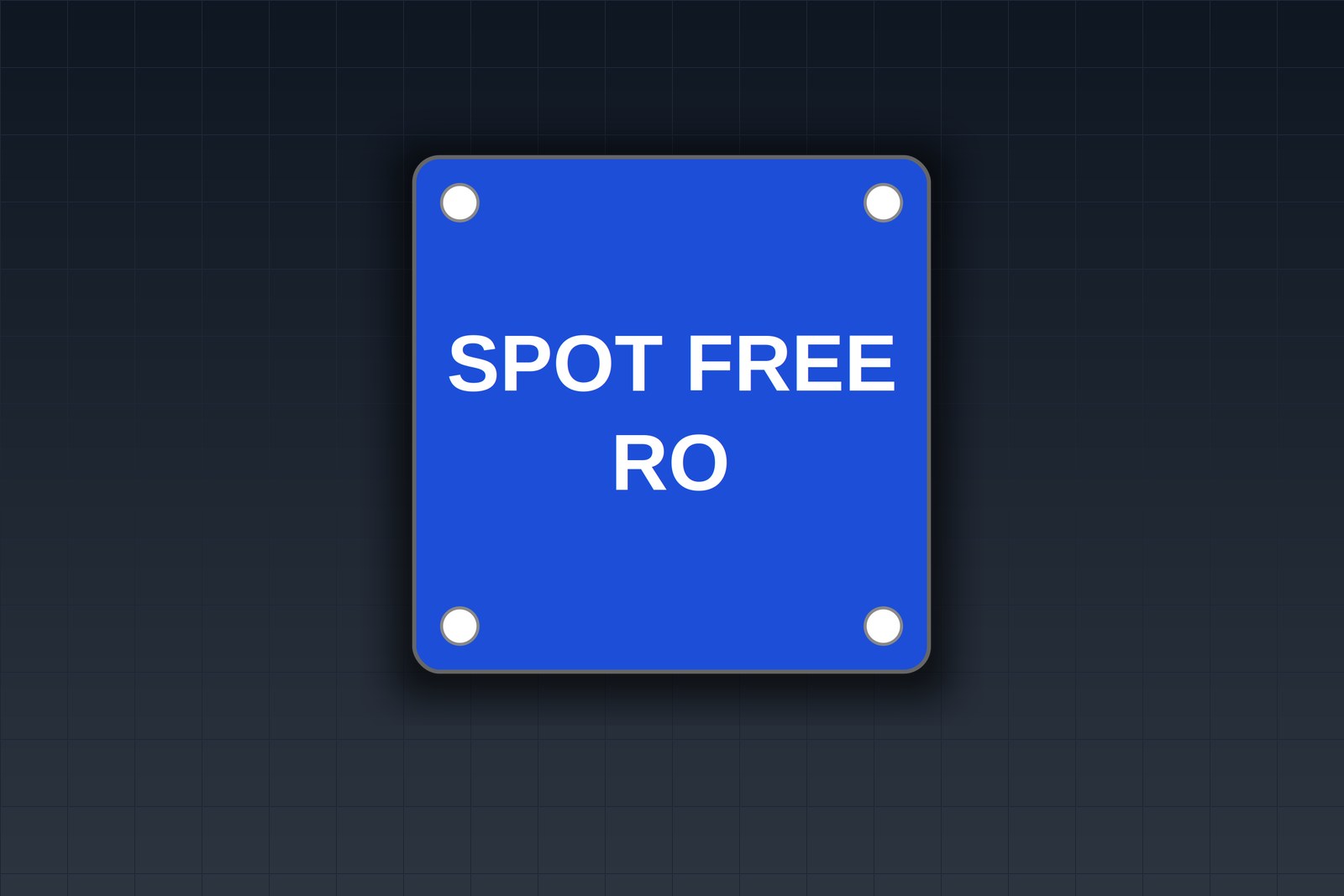
| Equipment room | Water, RO, reclaim, air, hot water | System name and valve tags | Plumber or installer |
| Tunnel | E-stops | EMERGENCY STOP | Installer |
| Tunnel | Operator station and entrance/exit pushbuttons | Function legend for each device | Installer |
| Tunnel | Isolation points | Equipment and energy source | Installer |
| Pay and attendant station | Pay station and attendant panel | Disconnect and panel names | Electrician |
| Vacuums | Producer and drops | VACUUM PRODUCER 1, disconnects | Vacuum installer |
Two items are worth buying by the exact part. Main and equipment disconnects are available as a 4x2 inch MAIN DISCONNECT label, black on yellow. Tunnel emergency stops can use the 60 mm emergency stop arc legend for a 22 mm device. For pump naming, the LEAD PUMP label in white on blue is a common starting point. Where an arc flash label is required by your AHJ, the fill-in arc flash and shock hazard label leaves room for the values from your study.
Worked example: 120 ft express tunnel, 10 blowers
Copy this list and change the names to match your drawings. Plate sizes are suggestions; measure the actual mounting space first.
Electrical room
- MDP, 480/277V 3PH 4W (1 plate)
- PANEL LP-1 LIGHTING, 208/120V (1)
- PANEL RP-1 RECEPTACLES (1)
- MCC-1 plus one unit label per starter
- BLOWER 1 VFD through BLOWER 10 VFD (10)
- BLOWER 1 DISCONNECT through BLOWER 10 DISCONNECT (10)
- CONVEYOR VFD and CONVEYOR DISCONNECT (2)
- MAIN DISCONNECT (1)
Equipment room
- HP PUMP 1, HP PUMP 2, LEAD PUMP, LAG PUMP
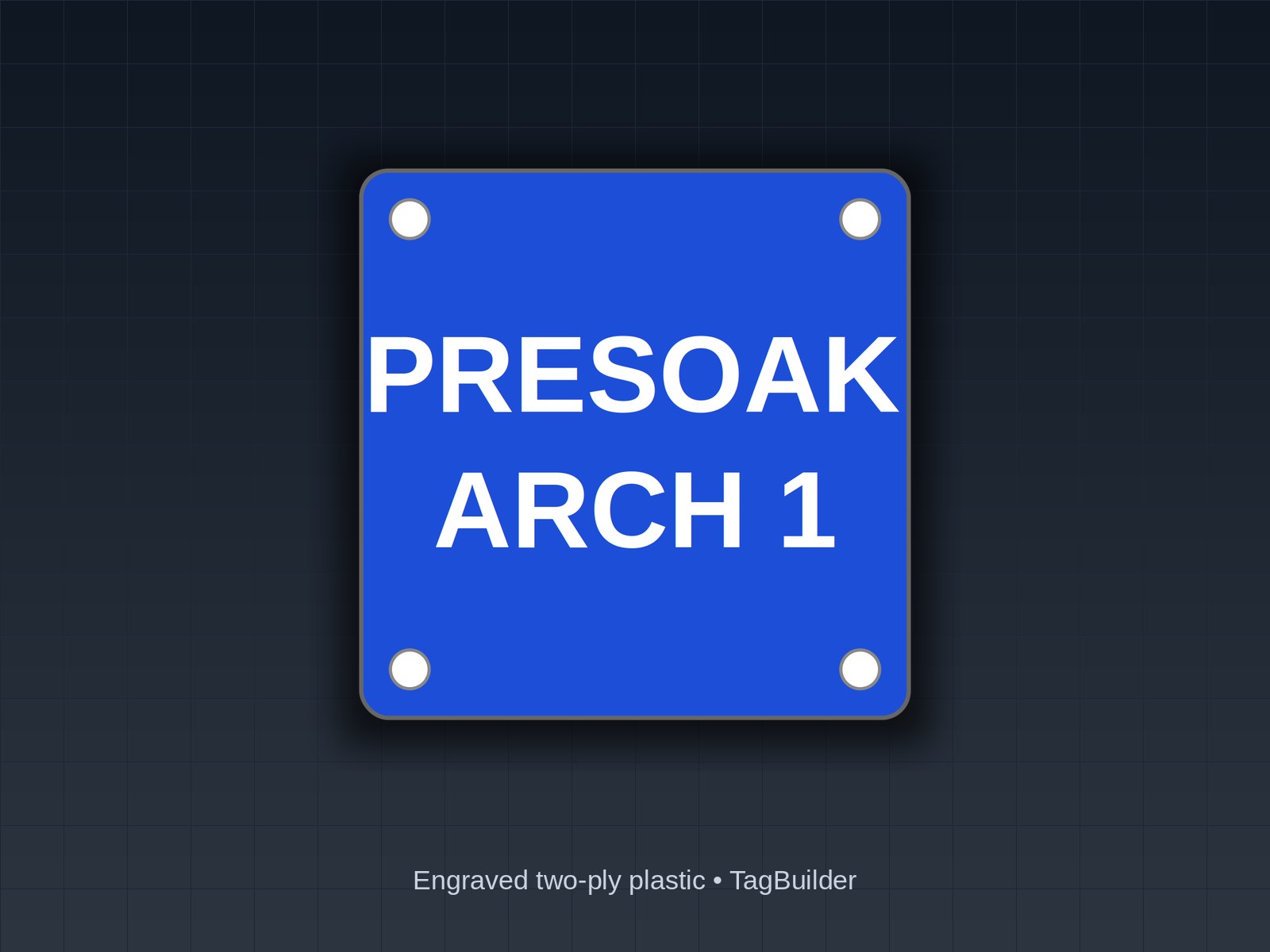
- Chemical lines: PRESOAK, TRIPLE FOAM, TIRE SHINE, SEALANT, DRYING AGENT, one plate at the pump end and one at the arch end
- RO SYSTEM, SOFT WATER, RECLAIM TANK, HOT WATER HEATER
- AIR COMPRESSOR, AIR DRYER, AIR RECEIVER
Tunnel
- EMERGENCY STOP, one per station (entrance, operator station, mid-tunnel, exit)
- CONVEYOR START, CONVEYOR STOP, RESET, ALARM SILENCE
- ENTRANCE PB and EXIT PB legends
- Isolation labels at each blower: BLOWER 1 through BLOWER 10, matching the disconnect names exactly
Pay and attendant station, vacuums
- PAY STATION DISCONNECT, ATTENDANT PANEL
- VACUUM PRODUCER 1, VACUUM PRODUCER 1 DISCONNECT, VAC DROP 1 through VAC DROP 12
The rule that saves the most trouble: one name per machine. The drawing, the VFD, the disconnect, the controller screen and the crew’s training sheet should all say BLOWER 4, not BLOWER 4 on one and B4 on another.
Send your equipment list two weeks before turnover and the whole site's labels arrive as one kit, sorted by room.
Frequently Asked Questions
What labels does a new car wash need?
At minimum: disconnect and panel identification in the electrical room, names on every pump and chemical line in the equipment room, a legend on every operator pushbutton and emergency stop in the tunnel, and names on the pay station and vacuum equipment. Add arc flash or field markings where your AHJ and the current NEC edition call for them.
When should you order equipment labels for a new building?
About 2 to 3 weeks before turnover, once the equipment layout and the controller function list are final. Ordering earlier risks reprints after a change order; ordering later means the plates arrive after the walk-through.
What does the electrical inspector check on a car wash?
It depends on the jurisdiction and the code edition. Inspectors commonly look at disconnect identification, panel directories and any required arc flash field marking. Ask the AHJ before turnover what they expect to see.
Who is responsible for labeling car wash equipment?
It is split. The equipment manufacturer usually covers its own control panels, the electrician covers service equipment, panelboards and disconnects, and the operator or installer covers chemical and water lines. Put one named person on the punch list for anything left over.
What size should car wash equipment labels be?
Match the mounting space. A 4x2 inch plate suits most disconnects and panel doors, while operator devices on 22 mm bores use a round legend. Measure the actual surface before ordering so the reorder is not the wrong size.
If you are still setting the scope, the guide to specifying engraved labels on panel drawings helps you get names into the bid package. For existing buildings, the car wash equipment room labeling article goes deeper on pumps and chemical lines. To see the material first, send one legend and ask for a free sample.
UL, NFPA, NEC, ASME, CEMA, TIA, ANSI and OSHA are names or marks of their respective organizations; TagBuilder is not affiliated with or endorsed by any of them. Requirements above are paraphrased summaries, not the text of any standard. Always work from the current published edition and your AHJ.