Arc Flash Label Template: What to Put on Each Line
The arc flash study is done, the report is in your inbox, and now someone has to turn a page of numbers into a label that fits on a 4x2 or 5x3 plate without leaving anything out. This is the field-by-field layout.
Important Disclaimer
This article is provided for general informational purposes only and does not constitute legal, safety, or professional compliance advice. Regulations, standards, and codes are subject to change and may be interpreted differently by authorities having jurisdiction (AHJ). Always consult with qualified safety professionals, licensed engineers, or legal counsel to determine the specific requirements applicable to your facility. TagBuilder is not responsible for any actions taken based on this information.
What Belongs on the Label
For a full walk-through of who requires the label and why, see the NFPA 70E label requirements guide. This article assumes you already have a completed study and just need the wording and layout. At minimum, an arc flash label commonly carries:
- A signal word — WARNING or DANGER
- Nominal system voltage
- Arc flash boundary
- Either incident energy at the working distance or the PPE category — never both methods on the same label
- Limited approach boundary and restricted approach boundary
- Equipment identifier matching the one-line and the study
- Study date and a reference back to the study document
Every one of those fields comes from a specific source document. Mixing up which number came from where is one of the most common label errors we see — a voltage pulled from an old nameplate instead of the current one-line, or an incident energy value that does not match the working distance printed next to it.
Signal Word: WARNING vs DANGER
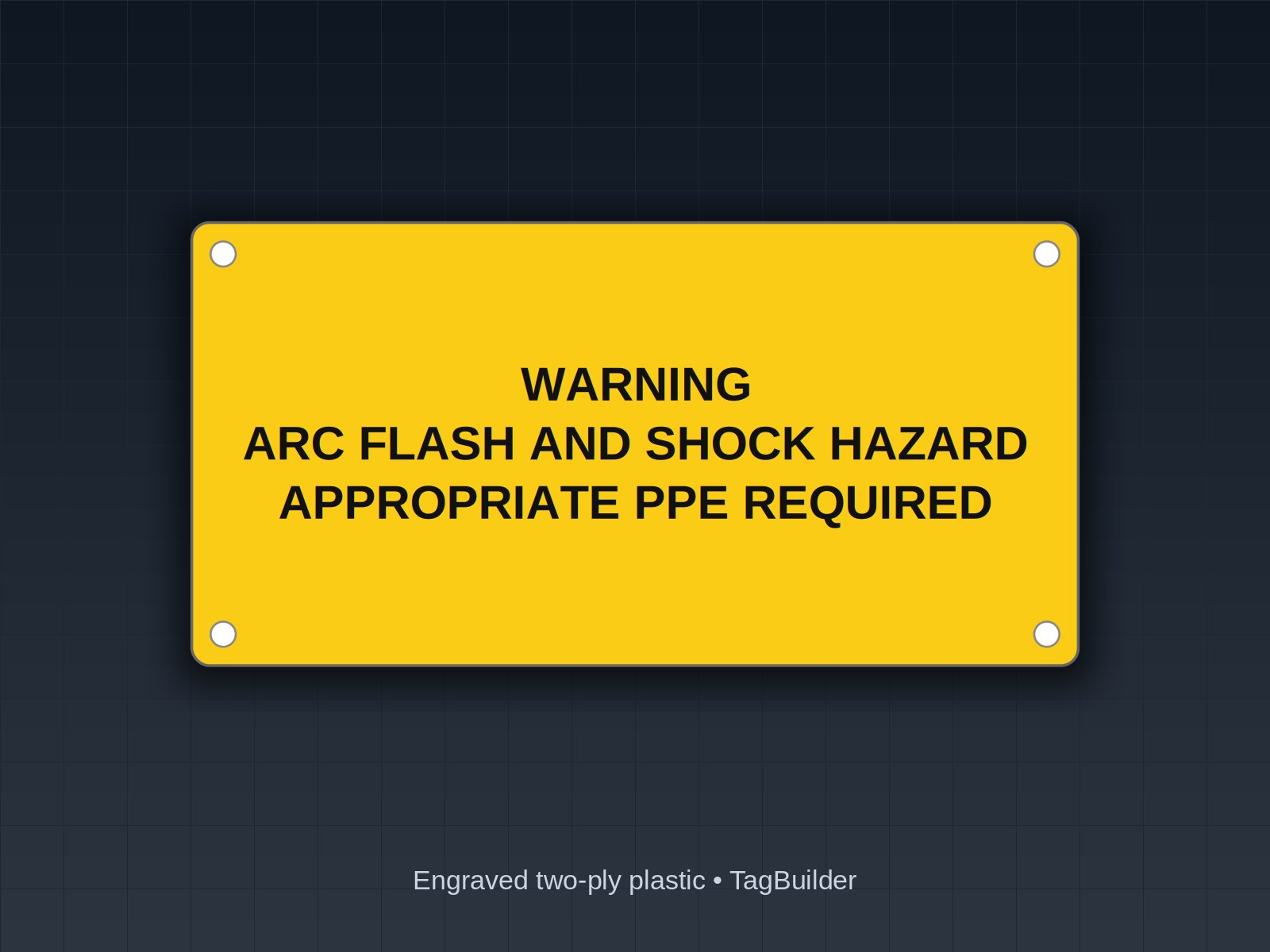
The signal word tells the reader how serious the hazard is at a glance. WARNING is the default for most equipment. DANGER is reserved for higher-severity conditions — many programs use an incident energy threshold around 40 cal/cm² as the line where DANGER applies, since that is roughly the upper limit of what standard arc-rated PPE is rated to handle. That threshold is common practice, not a fixed number in every edition, so confirm it against the current NFPA 70E and your own program before printing.
Voltage, Boundaries, and the One-Method Rule
Nominal system voltage comes straight off the one-line diagram or the equipment nameplate — use whichever the study itself references, since that is the number the boundaries were calculated against.
The arc flash boundary is the distance at which an unprotected person would receive a second-degree burn threshold of incident energy. It comes directly from the study output and changes with equipment configuration, so it is specific to that bus or panel, not a plant-wide constant.
Then comes the field that trips people up most: pick one method and print only that one. Either show the incident energy in cal/cm² at a stated working distance, or show a PPE category. Putting both on the same label creates a label that contradicts itself if the two were derived under different assumptions, and it is not how either method is meant to be presented. Decide once, per equipment class, and hold to it across the facility so crews are not switching mental models label to label.
Limited approach boundary and restricted approach boundary define how close an unqualified or qualified person, respectively, can get without additional protection. These typically come from a standard boundary table based on voltage class rather than the incident energy calculation, so double-check you are pulling them from the correct source — usually the same study report will list them, but they may reference a boundary table rather than the arc flash calculation itself.
Equipment ID, Study Date, and Reference
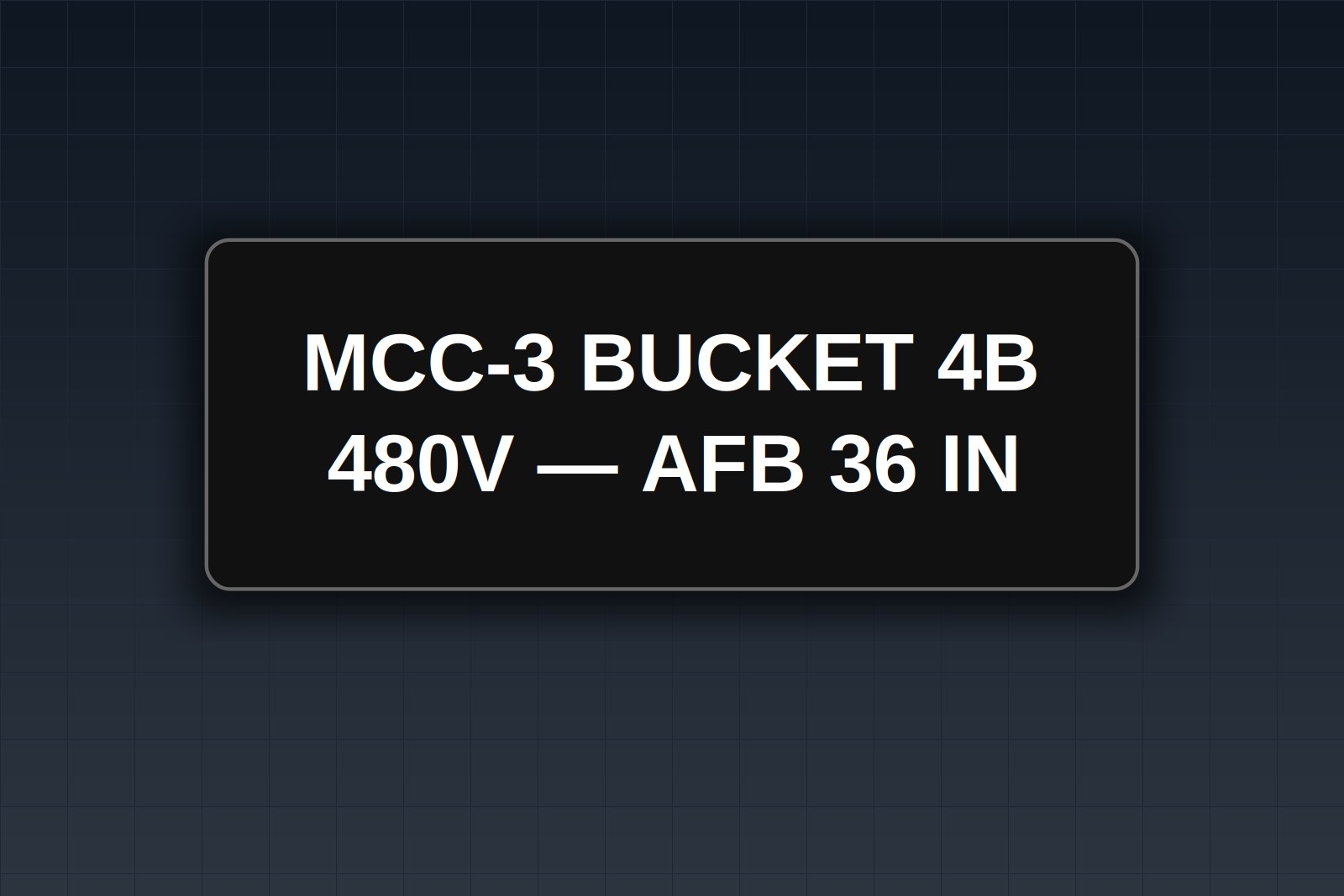
The equipment identifier has to match three places exactly: the label, the one-line diagram, and the study report's equipment list. A mismatch here is worse than a missing label, because it sends a crew to verify the wrong bucket. Use the same ID format the facility already uses on drawings — do not invent a shorter version for the label.
The study date and a short reference (report number or revision) let anyone standing at the panel trace the numbers back to their source. This also does the work of flagging stale labels: if the date on the plate is older than the facility's review interval, that is the signal to pull the study and check whether anything has changed.
Layout: ANSI Z535 Is Common Practice, Not a Requirement
NFPA 70E tells you what has to be on the label; it does not mandate a specific layout. The orange/red header bar with white text that most people picture is the ANSI Z535 signal-word convention, and it is widely used because crews already recognize it from other safety signage in the plant. Using it is a reasonable, common choice — but a plain layout that includes every required field is still a compliant label as far as 70E's content requirement goes. What matters more than the color bar is that the fields are legible, correctly sourced, and current.
Worked Example: A Filled-In Label
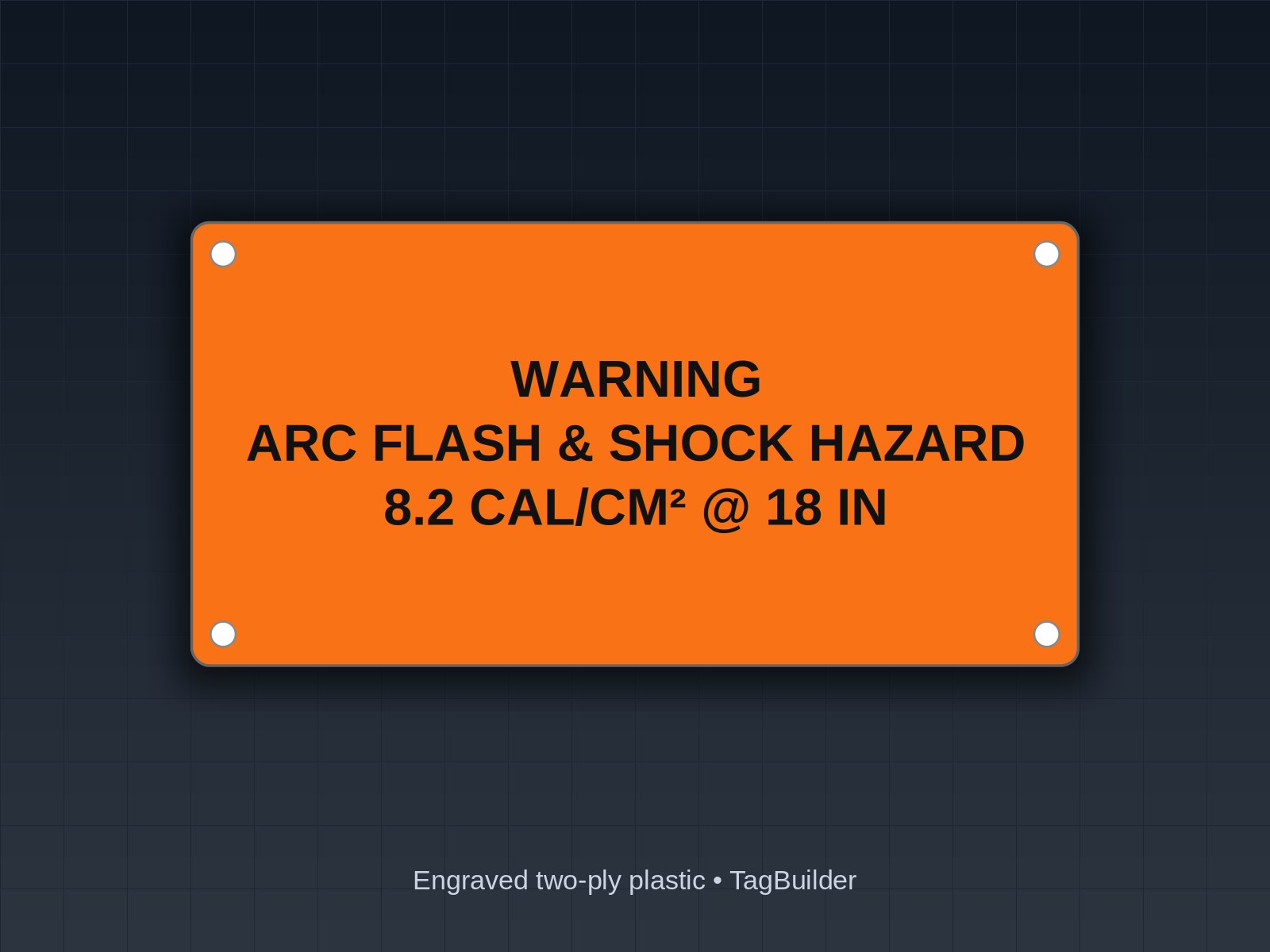
Below is a sample layout with clearly marked example values — swap in your own study numbers before using it on equipment.
| Field | Example value |
|---|---|
| Signal word | WARNING |
| Equipment ID | MCC-2, CUBICLE 4 |
| Nominal voltage | 480V, 3-phase |
| Arc flash boundary | 42 in |
| Incident energy | 8.2 cal/cm² at 18 in working distance |
| Limited approach boundary | 42 in |
| Restricted approach boundary | 12 in |
| Study date / reference | 03/2026 — Arc Flash Study Rev 2 |
Note this example uses the incident energy method only — no PPE category line was added alongside it, per the one-method rule above.
Where Each Number Comes From
Before a label goes out, it helps to trace every field back to its document rather than trusting a spreadsheet copy-paste:
| Field | Source document |
|---|---|
| Nominal voltage | One-line diagram or equipment nameplate |
| Arc flash boundary | Study report, calculated output |
| Incident energy / PPE category | Study report, calculated output |
| Approach boundaries | Study report or referenced boundary table |
| Equipment ID | One-line diagram, cross-checked against nameplate |
| Study date / reference | Study report cover page or revision log |
Suggested Letter Heights
These are practical suggestions for legibility at typical viewing distance, not a code minimum. Check your own program and the plate size you are working with:
- 4x2 in plate: signal word roughly 1/4–5/16 in caps; equipment ID and field labels around 3/16 in; boundary and energy values around 5/32–3/16 in
- 5x3 in plate: signal word roughly 3/8–1/2 in caps; equipment ID around 1/4 in; boundary and energy values around 3/16–1/4 in
On a busy panel with poor lighting, err toward the larger end of these ranges — a label nobody can read from working distance does not do its job, and engraved text holds up better over years of handling than printed ink, but only if the field is large enough to read once it starts to fade optically at a distance.
When to Update the Label
Arc flash labels are commonly reviewed on roughly a 5-year cycle, or sooner whenever something changes that affects the calculation — a utility transformer upsize, a breaker or fuse change, new conductor length, or a modification to the distribution equipment itself. Treat the study date on the label as a trigger, not a formality: if a change was made to that equipment and the label was not reissued, the numbers on the plate no longer describe the panel in front of the technician.
If you have not built the label field list yet, the rectangle lamacoid configurator lays out custom fields at whatever plate size you need, and our how it works page covers turnaround and proofing before you commit to a full equipment list.
Frequently Asked Questions
Can I put both incident energy and PPE category on the same label?
That is not how either method is intended to be used. Pick one per equipment class and apply it consistently across the facility so field crews are reading the same kind of number everywhere, rather than switching interpretation label to label.
Does the label have to use the orange and red ANSI Z535 colors?
No. That color and header convention is common practice because it matches other plant safety signage, but NFPA 70E's content requirement does not mandate a specific layout or color scheme. What is required is that the fields themselves are present, current, and legible.
What if the equipment ID on our drawings does not match what is stamped on the panel?
Fix the mismatch before the label goes out, and flag it to whoever maintains the one-line. A label with an ID that does not match the drawing set sends the next technician to verify the wrong equipment, which defeats the purpose of labeling in the first place.
Who determines whether we need DANGER instead of WARNING?
That call should come from whoever performed the study or from your facility's electrical safety program, generally based on the incident energy level and program threshold. Confirm the practice against the current edition of NFPA 70E and your AHJ rather than assuming a fixed cutoff.
How often do these labels actually need to be replaced?
Many programs use roughly a 5-year review cycle, or immediately after any change to the equipment that would affect the boundaries or incident energy — transformer, breaker, fuse, or conductor changes are the common triggers. Check your program documentation for the exact interval.
Can TagBuilder just build the label from our study report?
Send the equipment ID and the values from your report and we will lay out the fields on a proof before anything is engraved, so you can check every number against the study before it goes on the wall.
Send one equipment ID and the values from your study and we'll engrave a sample arc flash label and mail it, no charge.
Once the fields are laid out correctly, ordering is the easy part — start from the arc flash label builder or look at the fill-in 4x2 arc flash label if you want a standard starting point, and request a free sample if you want to see the material and engraving quality before committing to a full equipment list.
UL, NFPA, NEC, ASME, CEMA, TIA, ANSI and OSHA are names or marks of their respective organizations; TagBuilder is not affiliated with or endorsed by any of them. Requirements above are paraphrased summaries, not the text of any standard. Always work from the current published edition and your AHJ.