Brewery and Winery Tank and Valve Tags: Fermenter Numbering, Brite Tanks and Glycol Valves
The chalk on FV-3 washed off last week, the tape on the glycol valve is curling, and the new cellar hand just asked which tank is which. Here is how to label the cellar once so it stays readable.
Important Disclaimer
This article is provided for general informational purposes only and does not constitute legal, safety, or professional compliance advice. Regulations, standards, and codes are subject to change and may be interpreted differently by authorities having jurisdiction (AHJ). Always consult with qualified safety professionals, licensed engineers, or legal counsel to determine the specific requirements applicable to your facility. TagBuilder is not responsible for any actions taken based on this information.
The Short Answer
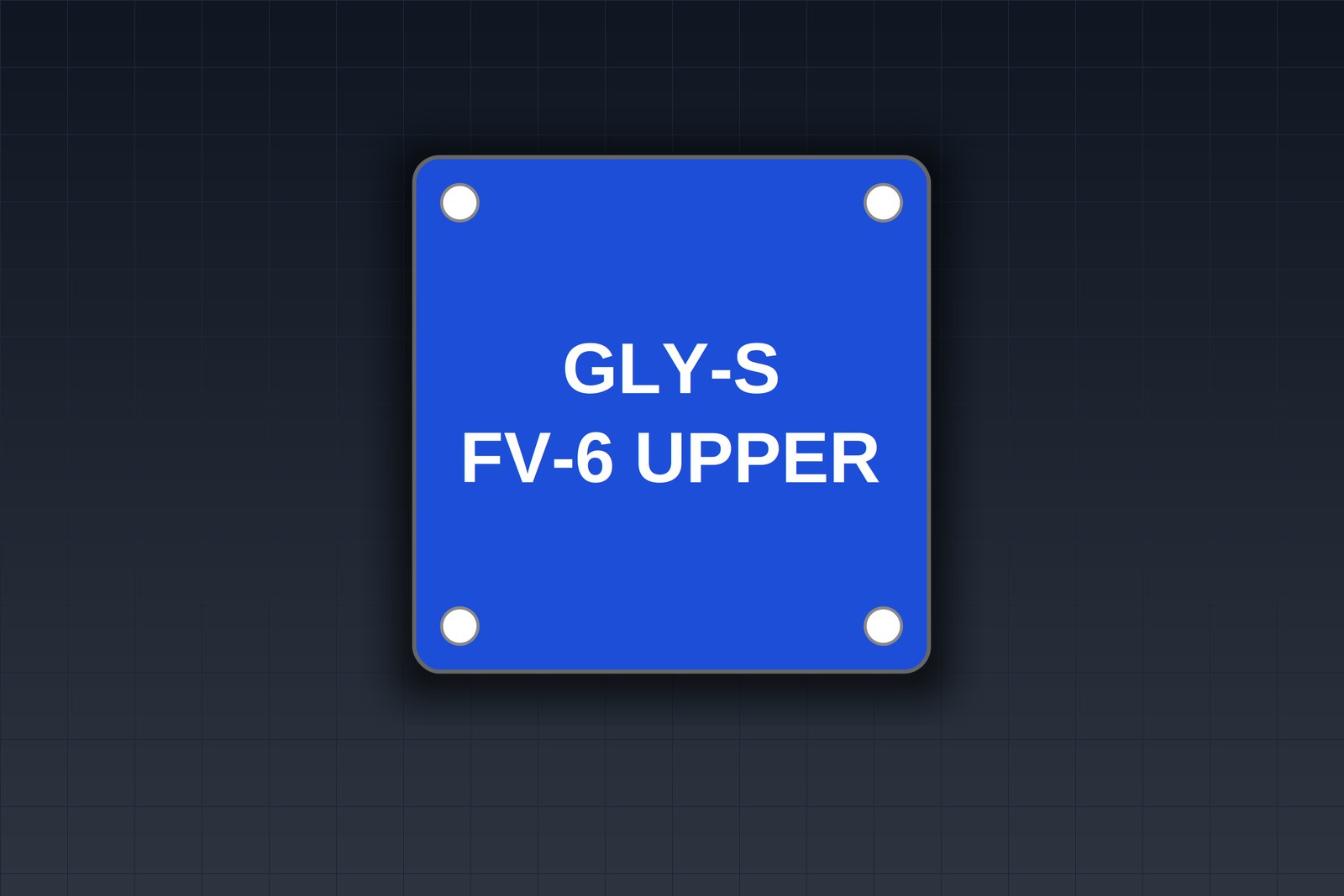
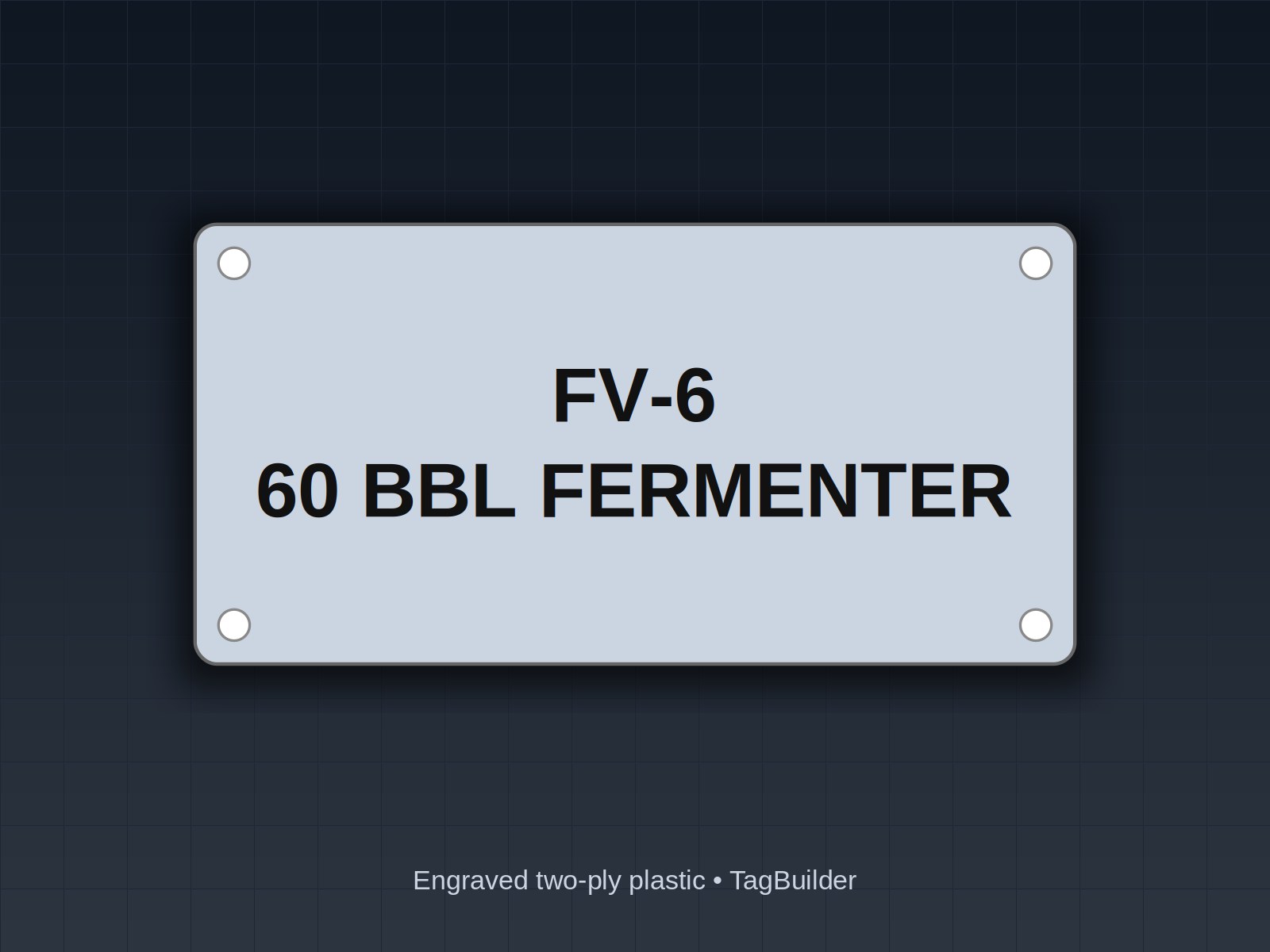
Give every vessel a permanent ID that never changes, such as FV-1 through FV-6 for fermenters and BT-1 and BT-2 for brite tanks. Engrave that ID on a stainless tag hung on the tank's racking or sample valve. Tag every glycol zone valve with the tank ID plus the zone, for example FV-3 UPPER. Keep the changing information, such as beer name and batch date, on a whiteboard or clip below the fixed plate.
What Goes Wrong With Chalk, Tape and Dry-Erase
A cellar is wet, cold and cleaned often. Chalk washes off in the first rinse. Masking tape and paper labels absorb water, lift, and eventually fall into a floor drain. Dry-erase marker smears under a hose or a sanitizer spray bottle.
The failures are specific and avoidable:
- A transfer goes to the wrong tank because the hose was connected to an unlabeled port.
- A CIP circuit gets run through the wrong vessel because two tanks look alike and the tags are gone.
- A glycol valve gets closed to fix a problem on one tank and quietly warms a different one, because nobody knows which zone it feeds.
- A new hire, a relief brewer or a service tech guesses. Guesses in a cellar cost product.
Numbering Tanks So the Number Never Changes
The rule that matters most: the tank ID belongs to the steel, not to the beer. Number the vessel once and leave it alone. The table below lists common brewery abbreviations and what each one is usually used for.
| Vessel | Common ID | Notes |
|---|---|---|
| Fermenter | FV-1, FV-2, FV-3 | Number in the order they sit in the cellar |
| Brite tank | BT-1 or BBT-1 | BBT stands for bright beer tank |
| Unitank | UNI-1, UNI-2 | Used when one vessel ferments and conditions |
| Hot liquor tank | HLT | One per brewhouse, no number needed |
| Cold liquor tank | CLT | Same |
| Mash/lauter tun | MLT | Same |
| Kettle | KETTLE | Spell it out, it is short enough |
| Whirlpool | WP | Or WHIRLPOOL if space allows |
Wineries usually have many more tanks, so a bare number such as T-14 works better than a long name. Many cellars add capacity to the plate, for example T-14 / 2,000 GAL, so a pump operator does not have to look it up before a transfer. If tanks get replaced, retire the number rather than reusing it. For the general logic behind a scheme that survives growth, see the guide on creating a valve numbering system.
Glycol: Label the Headers and Every Zone Valve
Glycol is where unlabeled systems cause the most confusion, because the lines are insulated and the valves are often behind a jacket. Label at three levels:
- Headers: GLYCOL SUPPLY and GLYCOL RETURN at each end and at every branch.
- Zone valves: the tank ID plus the jacket zone, such as FV-3 UPPER and FV-3 LOWER.
- Solenoid valves and chiller connections: the tank ID and zone on the solenoid body or its bracket, and CHILLER SUPPLY and CHILLER RETURN at the unit.
Use the same wording on the tag and on the controller screen or panel legend, so a brewer who sees FV-3 UPPER on the controller can find FV-3 UPPER on the wall. Some operations color-code supply and return. If you do, state the color on the tag text as well, because color alone is easy to misread under cellar lighting.
Valves, Gas Lines and Controller Legends
Product-side valves
Tag the racking arm, the sample valve, the CIP spray ball feed and each butterfly valve on the manifold or transfer panel. On a transfer panel, tag both the port and its valve with the same ID so a hose and a valve can be matched at a glance.
Carbonation and gas lines
Label the carbonation gas supply, beer gas and any nitrogen or air lines at the regulator, at each shutoff and at each branch. Requirements for gas storage, monitoring and signage vary by jurisdiction and by edition of the fire and mechanical codes, so check the current edition and your AHJ before assuming what a gas room needs.
Control panel legends
Tank temperature controllers and pump switches should carry a short legend that matches the tank ID: FV-3 TEMP, FV-3 GLYCOL, PUMP 1 TRANSFER. Engraved plastic works well here because it sits on a dry flat surface.
Tag Material for a Cold, Wet Cellar
Use engraved stainless tags on stainless wire or chain for anything on a tank, valve or jacketed line. Engraved text does not rub off the way printed ink does, and a metal tag does not soften when it is hosed down. For the trade-offs between metals and plastics, see brass vs. stainless vs. plastic valve tags. Wash-heavy rooms have their own concerns, covered in the washdown and food plant tag guide.
Use engraved two-ply plastic on dry walls and control panels, where it can be screwed or mounted flat.
Avoid adhesive on cold, sweating jackets. Condensation keeps the surface wet, and adhesive tends to let go. A mechanical attachment such as a wire loop, chain or zip tie holds up better. See the valve tag attachment methods guide for options.
Worked Example: 10-Barrel Brewhouse, 6 Fermenters, 2 Brites
This is a copyable starting list. Rename items to match your own layout. The table shows the suggested ID and tag type for each group.
| Item | Suggested ID | Tag type |
|---|---|---|
| Fermenters (6) | FV-1 to FV-6 | Stainless tag on the racking valve |
| Brite tanks (2) | BT-1, BT-2 | Stainless tag on the racking valve |
| Glycol zone valves | FV-1 UPPER, FV-1 LOWER, and so on | Stainless tag on wire |
| Glycol headers | GLYCOL SUPPLY, GLYCOL RETURN | Stainless tag, one per branch |
| Transfer panel | TP-1 to TP-8 | Engraved plastic or stainless at each port |
| Tank controllers | FV-1 TEMP, BT-1 TEMP | Engraved plastic on the panel |
Full legend list, one tag per line:
- HLT, MLT, KETTLE, WP
- FV-1, FV-2, FV-3, FV-4, FV-5, FV-6
- BT-1, BT-2
- FV-1 UPPER, FV-1 LOWER (repeat through FV-6)
- BT-1 JACKET, BT-2 JACKET
- GLYCOL SUPPLY, GLYCOL RETURN, CHILLER SUPPLY, CHILLER RETURN
- FV-1 SAMPLE (repeat through FV-6, BT-1, BT-2)
- TP-1 to TP-8
- CARB GAS SUPPLY, CARB GAS SHUTOFF, BEER GAS
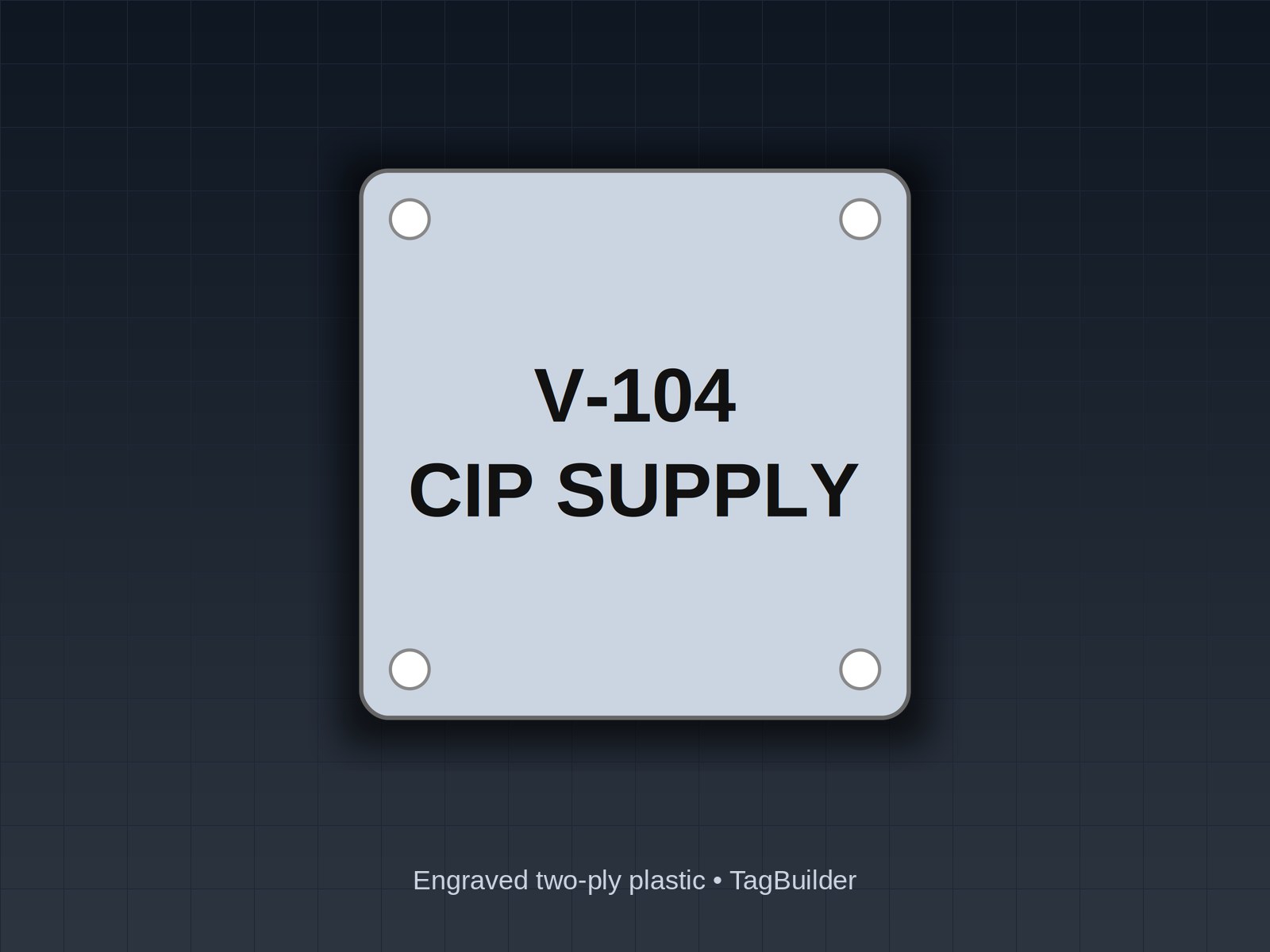
For circle tags on the valves, the 1.5 inch circle valve tag, V-101, stainless steel shows the format, and the 1.5 inch blank stainless circle tag is the one to order when your IDs are your own. If you want a quick color cue on a chilled water or glycol-adjacent line, the 2 inch CHWS plastic circle tag, white on blue is a ready example of the format.
Frequently Asked Questions
How should I number fermenters?
Use a short prefix and a sequential number, such as FV-1 through FV-6, and number them in the order they sit in the cellar. Do not tie the number to a beer style or batch. The plate should still be correct five years from now.
What does BBT stand for in a brewery?
BBT stands for bright beer tank, the vessel where finished beer is conditioned and carbonated before packaging. Many breweries shorten it to BT. Either works if you pick one and use it everywhere.
How do I label glycol lines in a brewery?
Label the supply and return headers, then tag each jacket zone valve with the tank ID and zone, such as FV-3 UPPER. Add the same wording to solenoid valves and to the controller legend so the panel and the hardware match.
What tags survive a brewery cellar?
Engraved stainless tags on stainless wire or chain hold up best on tanks and valves because moisture, cold and cleaning do not soften them. Engraved plastic suits dry walls and panels. Skip adhesive on sweating jackets.
Should the tank tag show capacity?
In many cellars, yes, especially wineries with tanks of different sizes. A plate such as T-14 / 2,000 GAL helps a pump operator choose the right destination without looking it up. Leave batch details off the plate because they change.
Send one tank or glycol valve ID and we'll engrave a free sample tag to hang in your cellar.
If you are ready to lay out your own list, start in the circle tag builder, browse the full range of valve tags, or request a free sample to hang on one tank first.
UL, NFPA, NEC, ASME, CEMA, TIA, ANSI and OSHA are names or marks of their respective organizations; TagBuilder is not affiliated with or endorsed by any of them. Requirements above are paraphrased summaries, not the text of any standard. Always work from the current published edition and your AHJ.