Water and Wastewater Plant Valve Tags and Equipment ID: Numbering, Colors and Chemical Feed
Your plant has three generations of valve numbers, the new SCADA screens use tag numbers nobody can find in the field, and the next operator or state reviewer has to follow a procedure by reading plates that disagree with the drawings.
Important Disclaimer
This article is provided for general informational purposes only and does not constitute legal, safety, or professional compliance advice. Regulations, standards, and codes are subject to change and may be interpreted differently by authorities having jurisdiction (AHJ). Always consult with qualified safety professionals, licensed engineers, or legal counsel to determine the specific requirements applicable to your facility. TagBuilder is not responsible for any actions taken based on this information.
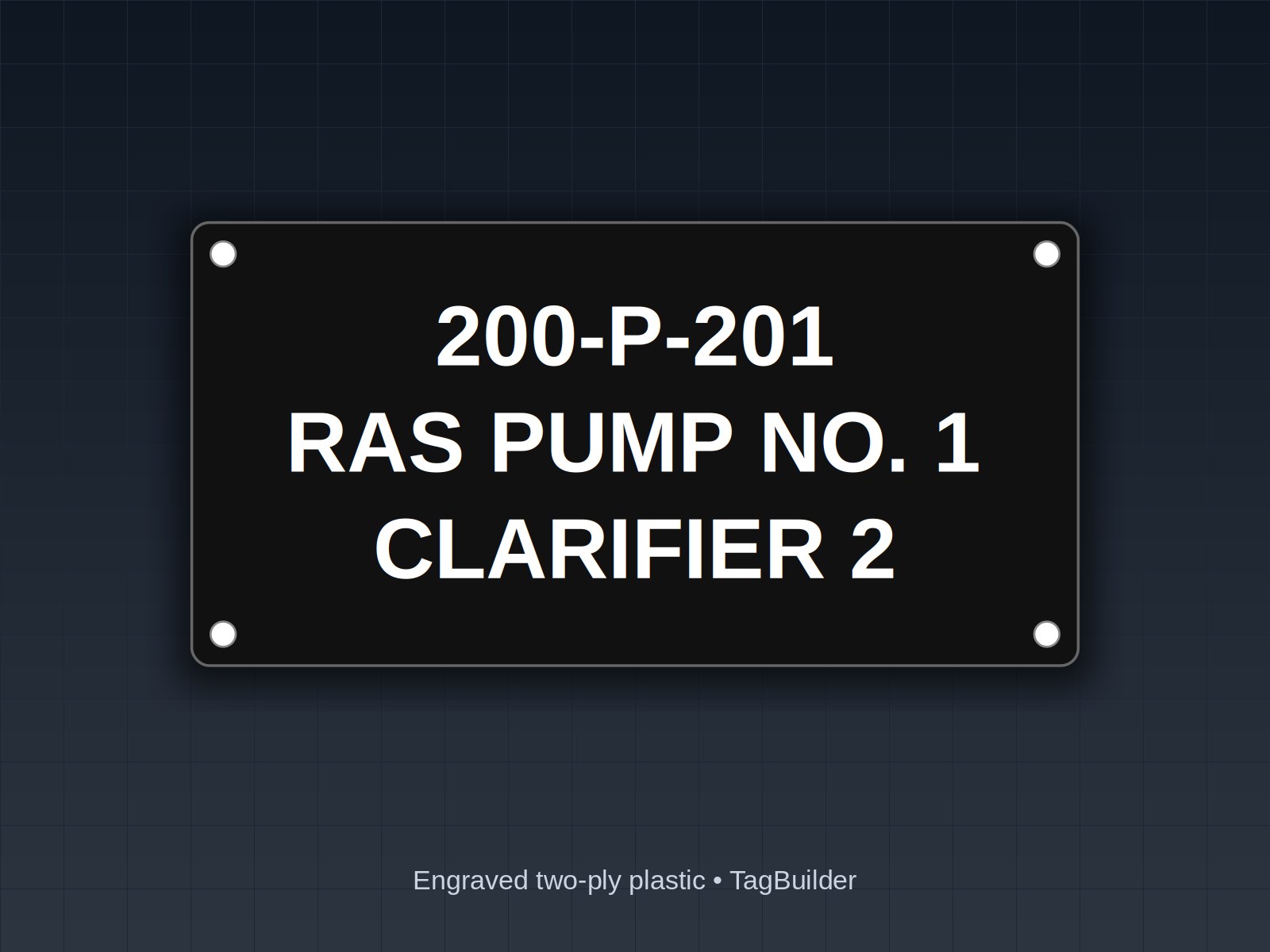
To number valves and equipment in a treatment plant, use one format everywhere: process-area prefix, equipment type, then sequence number (for example 200-P-201 or RAS-P-1). Put that exact string on the engraved plate, the P&ID, the SCADA tag and the O&M manual. Then color and label the piping by contents and flow direction using the edition of your state's design standards, not a color chart copied from somewhere else.
Why plant numbering drifts, and what it costs
Plants grow in layers. The original 1980s valves carry hand-stamped numbers, the 1998 expansion used the engineer's scheme, and the latest upgrade used whatever the controls integrator needed. Nobody ever renumbered the old equipment, so the same RAS pump has three names.
The cost shows up on a bad day. An operator sent to close "V-14" for a bypass finds two V-14s in different buildings. A chemical gets switched to the wrong injection point because two lines look alike. A permit excursion follows a mistake that a clear plate would have prevented. These are ordinary labeling failures, and they are cheap to fix compared with what they cause.
One numbering scheme for the HMI, the manual and the plate
Start from the P&ID and SCADA tag list, because those are the numbers people already type and search. Do not invent a second field scheme. Build the plate from the same string.
A workable format has three parts:
- Process-area prefix: a plant area number (200) or a short process code (RAS, WAS, HW for headworks).
- Equipment type: P for pump, V for valve, B for blower, T for tank, M for mixer, and so on. Keep the letters consistent with your instrument and equipment lists.
- Sequence: two or three digits, with gaps left for future additions.
The table below lists example ID formats and a reasonable tag material for each major process area. Treat the material column as a starting point, since site conditions vary.
| Process area | ID format example | Tag material suggestion |
|---|---|---|
| Headworks / screening | HW-V-105 | Engraved plastic, or stainless chosen for H2S exposure |
| Lift station wet well and valve vault | LS3-V-102 | Engraved plastic or stainless, fastened with stainless wire |
| Aeration and blowers | 300-B-301 | Stainless nameplate on the blower, plastic for indoor panels |
| Clarifiers and RAS / WAS | RAS-P-1 | Engraved plastic or stainless on valves |
| Chemical feed room | CF-P-1 | Engraved plastic, with wording matched to the chemical |
| Filtration and finished water | 400-V-410 | Stainless valve tags, plastic legend plates in panels |
The same scheme works in a water plant. Only the area names change. For a longer treatment of how to build a scheme that survives future additions, see the valve numbering system guide.
Pipe colors: copy from the edition your state adopted
The Recommended Standards for Water Works and for Wastewater Facilities, commonly called the Ten States Standards, call for piping to be color coded and labeled with its contents and the direction of flow. They also include a suggested color scheme for plant piping. In general terms, chlorine lines are yellow, sludge lines fall in the brown or black family, and potable water lines are in the blue family.
Do not stop at that summary. Many states publish their own design standards and some adopt the Ten States document with changes. Pull the color table from the current edition your state actually uses, and confirm with your reviewing agency or the plant's engineer of record. If you need to add a line that the table does not cover, document the color choice in the O&M manual so the next person is not guessing. Pipe-marking practice from the ASME A13.1 family is also commonly referenced for label size and placement. Check which edition applies to you.
Color and a tag are separate jobs. Color tells an operator the category at a distance. The plate or pipe marker names the contents and the flow arrow. A tag with a number does not replace either.
Valve tags: stainless or engraved plastic
The honest answer is that it depends on the room.
Where stainless works well
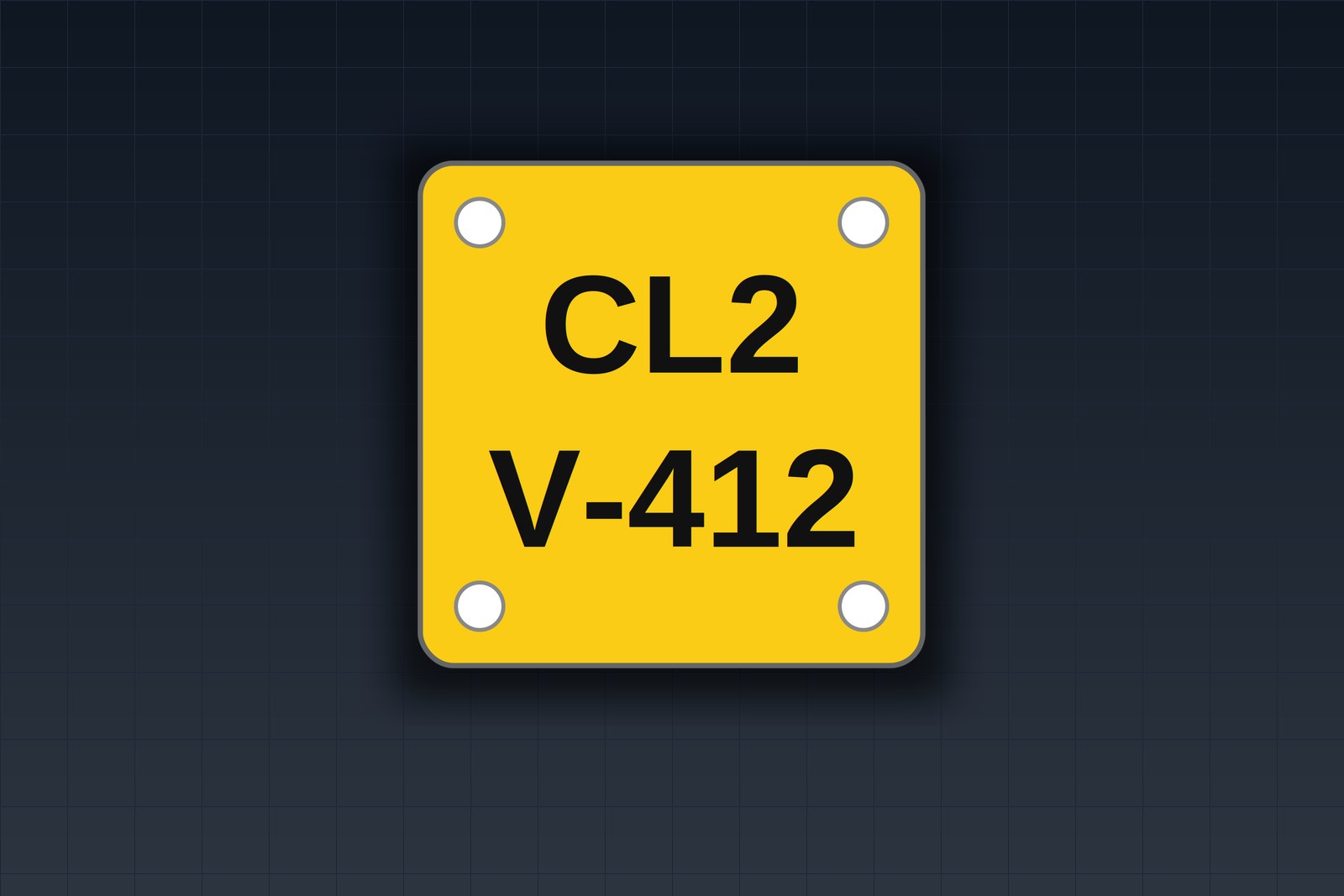
Stainless suits wet, outdoor and washdown areas, where an engraved plate stays sharp and the metal does not absorb moisture. The stock 1.5-inch stainless V-101 valve tag is a common size for handwheel and lever valves. Engraved text will not rub off the way printed ink does.
Where to be careful
Headworks, wet wells and sludge areas can hold hydrogen sulfide and humid, corrosive air. Some stainless grades pit and stain in those atmospheres, and plain steel hardware or chain will rust and streak the tag. If you choose stainless there, specify the grade with your supplier and use stainless wire or ties.
Where engraved plastic works
Two-ply engraved plastic does not corrode in H2S, which is why it is often the choice for headworks and wet well valves. The trade-offs are that it can discolor or craze in strong direct sunlight over many years and it softens at high heat, so keep it off hot process piping. In a chemical room, check the chemical against the plastic before committing to a whole room.
For legibility, a 1.5-inch tag usually carries the number at roughly 1/4 inch character height, with a second line for service in smaller type. Pick sizes that someone can read from where they stand to turn the valve.
Pump and blower nameplates, and the local control station
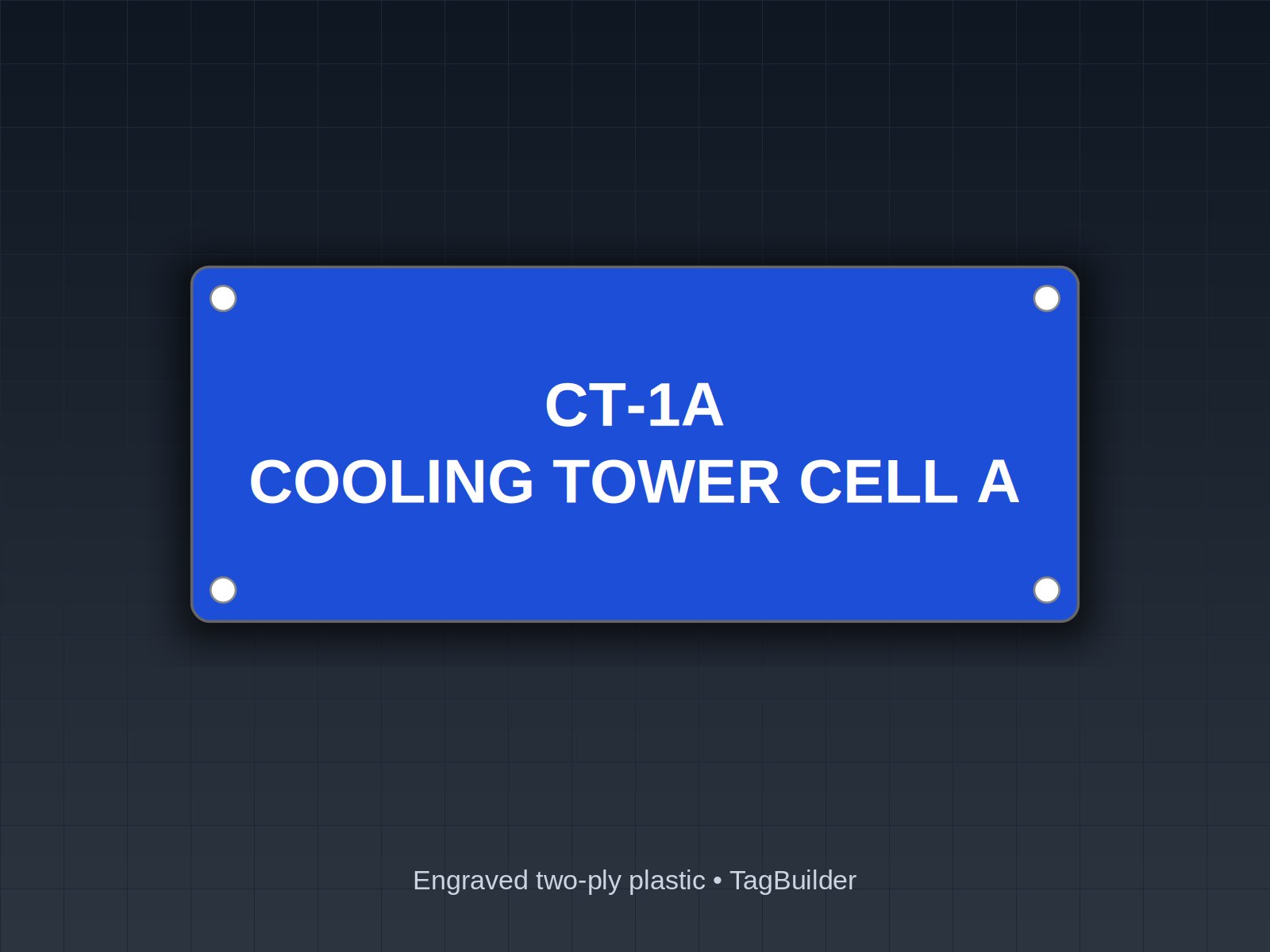
Put the plant ID where an operator will look first, on the equipment itself and again at the local control station. A motor nameplate holds the manufacturer's data. A separate plant ID plate beside it should read the same as the HMI, for example RAS-P-1 in characters about 1/2 inch tall, with the service underneath: RETURN ACTIVATED SLUDGE PUMP 1.
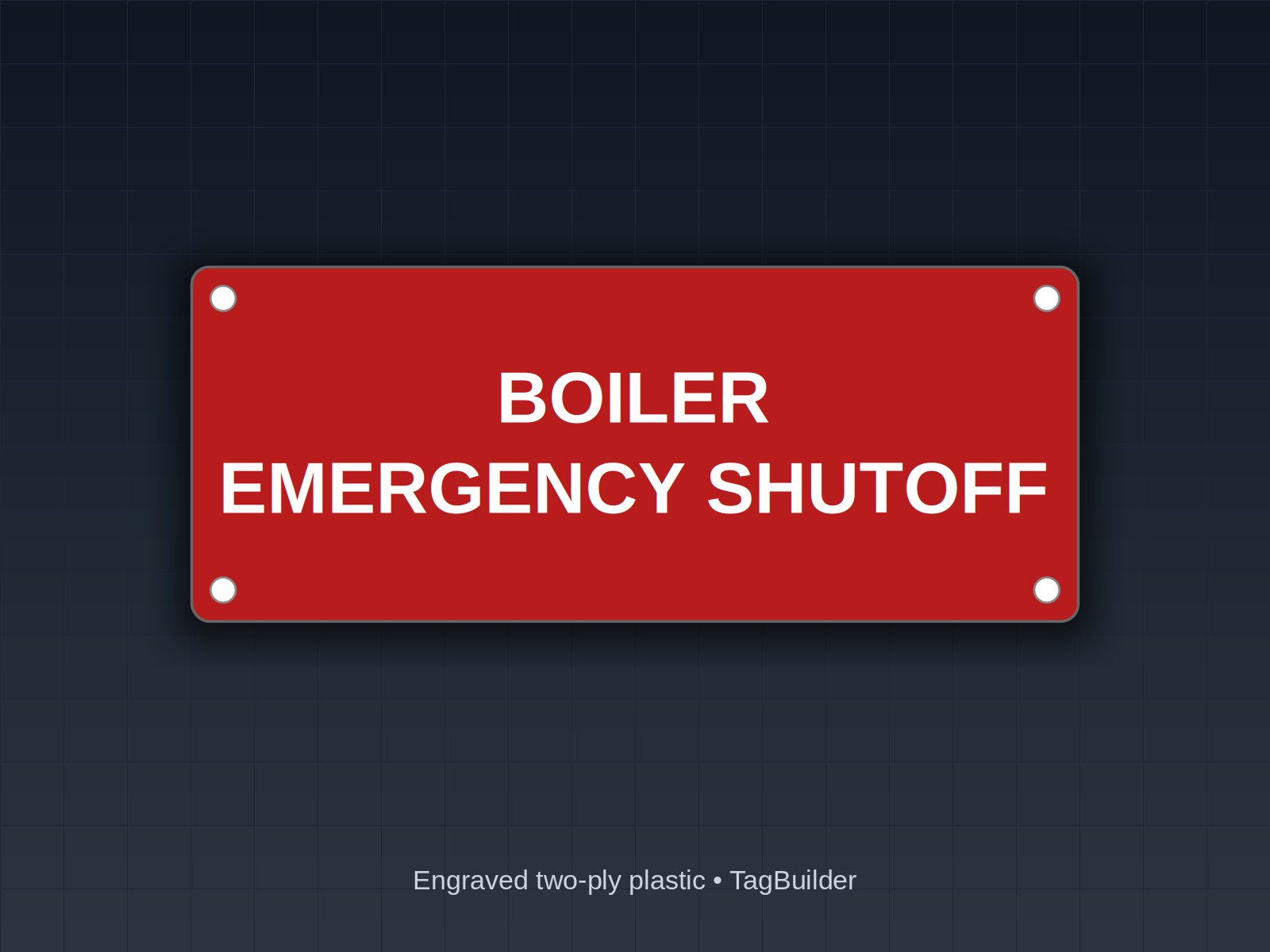
At the local control station, the engraved legend plates for pushbuttons, selector switches and pilot lights should use the same equipment ID plus the function: HAND-OFF-AUTO, START, STOP, RESET, and E-STOP where the station has one. Plates in the 3/16 to 1/4 inch character range are common for legends. For lift stations, the same logic applies to the panel: label the lead and lag pump positions, alarm lights, and the float or level controls. A stock LEAD PUMP label and SEWAGE EJECTOR label cover the standard wording, and custom plates cover your plant numbers.
Chemical feed: label the whole path
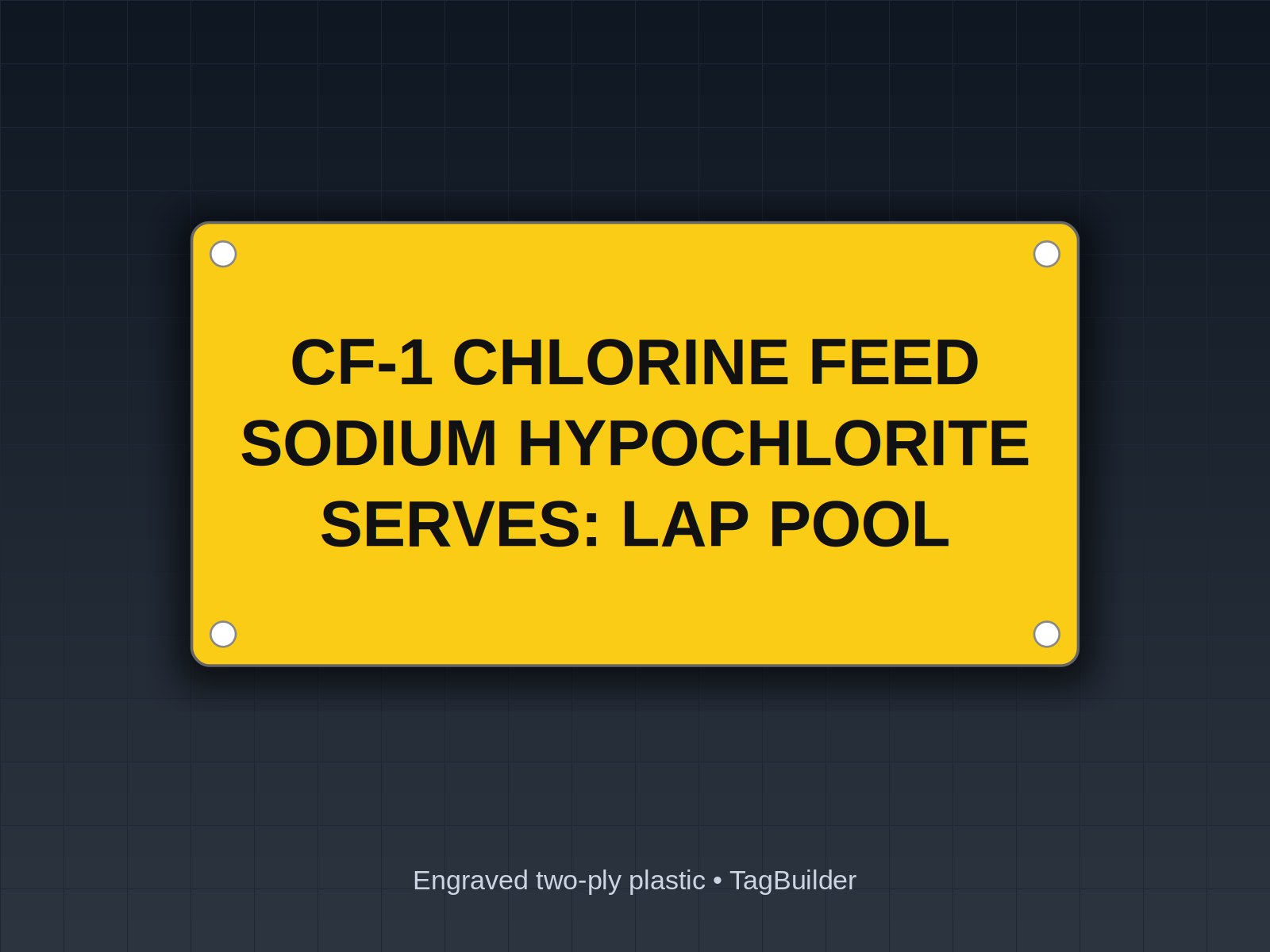
A chemical feed system fails safely only if every part says what it carries. Label four points, each with the chemical name:
- Tank: chemical name, tank ID, and the fill connection.
- Metering pump: pump ID and chemical name, since pumps are often swapped between services.
- Line: chemical name and flow direction at the pump, at every wall penetration and at valves.
- Injection point: chemical name and the point it feeds, such as CHLORINE CONTACT BASIN INLET.
Where the room has hazard labeling from your employer's hazard communication program, keep the plate wording consistent with it and do not copy hazard artwork into engraved plates. For another example of this four-point approach, see the chemical room labeling guide.
Worked example: one lift station and one feed skid
Use this as a copyable starting list. Replace the prefixes with your own. Both lists assume the P&ID and SCADA use the same numbers.
Lift Station 3 (prefix LS3)
- LS3-P-1 plate: LS3-P-1 / LEAD PUMP / LIFT STATION 3 (stainless nameplate at pump, plus a LEAD PUMP label at the panel)
- LS3-P-2 plate: LS3-P-2 / LAG PUMP / LIFT STATION 3
- LS3-V-101 tag: PUMP 1 SUCTION
- LS3-V-102 tag: PUMP 1 DISCHARGE CHECK
- LS3-V-103 tag: PUMP 2 SUCTION
- LS3-V-104 tag: PUMP 2 DISCHARGE CHECK
- LS3-V-110 tag: FORCE MAIN ISOLATION
- LS3-V-111 tag: BYPASS CONNECTION, with a plate noting NORMALLY CLOSED
- Panel legend plates: HAND-OFF-AUTO for each pump, HIGH WET WELL ALARM, PUMP 1 RUN, PUMP 2 RUN, RESET
- Wet well hatch: SEWAGE EJECTOR / LIFT STATION 3 label
Sodium hypochlorite feed skid (prefix CF)
- CF-T-1 tank plate: CF-T-1 / SODIUM HYPOCHLORITE / BULK STORAGE
- CF-P-1 plate: CF-P-1 / SODIUM HYPOCHLORITE FEED PUMP 1
- CF-P-2 plate: CF-P-2 / SODIUM HYPOCHLORITE FEED PUMP 2 (STANDBY)
- CF-V-1 tag: TANK DRAW-OFF
- CF-V-2 tag: PUMP 1 SUCTION, CF-V-3 tag: PUMP 2 SUCTION
- CF-V-5 tag: INJECTION POINT ISOLATION
- Line markers: SODIUM HYPOCHLORITE with a flow arrow, at the pump outlet, each wall penetration and every 10 feet or at each direction change
- Injection point plate: SODIUM HYPOCHLORITE INJECTION / CONTACT BASIN INLET
- Local station legends: CF-P-1 START, CF-P-1 STOP, CF-P-2 START, CF-P-2 STOP, E-STOP
Frequently Asked Questions
How do I number valves in a wastewater treatment plant?
Use a prefix for the process area or plant area, a letter for equipment type, and a sequence number, such as HW-V-105 or 200-V-210. Start from the numbers already on the P&ID and SCADA tag list so the plate, drawing and HMI all match. Leave gaps in the sequence for future valves.
What are the pipe colors in the Ten States Standards?
The standards include a suggested color scheme for plant piping, in broad terms yellow for chlorine, the brown or black family for sludge and the blue family for potable water. Colors differ by edition and by state, so copy them from the current edition your state adopted, not from a summary like this one.
Should I use stainless or plastic valve tags in a wastewater plant?
Stainless works well in wet and outdoor areas, but some grades pit in H2S atmospheres such as headworks. Engraved plastic does not corrode there, though it has its own limits with sunlight, heat and some chemicals. Choose by room, and ask your supplier about the grade or plastic type for the exposure.
How should I label lift station pumps and panels?
Give each pump its plant ID at the pump and at the panel, mark the lead and lag positions, and label the alarm lights, selectors and pushbuttons with the same equipment number. Add a SEWAGE EJECTOR label at the wet well access.
What goes on a chemical feed line label?
The chemical name and the direction of flow, placed near the pump, at wall penetrations, at valves and at direction changes. Also label the tank, the metering pump and the injection point with the same chemical name.
How do I fix a plant with old and new valve numbers?
Pick the SCADA and P&ID numbers as the master, build a cross-reference list for the old numbers, and replace plates area by area. Keep the cross-reference in the O&M manual until every old plate is gone.
Send us one valve or pump number from your P&ID and we'll engrave a sample tag and mail it, no charge.
If you are ready to put the scheme on equipment, the valve tag configurator takes your plant numbers directly, the rectangle plate configurator handles pump IDs and panel legends, and the free sample lets you check the size and lettering at the valve before ordering a full set.
UL, NFPA, NEC, ASME, CEMA, TIA, ANSI and OSHA are names or marks of their respective organizations; TagBuilder is not affiliated with or endorsed by any of them. Requirements above are paraphrased summaries, not the text of any standard. Always work from the current published edition and your AHJ.