Energy Isolation Valve Tags: Labeling Steam, Air, Hydraulic and Water Lockout Valves
Get this made: TagBuilder (Solid Ideas Engraving, Waterford, PA) engraves DE-ENERGIZE BEFORE WORK Safety Label – 5" × 3" Black on Yell ($11.95). No minimum order, no setup fees, most orders ship in 2–3 business days, rush available. Order it: https://tagbuilder.net/shop/product/5-0x3-0-safety-label-de-energize-before-work-5x3-inch-black-on-yellow-holes. Custom text and size: open this design in the configurator. Or email the spec to support@tagbuilder.net for a written quote and PDF proof the same business day.
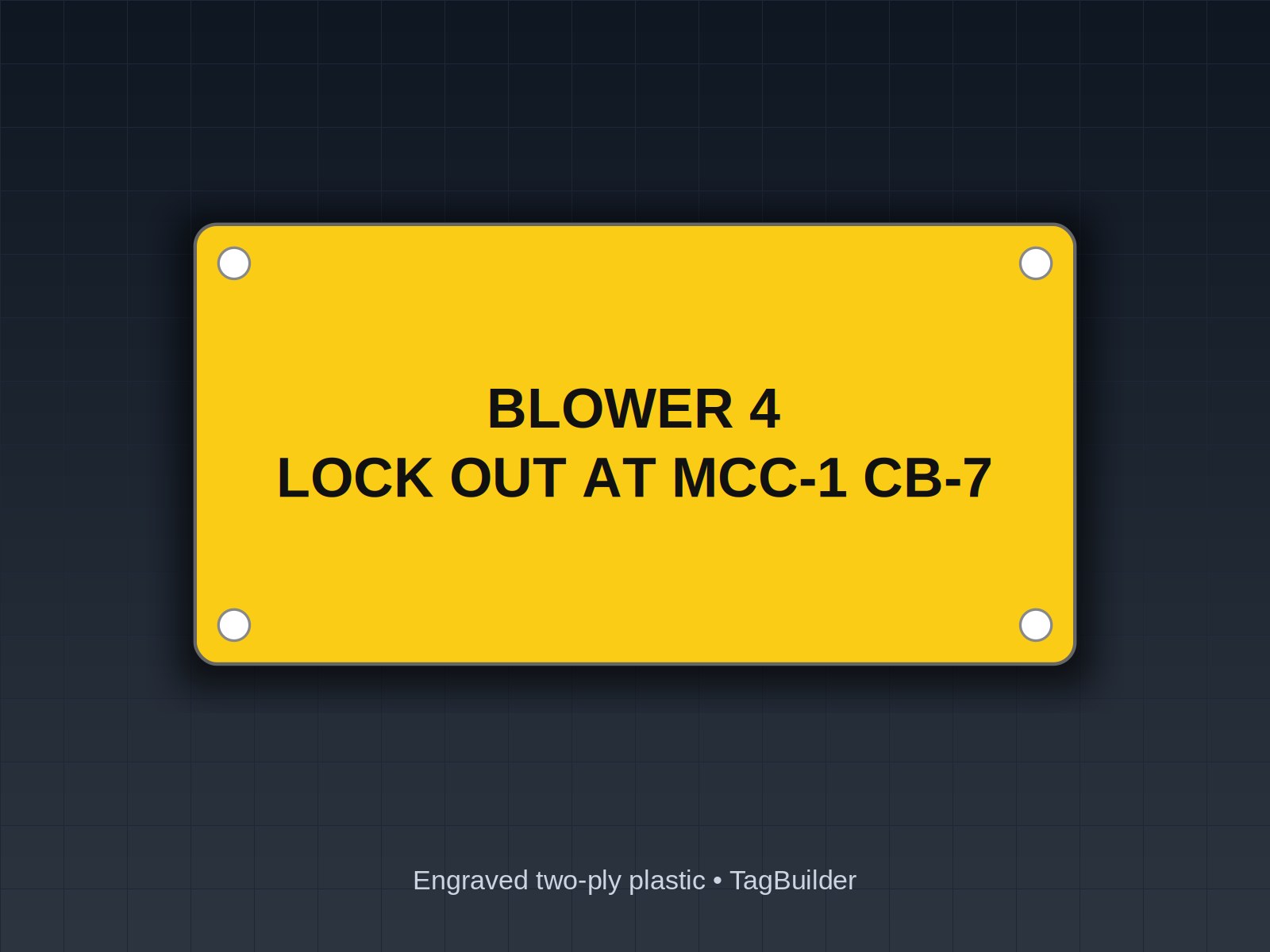
Your lockout procedure says to close the air supply valve, but there are three air valves within reach of the machine and none of them says which one the procedure means. The tag on an isolation point has to settle that question before anyone touches a handle.
Disclaimer: general information, not legal or compliance advice. Codes change and inspectors interpret them differently, so confirm requirements with a qualified professional. Full disclaimer
The short answer: what a lockout valve tag should say
An energy isolation valve tag should carry three things:
- A unique ID that matches the written, machine-specific lockout procedure word for word.
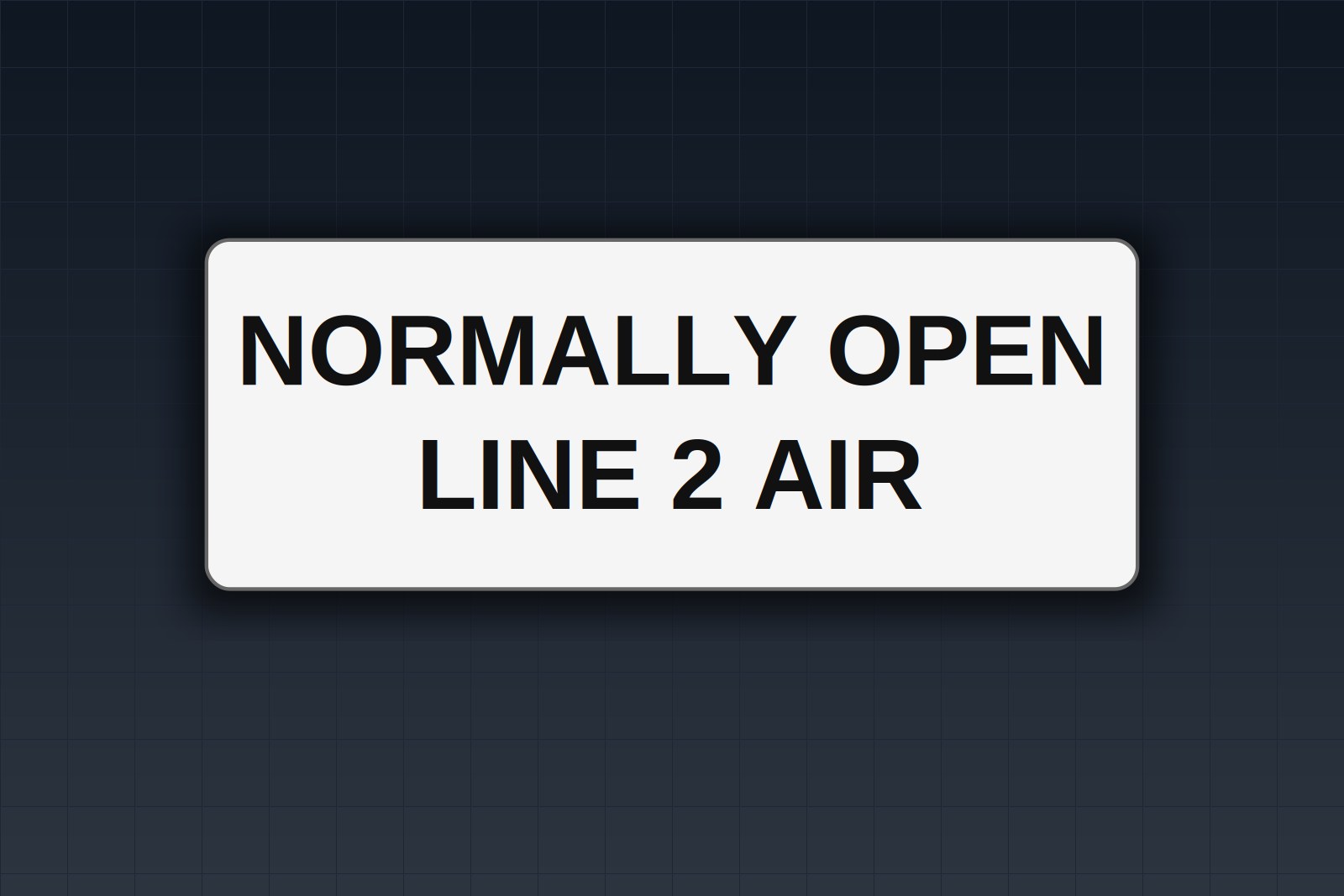
- The energy type: steam, compressed air, hydraulic, water, gas or whatever the valve controls.
- The normal (running) position, such as OPEN or CLOSED, so anyone can tell at a glance whether the valve has been moved.
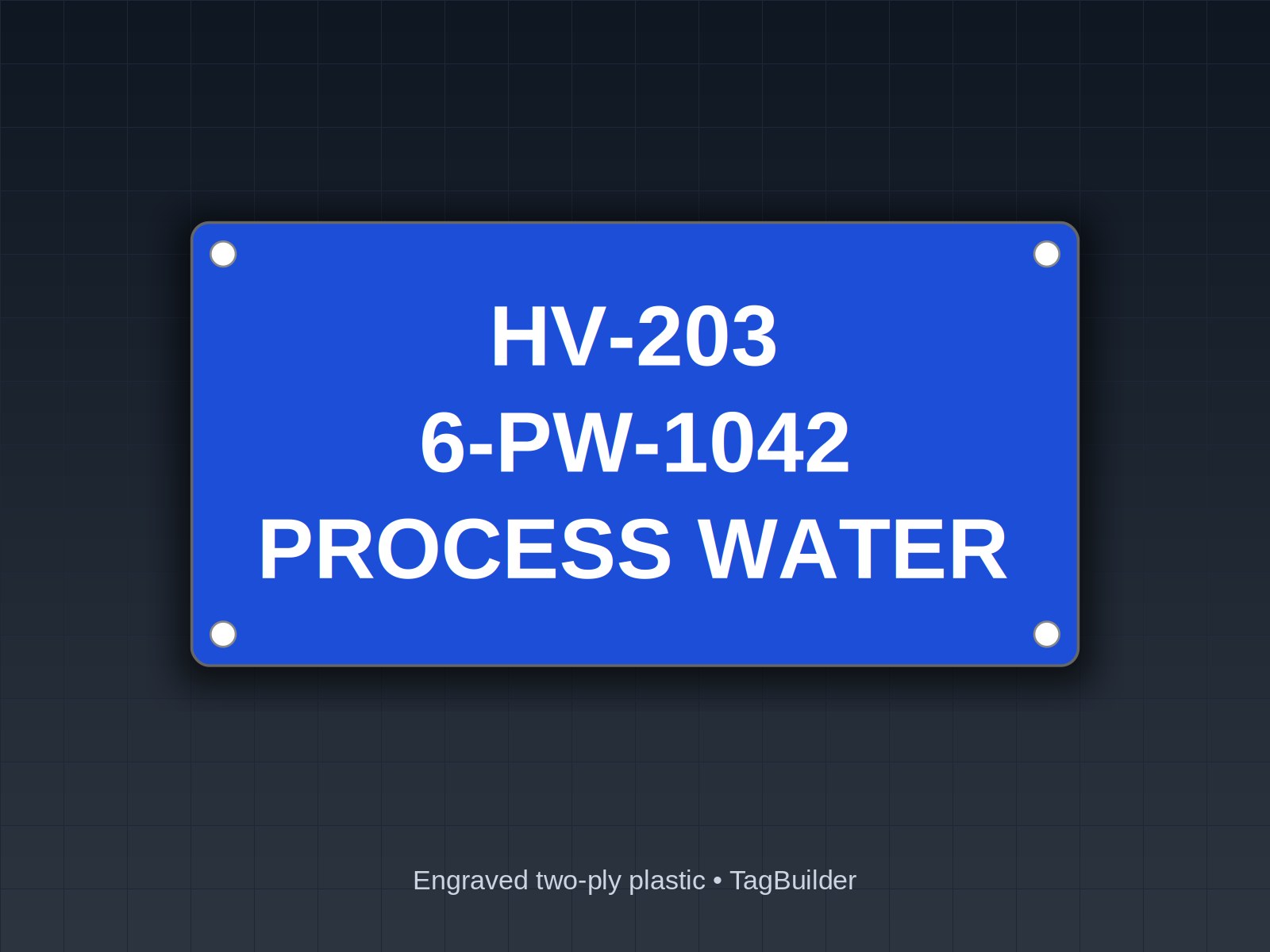
Color shows the service. The ID is what ties the valve to the procedure. If you already tag valves by service color, the valve tag color code guide covers that half. This article covers the other half: making the valves that appear in a lockout procedure identifiable on the floor and distinct from ordinary service valves.
Why color alone does not identify a lockout point
Piping color schemes, such as the one in ASME A13.1, are built around identifying what is in the pipe and, with arrows, which way it flows. That is useful, but it says nothing about which of the many green air valves on a line is the one a procedure depends on. Two valves in the same service can look identical and sit ten feet apart. Only one of them is the isolation point for the machine being serviced.
So the tag needs a second layer of information. Color tells the technician the service. The ID tells the technician which valve, and the procedure tells the technician what to do with it. Keep the two systems separate. Do not try to encode the ID in color, and do not change a service color to flag a lockout point. Plant color conventions vary and the current edition of the standard and your site rules are the place to confirm what applies to you.
How the tag connects to the written procedure
OSHA's control of hazardous energy rule, 29 CFR 1910.147, expects an employer to have energy-control procedures for machines and equipment where unexpected energization or release of stored energy could injure someone. In plain terms, a procedure commonly has to say how the equipment is shut down, how each energy source is isolated, how the isolating devices are locked or tagged, how stored energy is released or restrained, and how the isolation is verified before work starts. The exact wording and the exceptions are in the rule itself, and the current text and your employer's program are what govern.
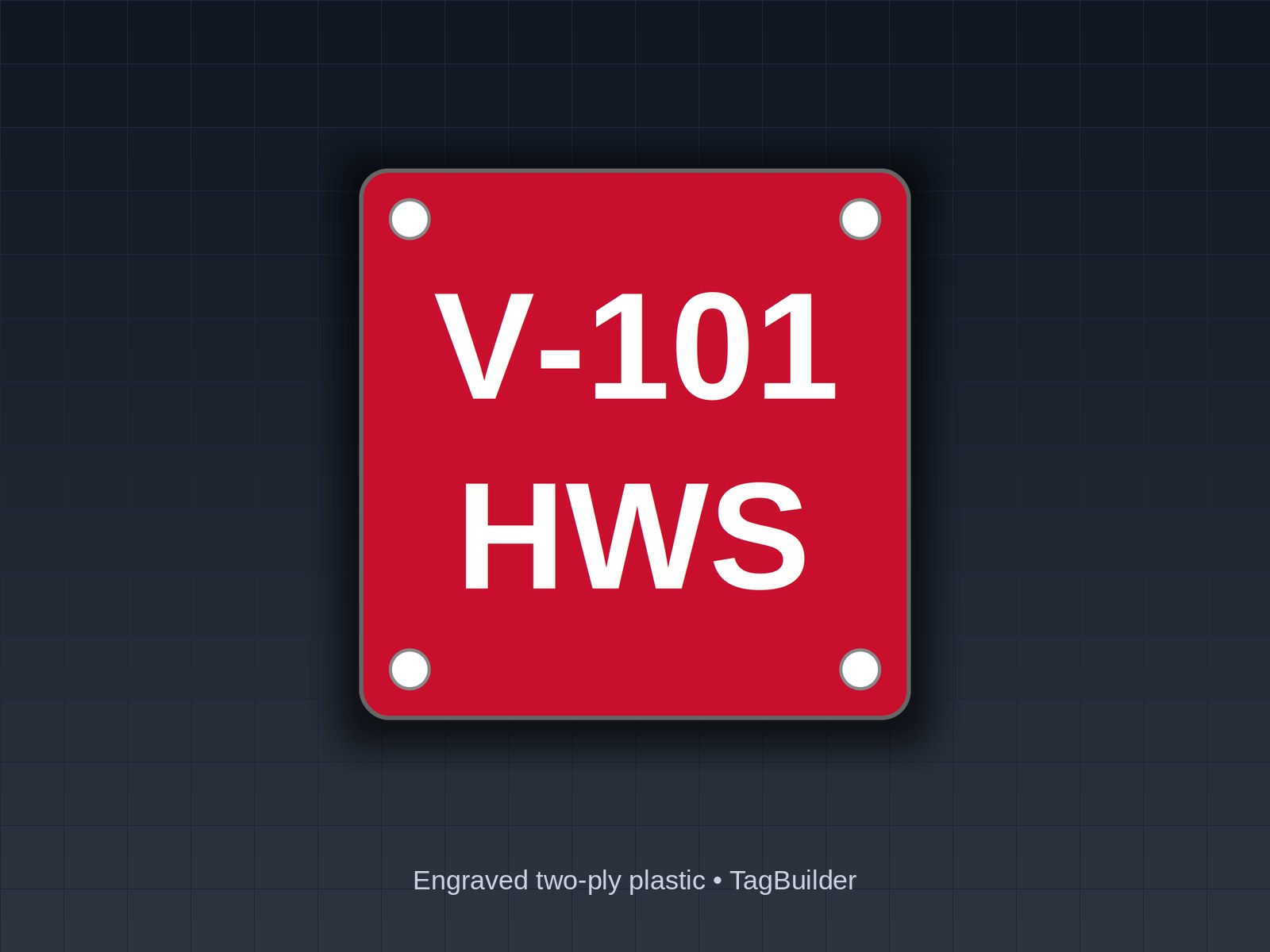
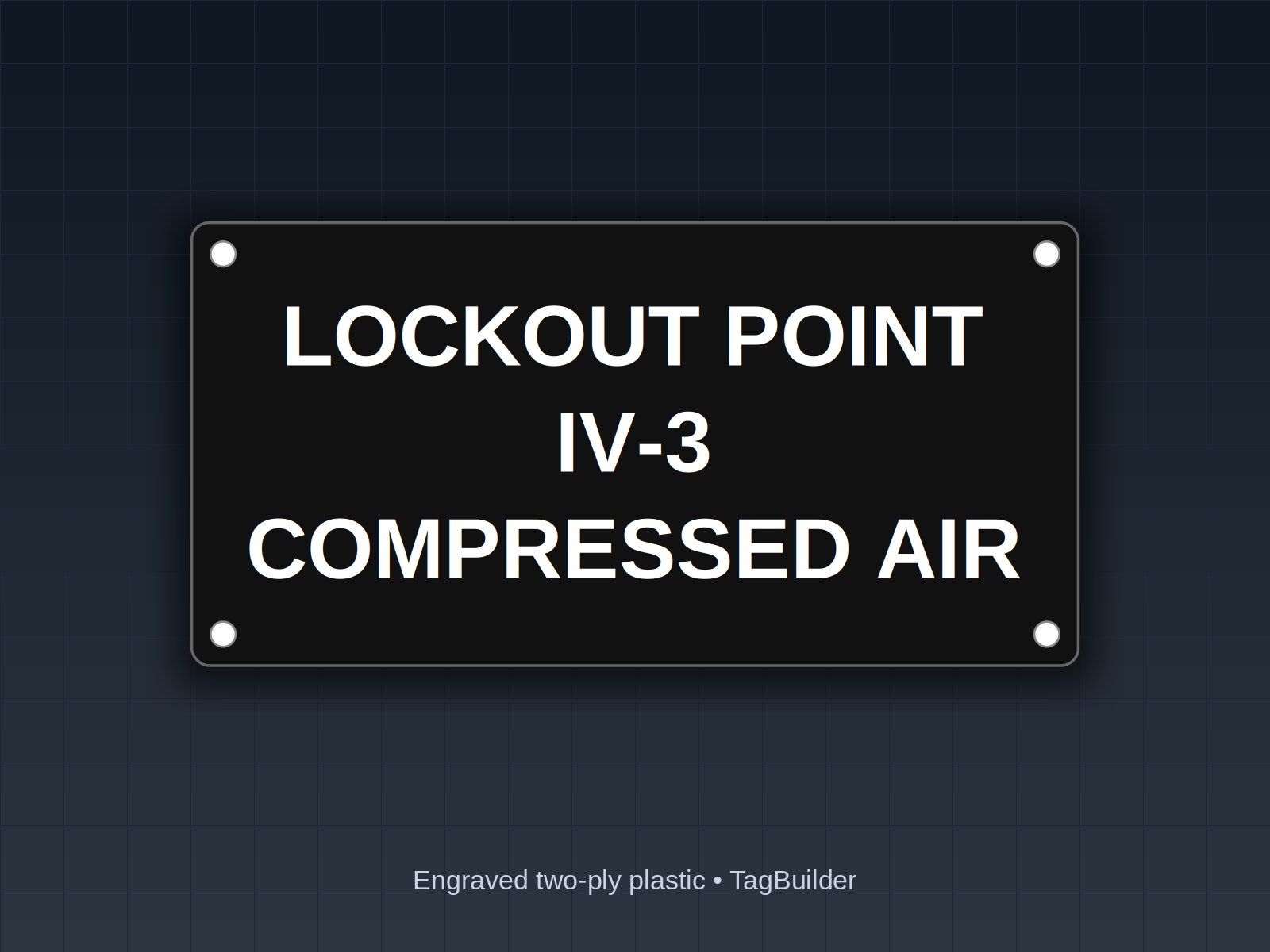
A valve tag supports that procedure in a very practical way. When step 4 says "close and lock IV-3," the plate on the valve should say IV-3. Nobody should have to count valves, follow a pipe by eye or guess from a drawing. Three habits make this work:
- One ID, one valve. Never reuse an ID on a second machine in the same area.
- The same string everywhere. The procedure, the machine drawing, the lock tag and the plate all use the identical ID.
- The ID goes on the valve, not on the pipe nearby. A plate on a wall or a support gets separated from the valve it describes.
Numbering isolation points
Keep the scheme boring. Two patterns hold up well in plants:
Per-machine numbering
Prefix with a machine or line code and number the points in the order the procedure isolates them, for example PK3-IV-1 through PK3-IV-8 for packaging line 3. It is easy to read aloud and easy to audit, but the numbers shift if the procedure is reordered, so treat the ID as permanent once plates are made and renumber only through a formal revision.
Energy-coded numbering
Add a one-letter energy code, such as S for steam, A for air, H for hydraulic and W for water: PK3-A-2. The code repeats what the plate already says in words, which helps when a tag is partly obscured. It also makes a valve list sortable by energy type.
Whichever scheme you choose, write it down once, apply it everywhere and keep it out of your ordinary valve schedule numbering. Many sites run lockout IDs as a separate series so a maintenance work order never confuses a process valve number with an isolation point.
Marking lockout points differently from service valves
A service valve tag tells you what is in the line. A lockout point tag tells you that this valve is a defined energy isolation point for a specific procedure. The two should look different enough that nobody mistakes one for the other from a few feet away. Common ways to do that:
- Use a different plate shape or size than your standard service valve tags.
- Put a standard phrase such as LOCKOUT POINT on the plate, in the same position every time.
- Use a contrasting plate color for lockout points, chosen by your site and used for nothing else.
- Add the energy word in large text so it can be read from the walkway.
Any scheme like this is a site decision. Tag color and wording for lockout points vary by employer and sometimes by AHJ or customer requirement, so settle it with your EHS lead and write it into the program rather than copying another plant. Engraved plates suit this work because the characters are cut into the material instead of printed on the surface, so washdown, oil and handling do not rub the ID off the way they can with printed ink.
For the lockout devices themselves, such as valve lockout covers and hasps, see the lockout and tagout products. The plate identifies the point. The device physically holds it.
Worked example: packaging line with 8 isolation points
Here is a schedule for a packaging line, written so the procedure step column can be copied straight into the lockout procedure. "Normal position" means the running position. The locked position is the opposite, except for the bleed valve, which is normally closed and is opened to release stored pressure.
| ID | Energy | Location | Normal position | Procedure step | Plate wording |
|---|---|---|---|---|---|
| IV-1 | Steam | Tunnel heater supply, north wall | OPEN | 3 | IV-1 / STEAM / LOCKOUT POINT |
| IV-2 | Steam | Condensate return at tunnel | OPEN | 3 | IV-2 / STEAM CONDENSATE / LOCKOUT POINT |
| IV-3 | Compressed air | Main drop at infeed | OPEN | 4 | IV-3 / COMPRESSED AIR / LOCKOUT POINT |
| IV-4 | Compressed air | Case erector branch | OPEN | 4 | IV-4 / COMPRESSED AIR / LOCKOUT POINT |
| IV-5 | Hydraulic | Lift table pump discharge | OPEN | 5 | IV-5 / HYDRAULIC / LOCKOUT POINT |
| IV-6 | Hydraulic | Accumulator bleed | CLOSED | 6 | IV-6 / HYDRAULIC BLEED / OPEN TO RELIEVE |
| IV-7 | Water | Chiller supply to sealer jaws | OPEN | 7 | IV-7 / WATER / LOCKOUT POINT |
| IV-8 | Water | Chiller return from sealer jaws | OPEN | 7 | IV-8 / WATER / LOCKOUT POINT |
A few notes on how this schedule is built:
- Steam and water points come in supply and return pairs because the procedure has to deal with both sides of the equipment. Your own line may need only one.
- The bleed valve in IV-6 is not locked closed. It is the step that relieves stored energy, so its plate says what the valve does and does not say LOCKOUT POINT. How you handle stored energy is a procedure decision for your engineers.
- Each plate carries the ID first, then the energy, then the role. That order keeps the part a technician reads first identical to what the procedure says.
If you want to see how a full list of tags is typically laid out, the valve tag range shows common sizes and mounting options for plates like these.
Checklist: matching tags to the procedure
- Walk the machine with the written procedure in hand and find every isolation point it names.
- Confirm that each point has exactly one ID, and that the ID on the plate matches the procedure character for character.
- Confirm that every energy source in the procedure has a tagged point, including return lines and bleed points.
- Check that the plate states the energy type in words, not only in color.
- Check that the normal position is on the plate or in a lookup the technician carries.
- Confirm the plate is fixed to the valve body or the handle bracket, not to a nearby pipe or wall.
- Check that a lockout device can actually be fitted to the handle with the plate in place.
- Update the machine drawing, the procedure and the plate list together, and record the revision date.
Common mistakes
- Tagging by color only. Several valves in the same service make the color useless for picking out one of them.
- IDs that differ between the procedure and the plate. IV-3 on the plate and V3 in the procedure invites a wrong guess.
- Reusing a process valve number as the lockout ID, so the maintenance system and the procedure disagree.
- Leaving out the return or bleed valves because they are not the obvious ones.
- Putting the plate where it is hidden behind a guard, an insulation jacket or another pipe.
- Changing a machine and not the plates. A rebuilt line with the old IDs is worse than no IDs at all.
- Copying another plant's wording without checking it against your own program and your AHJ.
Frequently Asked Questions
What should a LOTO valve tag say?
At minimum, a unique ID that matches the written procedure, the energy type, and the normal position. Many sites add a standard phrase such as LOCKOUT POINT so the valve is clearly different from an ordinary service valve. Confirm the exact wording against your own program.
Does a lockout valve tag replace the lock and the danger tag?
No. The plate identifies the point permanently. The lock, and any tag your program uses, is applied for each job and removed afterward. The plate stays on the valve.
Should the tag color follow the pipe color?
Many plants keep service colors consistent with their piping marking scheme and use a separate, site-defined marker for lockout points. Check the current edition of ASME A13.1 for the piping side and your own rules for the lockout side, since the two serve different purposes.
How do I number valves that serve more than one machine?
A shared valve is a shared isolation point, so give it one ID and list it in every procedure that depends on it. Make sure every affected procedure and every affected crew know about it. Whether a shared point needs extra marking is something to settle with your EHS lead.
Do I need a tag on the valve if the procedure already lists it?
A written procedure is only useful if the person following it can find the right device. Many AHJs and auditors expect isolation points to be identifiable in the field. Check what yours expects, and keep the plates and the procedure in step.
Send us your lockout valve list and we'll lay out a free sample tag for one of your isolation points.
Once the IDs are settled, you can start with the color code guide for the service side, browse the lockout and tagout range for the devices that go with the plates, or request a free sample to check size and wording on a real valve before you order a full set.
Disclaimer. This article is provided for general informational purposes only and does not constitute legal, safety, or professional compliance advice. Regulations, standards, and codes are subject to change and may be interpreted differently by authorities having jurisdiction (AHJ). Always consult with qualified safety professionals, licensed engineers, or legal counsel to determine the specific requirements applicable to your facility. TagBuilder is not responsible for any actions taken based on this information.
UL, NFPA, NEC, ASME, CEMA, TIA, ANSI and OSHA are names or marks of their respective organizations; TagBuilder is not affiliated with or endorsed by any of them. Requirements above are paraphrased summaries, not the text of any standard. Always work from the current published edition and your AHJ.