Data Center Rack and Row ID Plates: A Cabinet Numbering Scheme You Can Copy
Get this made: TagBuilder (Solid Ideas Engraving, Waterford, PA) engraves ROW A sign, 6×2″ ($15.00). No minimum order, no setup fees, most orders ship in 2–3 business days, rush available. Order it: https://tagbuilder.net/shop/product/6-0x2-0-safety-label-row-a-6x2-inch-white-on-black-adhesive. Custom text and size: open this design in the configurator. Or email the spec to support@tagbuilder.net for a written quote and PDF proof the same business day.
Two cabinets in two halls both read 12, and a technician powers down the wrong one. A numbering scheme set before the first plate is ordered keeps one number tied to one cabinet.
Disclaimer: general information, not legal or compliance advice. Codes change and inspectors interpret them differently, so confirm requirements with a qualified professional. Full disclaimer
Every cabinet needs a unique ID on its front and rear. Every row needs a sign at each end that lists its cabinet range and aisle type. Every ID must read the same in the DCIM, the drawings and on the plate. Cabinet and space identification comes from ANSI/TIA-606 (the C edition is widely cited, and a newer D revision exists, so check which one your contract names) and from the owner's own standard. No single NEC section sets cabinet numbers. Your AHJ or customer spec may add rules.
Why the space needs its own ID scheme
Power labels tell you what feeds a load. Space labels tell you where the load sits. This article covers the space: halls, rows, cabinets and aisles. For the power side, see the PDU and RPP labeling guide.
A scheme that works has three traits. Each ID is unique across the site. Each ID sorts correctly in a spreadsheet. Each ID is printed the same way everywhere it appears. Break any of the three and a work order sends someone to the wrong rack.
Grid coordinates vs. row and position
TIA-606 describes identifying spaces and cabinets in a way that stays unique and traceable. Owners commonly pick one of two approaches. The standard shows example formats. It leaves the final choice to the owner.
Floor-tile grid
The hall floor is a grid of tiles. Columns get letters and rows get numbers, or the reverse. A cabinet takes the coordinate of the tile it stands on. A long form looks like DC1.2A.AJ05: site, room, then the grid cell.
- Strength: the ID survives a re-rack. Move a cabinet and the ID changes with the tile.
- Weakness: staff need the grid in their heads, and a cabinet that sits across two tiles needs a rule.
Row and position
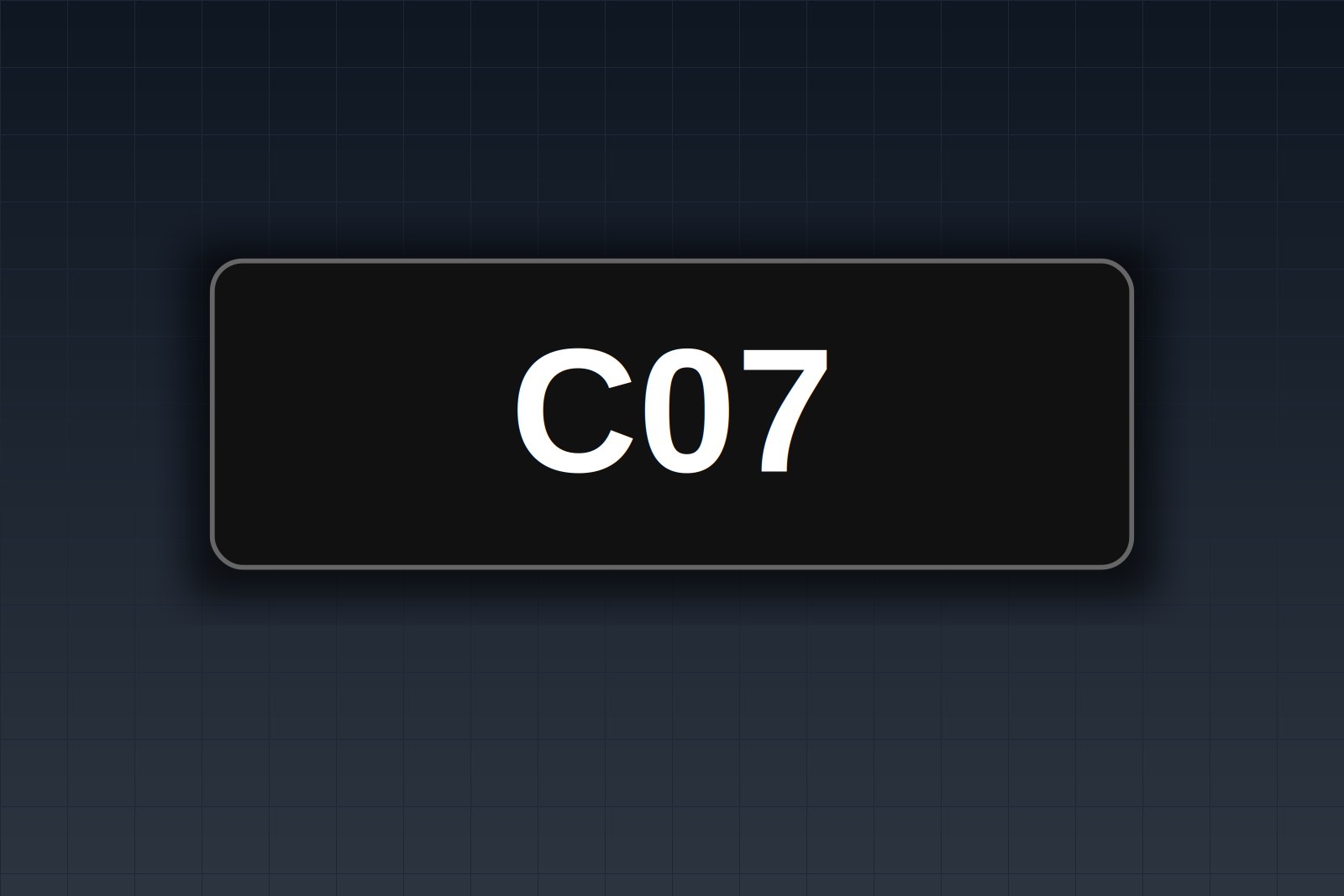
The hall is split into rows. Each cabinet is numbered along its row. A short form looks like R03-C12: row 3, cabinet 12. Or use a letter row, as in C07 for the seventh cabinet in row C.
- Strength: a technician can walk to it without a drawing.
- Weakness: adding a cabinet mid-row forces a renumber unless you leave gaps.
Pick one. Do not mix both in one hall.
Table 1: the identifier elements
Table 1: Identifier elements, an example of each, and where each one appears.
| Identifier element | Example | Where it appears |
|---|---|---|
| Site / building | DC1 | Long-form ID, drawings, DCIM |
| Hall / room | 2A | Hall entry sign, long-form ID |
| Row | ROW C | Both end-of-row signs, drawings |
| Cabinet | C07 | Front and rear of the cabinet, DCIM |
| Grid cell (grid scheme) | AJ05 | Floor tile marker, long-form ID |
| Aisle type | COLD AISLE | End-of-row sign, containment door |
| Feeding power source | RPP-2A / RPP-2B | End-of-row plate |
Rules that keep IDs sortable
- Use leading zeros. C07, not C7. Without them, C10 sorts ahead of C2.
- Fix the length. Every cabinet ID has the same number of characters.
- Skip look-alike characters. Avoid the letters O and I where a zero or a one could sit beside them.
- Pick one separator. Use a hyphen or a period, and use it everywhere.
- Leave gaps. Number by ones, but keep a few unused numbers at row ends for growth.
- Match the rear to the front. The rear plate carries the same ID as the front, not a second number.
Plates: what goes where
Cabinet plates
Put the ID on the front and the rear. Size the characters for the aisle: 1 in letters on a 6 x 2 in plate read from the end of a row. Use an adhesive plate on a painted door. Clean the spot first and keep the plate clear of the handle and the perforations.
End-of-row signs
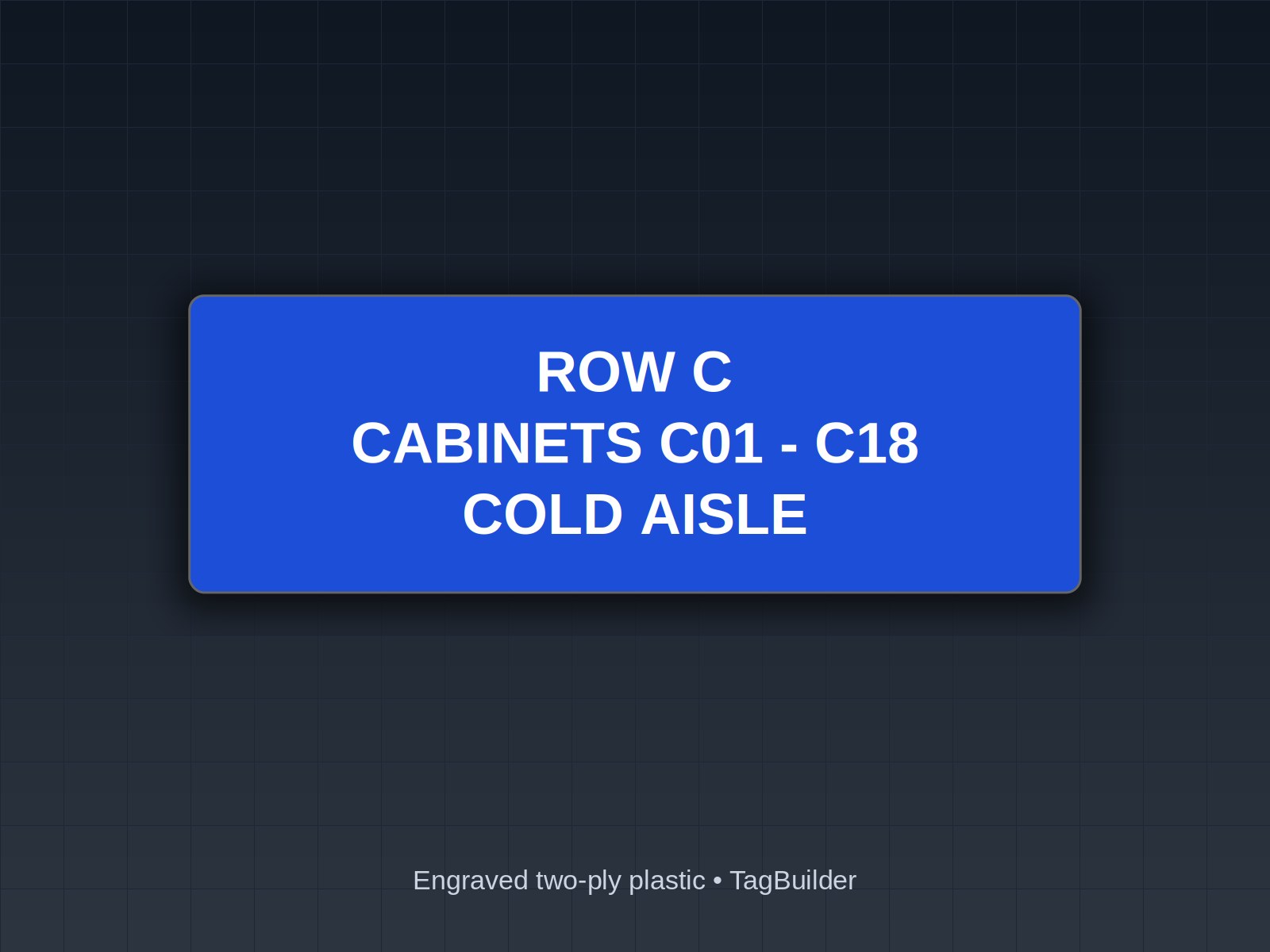
Each row gets a sign at both ends. It lists the row, the cabinet range and the aisle type with a direction arrow. The ROW A stock plate is a buyable starting point. You can order the 6 x 2 in ROW A plate as-is, or change the text in the configurator to your own row letters and ranges.
Aisle and containment signs
Hot and cold aisle wording belongs on the end-of-row sign and on each containment door. Choose one color for each aisle type and hold it across the hall. Many AHJs and customer standards expect consistent wording, so check the current edition of whatever your project cites.
Worked example: a six-row hall
The hall has rows A through F with 18 cabinets per row. That is 108 cabinets and 12 end-of-row signs. All plates are white text on a black adhesive plate.
Row sign, 6 x 2 in, one at each end of row C:
- Line 1: ROW C
- Line 2: CABINETS C01-C18
- Line 3: COLD AISLE →
Flip the arrow on the far-end sign so it points back down the row. Row C faces the cold aisle on one side and the hot aisle on the other, so write the aisle that the sign faces.
Cabinet plate, 6 x 2 in, front and rear of the seventh cabinet:
- Line 1: C07 (1 in letters)
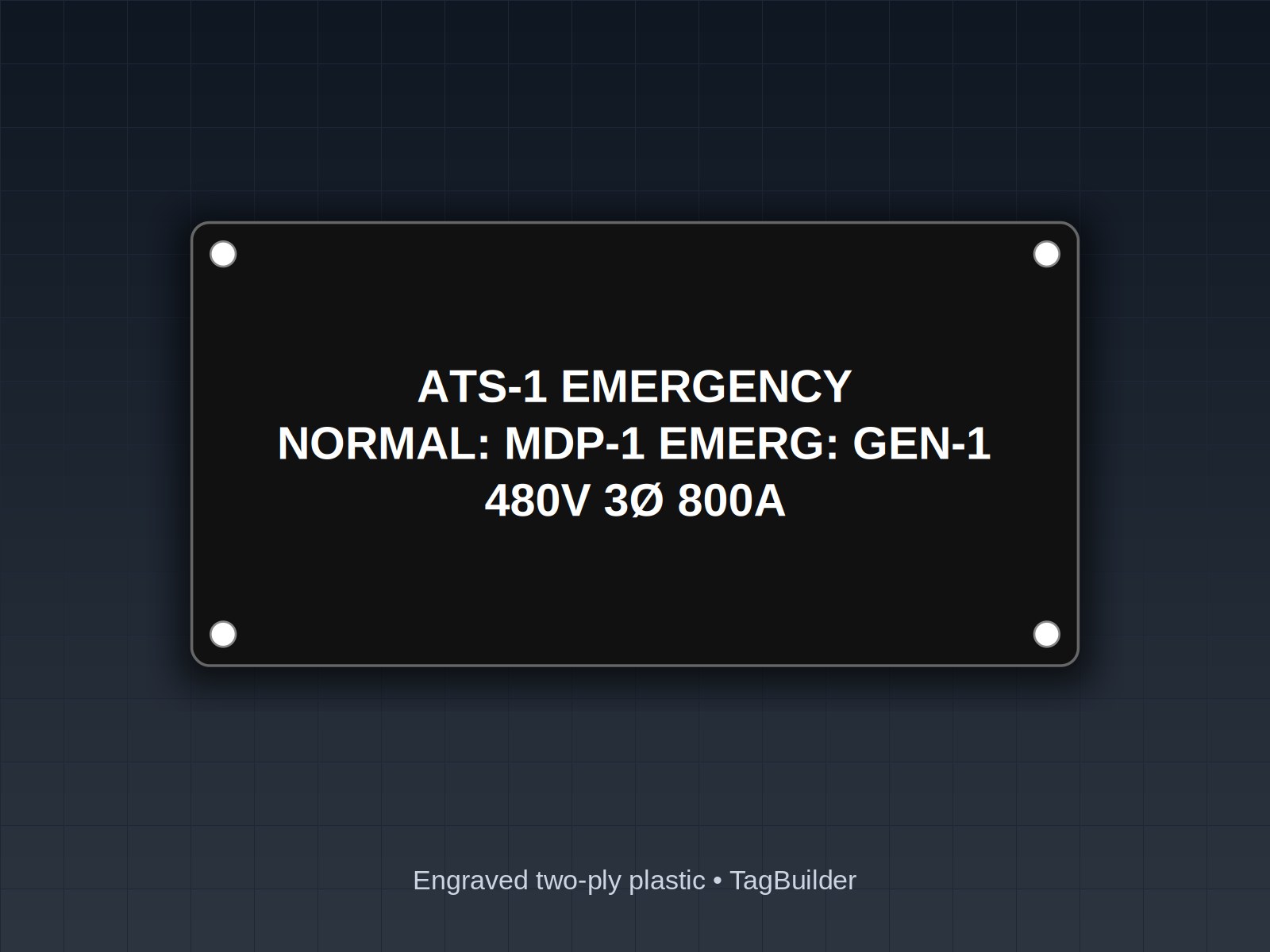
End-of-row power plate, 6 x 4 in, set in the configurator:
- Line 1: ROW C
- Line 2: CABINETS C01-C18
- Line 3: POWER: RPP-2A / RPP-2B
That third line is the one-line cross-reference to the power source. Keep the RPP names identical to the ones on the RPP itself. The PDU and RPP article covers how those names are built.
Frequently Asked Questions
How do I number data center racks?
Pick row and position or a floor-tile grid, then fix the format. Use a letter for the row, a two-digit number for the cabinet, and one separator. Print the same ID on the front, the rear, the drawings and the DCIM record.
What does TIA-606 say about cabinet labels?
It asks owners to identify spaces and cabinets with unique, consistent identifiers that tie to their records. It gives example formats and leaves the exact scheme to the owner. Read the edition your project names, whether C or D, rather than relying on a summary.
Do I need a label on the back of the rack?
Most operators put one there. Work at the rear is common, and a technician at the back of a cabinet should not need to walk around to read its number. Check your customer spec for the rule on your site.
Can I use a hot aisle or cold aisle sign instead of a row number?
No. An aisle sign tells people the airflow zone. A row sign tells them which row they stand in. Put both on the end-of-row sign so one glance answers both questions.
How big should a data center cabinet number be?
Size it to be read from the end of the aisle. As a working rule, 1 in letters on a 6 x 2 in plate suit most halls. Walk your longest row with a printout before you order a full run.
Send us your floor plan or row list. We'll engrave one row sign as a free sample and mail it.
The next step is small. Send the row list, the floor plan or a one-line drawing, and we return plates that match it. Use the plate configurator to set your own text, or request a free sample to check size and color in your hall first. For more on why engraved plates hold up in white space, read why data centers use engraved tags.
Disclaimer. This article is provided for general informational purposes only and does not constitute legal, safety, or professional compliance advice. Regulations, standards, and codes are subject to change and may be interpreted differently by authorities having jurisdiction (AHJ). Always consult with qualified safety professionals, licensed engineers, or legal counsel to determine the specific requirements applicable to your facility. TagBuilder is not responsible for any actions taken based on this information.
UL, NFPA, NEC, ASME, CEMA, TIA, ANSI and OSHA are names or marks of their respective organizations; TagBuilder is not affiliated with or endorsed by any of them. Requirements above are paraphrased summaries, not the text of any standard. Always work from the current published edition and your AHJ.