Walk-In Cooler, Freezer and Display Case Labels: Condensing Units, Evaporators and Case Numbers
The freezer is warm, there are six condensing units on the roof, and nothing on any of them says which one feeds which box. Every minute spent finding the right unit is a minute product is warming up.
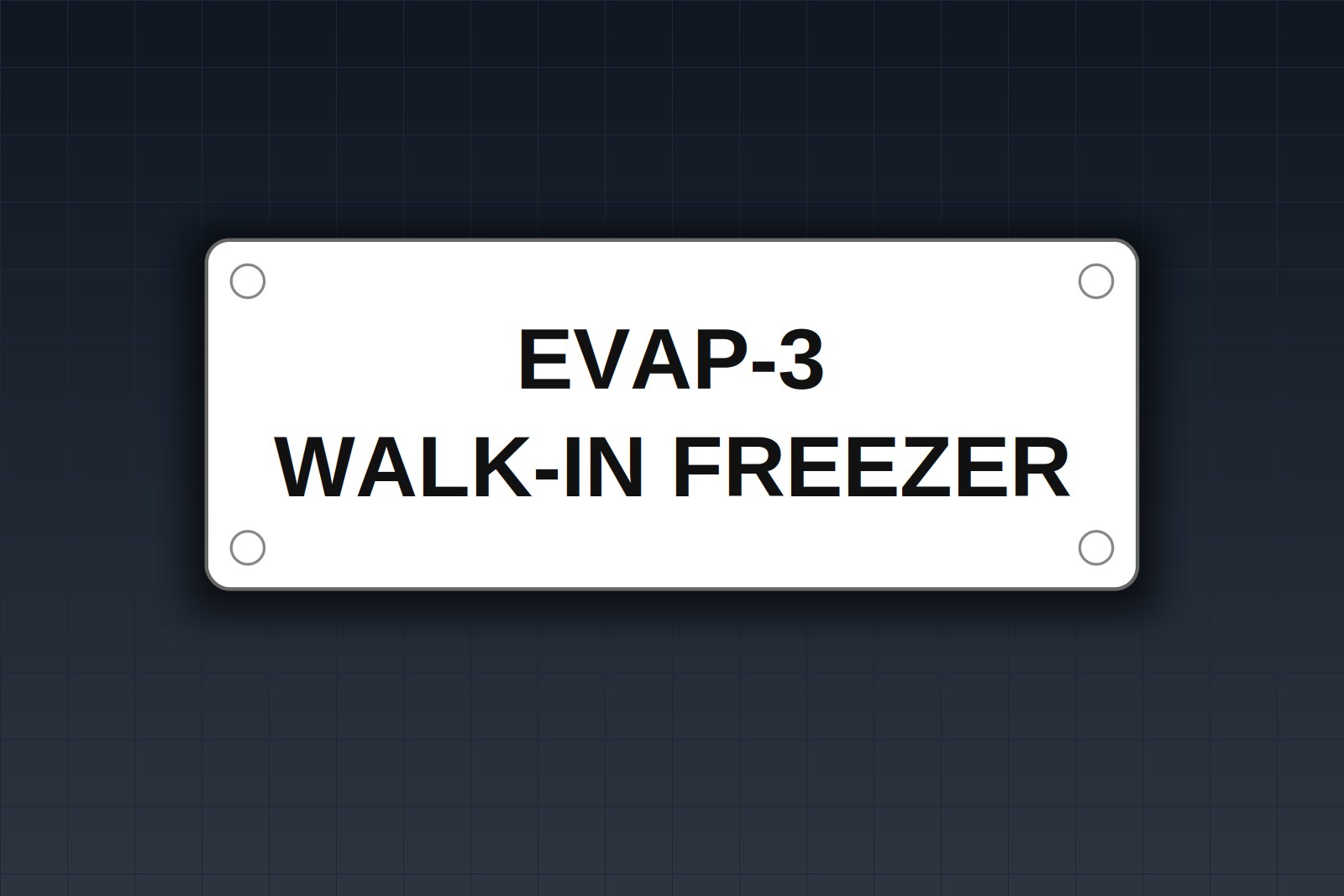
Direct answer: Give every condensing unit a short ID (CU-1, CU-2) and put that same ID, plus the load it serves, on the condensing unit, the evaporator, the defrost controller, the breaker in the panel and the case or box itself. A plate reading CU-3 / WALK-IN FREEZER on the roof and EVAP-3 / CU-3 inside the box lets anyone trace a problem in either direction in under a minute.
Important Disclaimer
This article is provided for general informational purposes only and does not constitute legal, safety, or professional compliance advice. Regulations, standards, and codes are subject to change and may be interpreted differently by authorities having jurisdiction (AHJ). Always consult with qualified safety professionals, licensed engineers, or legal counsel to determine the specific requirements applicable to your facility. TagBuilder is not responsible for any actions taken based on this information.
What goes wrong when refrigeration equipment is not labeled
Most refrigeration sites grow one box at a time. A walk-in cooler goes in, then a freezer, then a few display cases. Each gets its own condensing unit, installed by whoever had the job that year. Ten years later nobody remembers the piping routes.
Here is what that looks like in practice:
- A technician is sent to the walk-in freezer and services the unit next to it, because both sit on the same roof curb and neither is marked.
- Someone shuts off a breaker to work on one unit and the dairy case goes down instead.
- A manager reports "case 12 is warm," but the store calls it by aisle and the contractor calls it by circuit, so the first half hour is spent agreeing on which case is meant.
- A replacement part is ordered for the wrong unit because the only identification was a faded sticker on the wrong side of the cabinet.
None of this needs a complicated system. It needs one naming scheme, used the same way everywhere.
One ID, repeated at every point
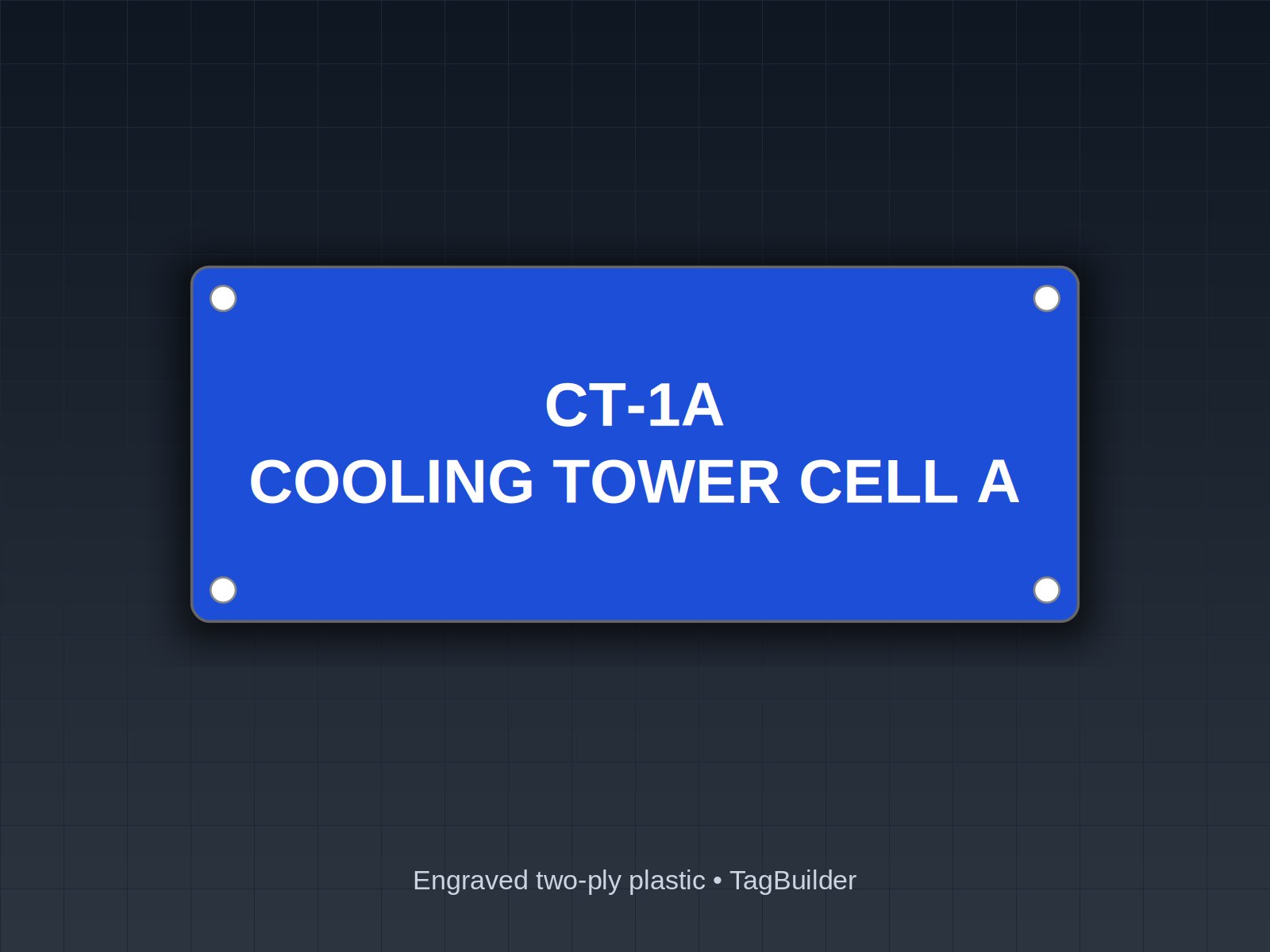
The scheme is simple: the condensing unit gets the number, and everything it serves inherits that number. If CU-3 feeds the walk-in freezer, the evaporator is EVAP-3, the liquid line solenoid is LLSV-3, the defrost controller is DEF-3 and the breaker reads CU-3. When a box has more than one evaporator, add a letter: EVAP-3A and EVAP-3B.
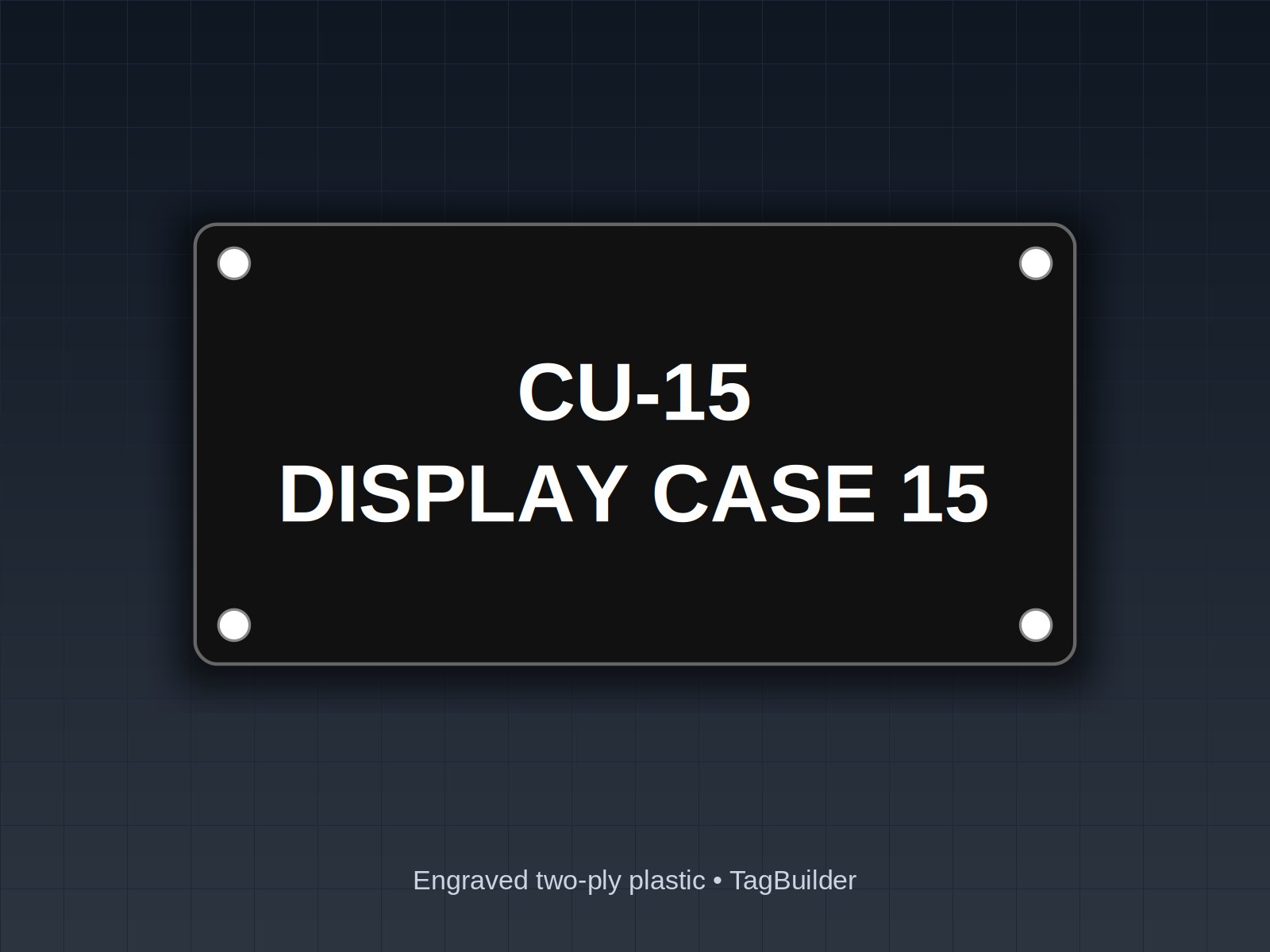
Keep the load description on the plate in plain words. The ID tells you which unit; the second line tells you what it serves. CU-15 / DISPLAY CASE 15 or CU-3 / WALK-IN FREEZER is enough for a roof plate.
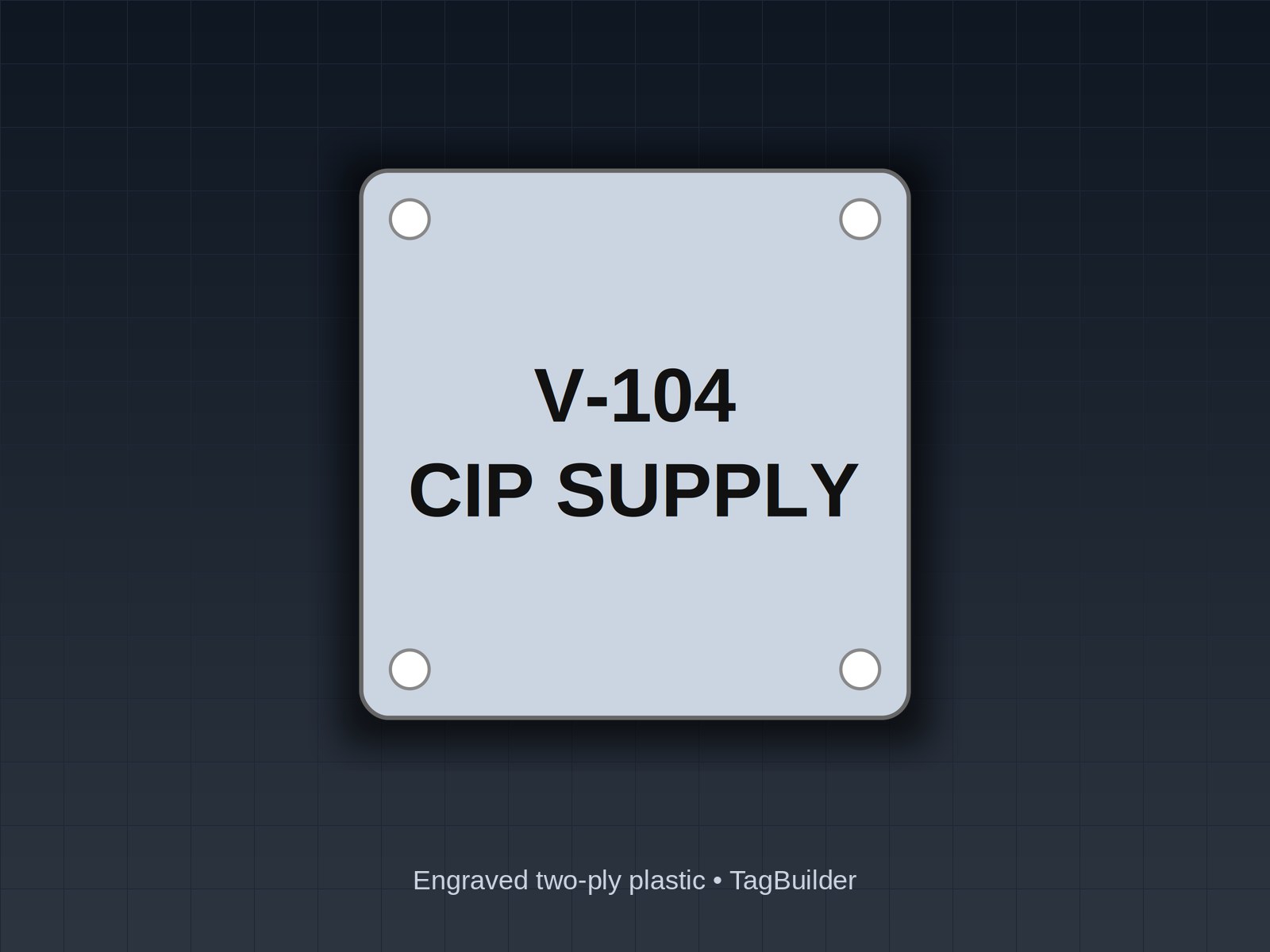
The ID plate is about which unit serves what. Refrigerant type, charge and electrical ratings are commonly printed on the manufacturer's nameplate, so leave that nameplate in place and uncovered. If you want a refrigerant line on your own plate for convenience, copy it from the manufacturer's nameplate and treat the manufacturer's data as the reference.
Abbreviations worth standardizing
Pick one spelling for each term and use it on every plate, drawing and breaker label. The table below lists the abbreviations that come up most on refrigeration jobs.
| Abbreviation | Meaning | Used on |
|---|---|---|
| CU | Condensing unit | Roof or pad unit, breaker, drawings |
| ACCU | Air-cooled condensing unit | Same as CU where the site distinguishes air-cooled from water-cooled |
| EVAP | Evaporator coil or unit cooler | Inside the walk-in or at the case |
| WIC / WIF | Walk-in cooler / walk-in freezer | Door, evaporator, breaker, load description |
| TXV | Thermostatic expansion valve | Valve at the evaporator |
| LLSV | Liquid line solenoid valve | Valve body or its coil, near the box |
| DEF | Defrost timer or controller | Controller enclosure |
| RACK A | Grocery compressor rack | Rack frame, rack panel, drawings |
What each component gets, and where it goes
The table below shows the label for each component in a typical walk-in or case installation, where it mounts and sample text.
| Component | Where the label goes | Example text |
|---|---|---|
| Condensing unit | Cabinet face you see when you walk up, screwed or riveted | CU-3 / WALK-IN FREEZER |
| Evaporator | Housing side facing the door, fastened with screws | EVAP-3 / CU-3 / WIF-1 |
| Defrost controller | Enclosure cover or the wall beside it | DEF-3 / WIF-1 / CU-3 |
| Liquid line solenoid | Tag on the valve or the adjacent bracket | LLSV-3 / CU-3 |
| Disconnect near the unit | Front of the disconnect enclosure | CU-3 DISCONNECT / PANEL RP CKT 7 |
| Breaker in the panel | Directory or label beside the breaker | CU-3 / WALK-IN FREEZER |
| Display case | Inside the case, at the end or under the rail, where staff can read it | CASE 15 / CU-15 |
| Grocery rack | Rack frame and each circuit stub | RACK A / A-07 / CASE 12 |
Grocery racks: rack ID, circuit number, case
Where compressors sit on a rack in a machine room and feed cases through suction and liquid circuits, the rack ID replaces the CU number. Label the rack frame RACK A. Number each circuit with the rack letter and a two-digit number (A-01, A-02), tag the circuit on the rack, and put the same circuit number on the case it serves. A-07 on the rack and A-07 on the case closes the loop.
Roof, rack room and cold box are different environments
Condensing units outdoors
Roof and pad units see sun, rain and temperature swings. Use a plate that is engraved through the surface, not a printed sticker, and fasten it with screws or rivets rather than relying on adhesive alone. Engraved text does not rub off the way printed ink can. For help choosing between plastic and metal for outdoor use, see the indoor vs. outdoor tag materials guide.
Evaporators inside the box
Inside a freezer the problems are cold and condensation. Adhesive only works when applied to a clean, dry surface above freezing, and a box that is running cannot be dried and warmed easily. Screws are the safer choice. If you do use adhesive, apply it during a defrost or before the box is loaded, and expect to check it at the next service visit. Use a pilot hole and a fastener suited to the housing material.
Matching the breaker to the CU number
The breaker label should carry the same ID as the unit it feeds. If the panel directory says "Cooler comp" and the roof says CU-1, someone has to guess. A label that reads CU-1 / WIC-1 removes the guess. For the broader approach to panel directories, see panel schedule to engraved breaker labels. NEC 408.4 deals with circuit directories in panelboards, and the specifics vary by edition, so check the one adopted in your area.
The same applies to disconnects. Where a disconnect is required within sight of equipment, many AHJs expect it to be identifiable as belonging to that equipment. Confirm with your inspector rather than assuming.
Worked example: a small grocery store
This list covers a store with six rooftop condensing units serving one walk-in cooler, one walk-in freezer and six display cases. You can copy it line for line and change the numbers to fit your site.
| Roof plate | Evaporator / case plate | Breaker label |
|---|---|---|
| CU-1 / WALK-IN COOLER | EVAP-1 / CU-1 / WIC-1 | CU-1 / WIC-1 |
| CU-2 / WALK-IN FREEZER | EVAP-2 / CU-2 / WIF-1 | CU-2 / WIF-1 |
| CU-3 / DISPLAY CASES 10-11 | CASE 10 / CU-3 CASE 11 / CU-3 | CU-3 / CASES 10-11 |
| CU-4 / DISPLAY CASES 12-13 | CASE 12 / CU-4 CASE 13 / CU-4 | CU-4 / CASES 12-13 |
| CU-5 / DISPLAY CASE 14 | CASE 14 / CU-5 | CU-5 / CASE 14 |
| CU-6 / DISPLAY CASE 15 | CASE 15 / CU-6 | CU-6 / CASE 15 |
Add one more plate per walk-in at the door: WIF-1 / SERVED BY CU-2 (ROOF). Someone standing at the freezer door can then go straight to the right unit.
Sizes that work
For condensing units, a plate around 4 x 2 inches holds two or three lines at a readable height. The 4 x 2 inch RTU-1 plate is a good fit for a CU ID with a load description, and it has mounting holes for screws or rivets. For evaporators, case ends and controller covers, the 4 x 1 inch compressor plate carries a short ID like EVAP-3 / CU-3 without crowding. Both are white on black, which stays readable under rooftop glare and in a dim machine room.
For other equipment, the equipment ID plates page lists the standard sizes. For HVAC naming that carries over to refrigeration, see HVAC equipment abbreviations and tagging schemes.
Doing the job in order
- Walk the piping or trace each circuit. Confirm which CU actually feeds which box before any plate is made.
- Write the ID list in one table like the one above and hand it to the store manager.
- Mark each CU and its breaker first, since those are the points that cause wrong-unit mistakes.
- Add evaporator, controller and case plates next.
- Record the final list with the service paperwork so the next contractor can use it.
Frequently Asked Questions
How do I label which condensing unit goes to which walk-in?
Put the unit ID and the box it serves on the condensing unit, for example CU-2 / WALK-IN FREEZER. Then repeat the CU number on the evaporator (EVAP-2 / CU-2), the controller and the breaker. A reader can start at either end and reach the other.
What should a condensing unit label say?
Two things: its ID and what it serves, such as CU-15 / DISPLAY CASE 15. Refrigerant type, charge and electrical data are commonly on the manufacturer's nameplate, so keep that visible and use your own plate only for identification.
Do labels stick in a walk-in freezer?
Adhesive only bonds to a clean, dry surface above freezing, and a running freezer rarely offers one. Screws are the safer choice for evaporators and anything else inside the box. If you use adhesive, apply it during a defrost and check it at the next visit.
How do you number display cases?
Number them in a fixed order, such as left to right along the sales floor, and keep the number the same on the case, the drawings and the breaker. Start at a number like 10 if you expect to add walk-ins or other equipment under single-digit IDs. For rack systems, add the circuit, for example A-07.
Should the breaker label match the CU number?
Yes. A breaker marked CU-3 / WALK-IN FREEZER tells whoever is at the panel exactly what they are about to shut off. Check the circuit directory requirements in the edition of the NEC your jurisdiction has adopted, and ask your AHJ if you are unsure.
Send one unit and the case it serves, like CU-15 / DISPLAY CASE 15, and we'll engrave a free sample plate.
If you are labeling rooftop equipment beyond refrigeration, the guide to labeling rooftop units and refrigeration equipment covers the same approach for RTUs. When you are ready to order a first batch, the free sample page is the easiest place to start.
UL, NFPA, NEC, ASME, CEMA, TIA, ANSI and OSHA are names or marks of their respective organizations; TagBuilder is not affiliated with or endorsed by any of them. Requirements above are paraphrased summaries, not the text of any standard. Always work from the current published edition and your AHJ.